Short entries from the sites as the work happens: a photo or two and a few lines on a wildlife sighting, a storm, a monitoring check or a work day. Each is tagged with its sites, projects and research themes.
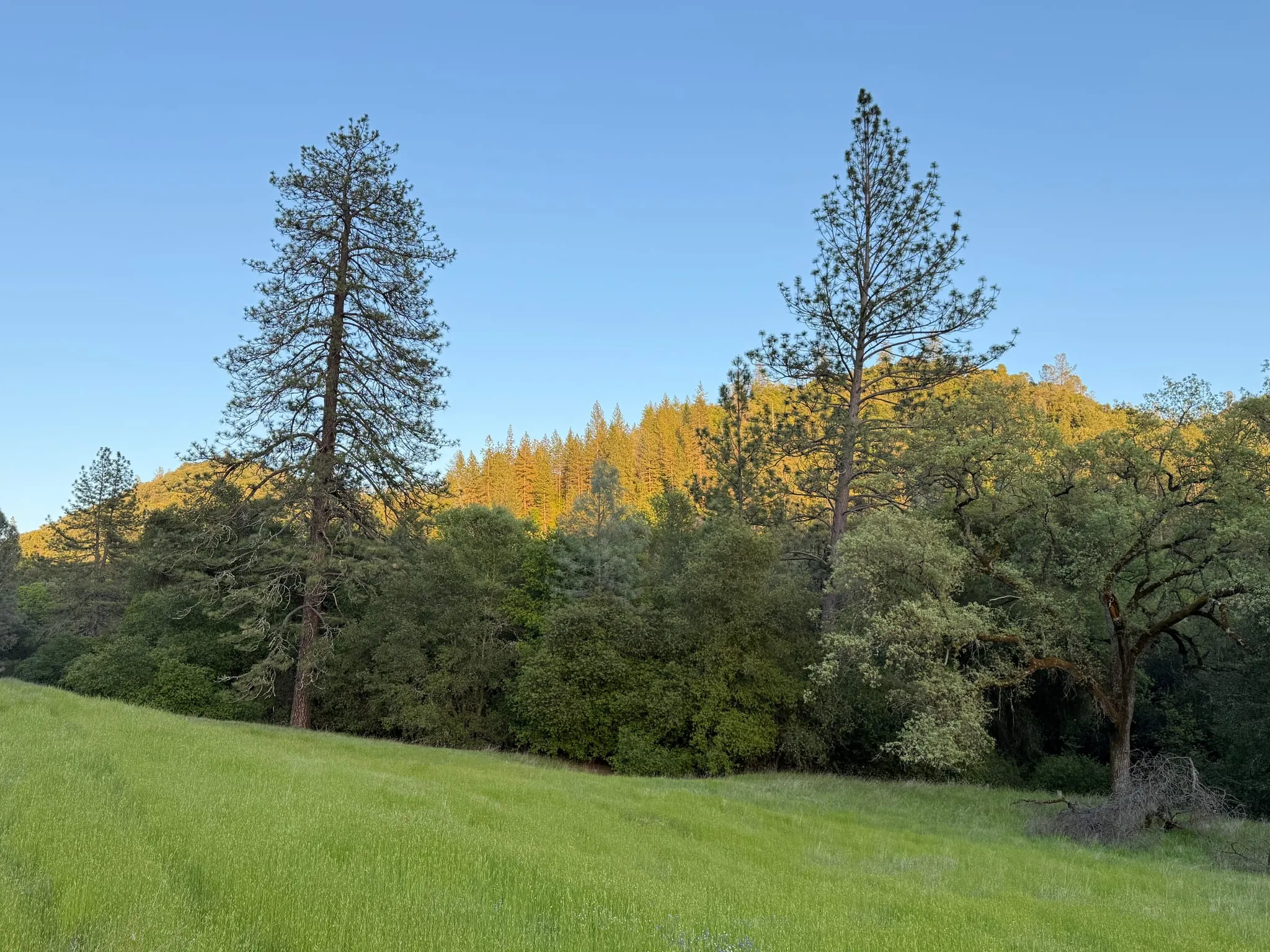
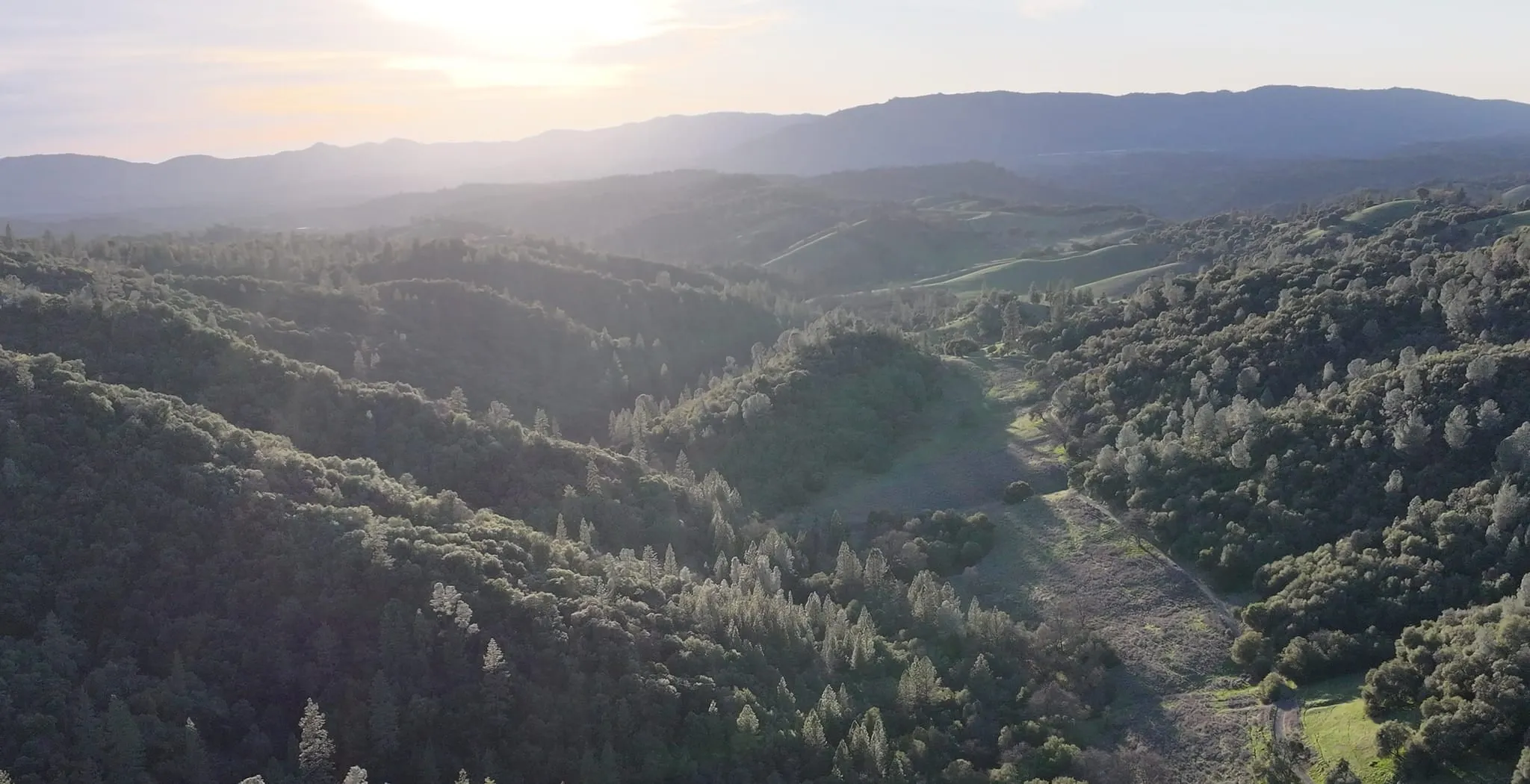
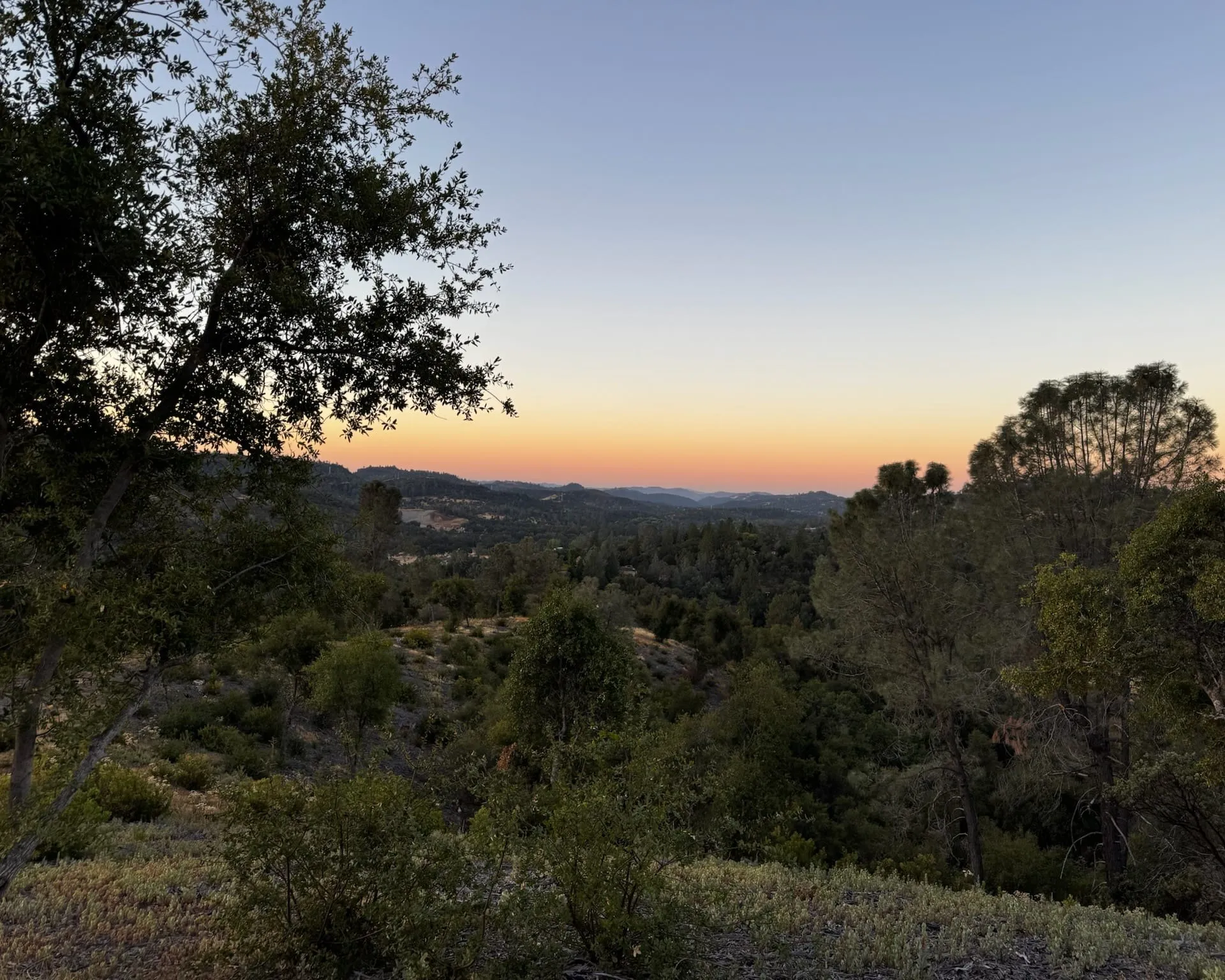
A slow drone pass at sunset over the canyon of San Domingo Creek, late in the dry season: the meadows in the valley have gone gold, while the oak and pine forest on the slopes stays green.
Flights like this one add to the drone record of the site we’ve kept since February 2025, so we can compare the same views across the seasons.
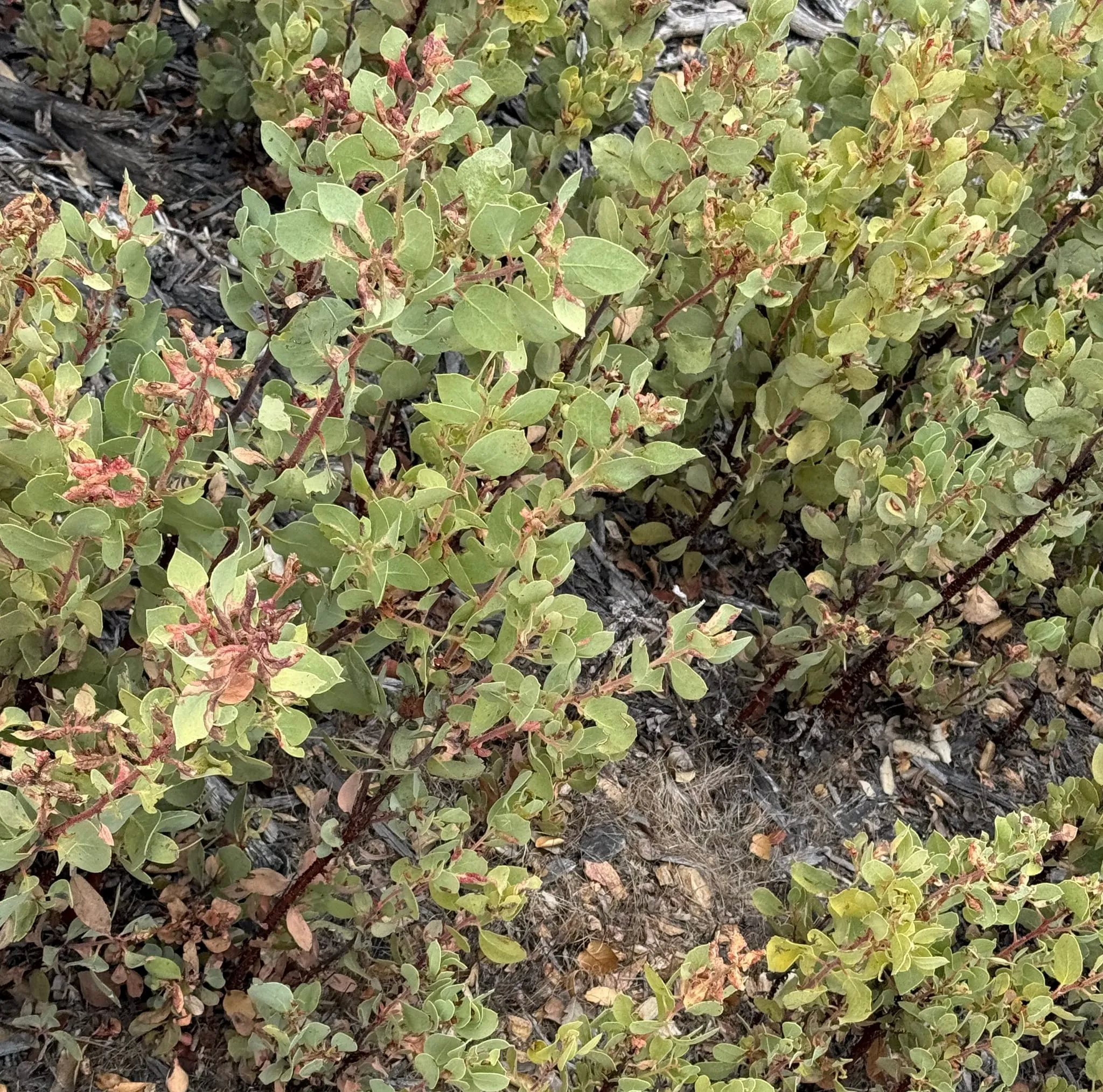
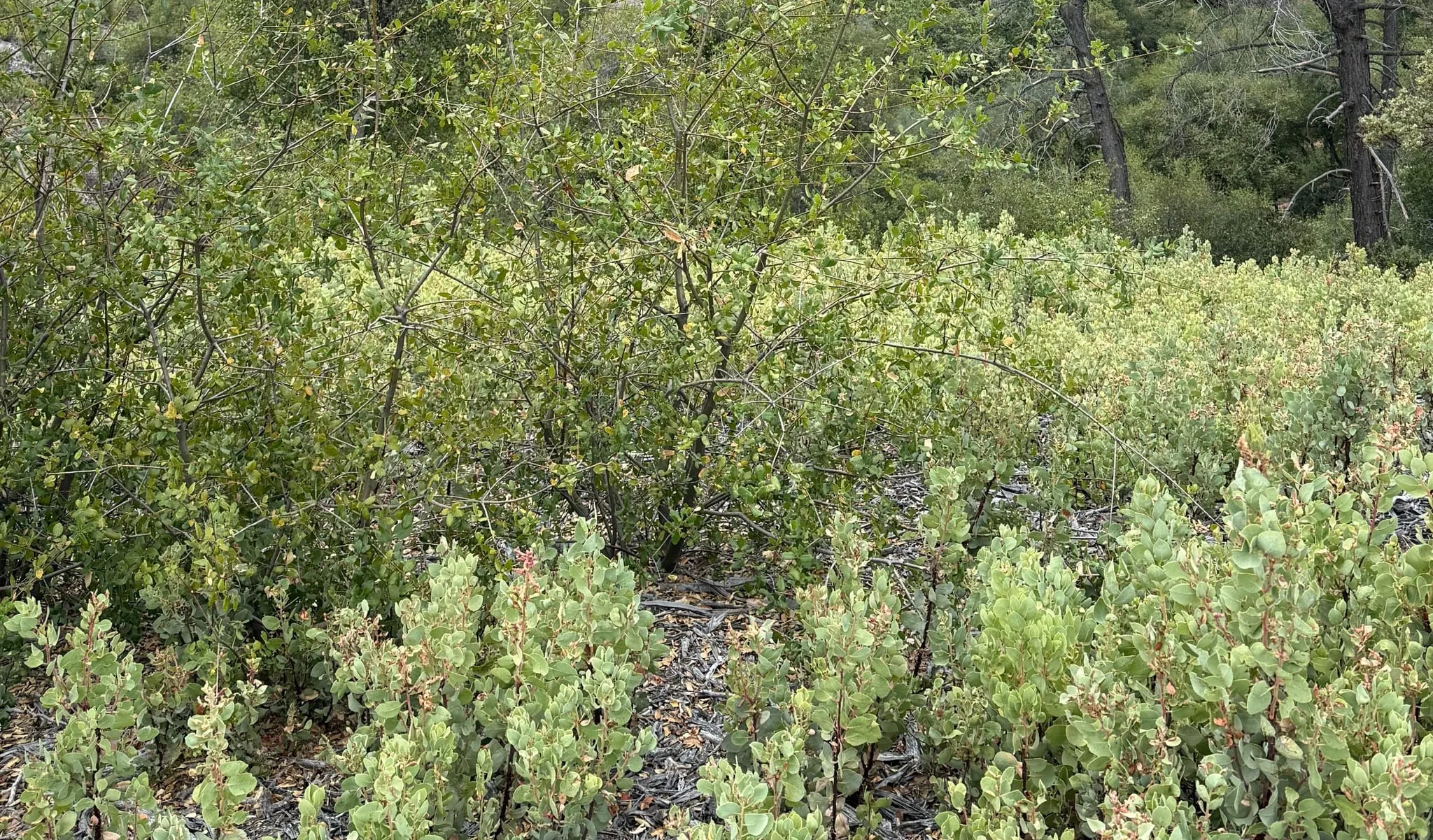
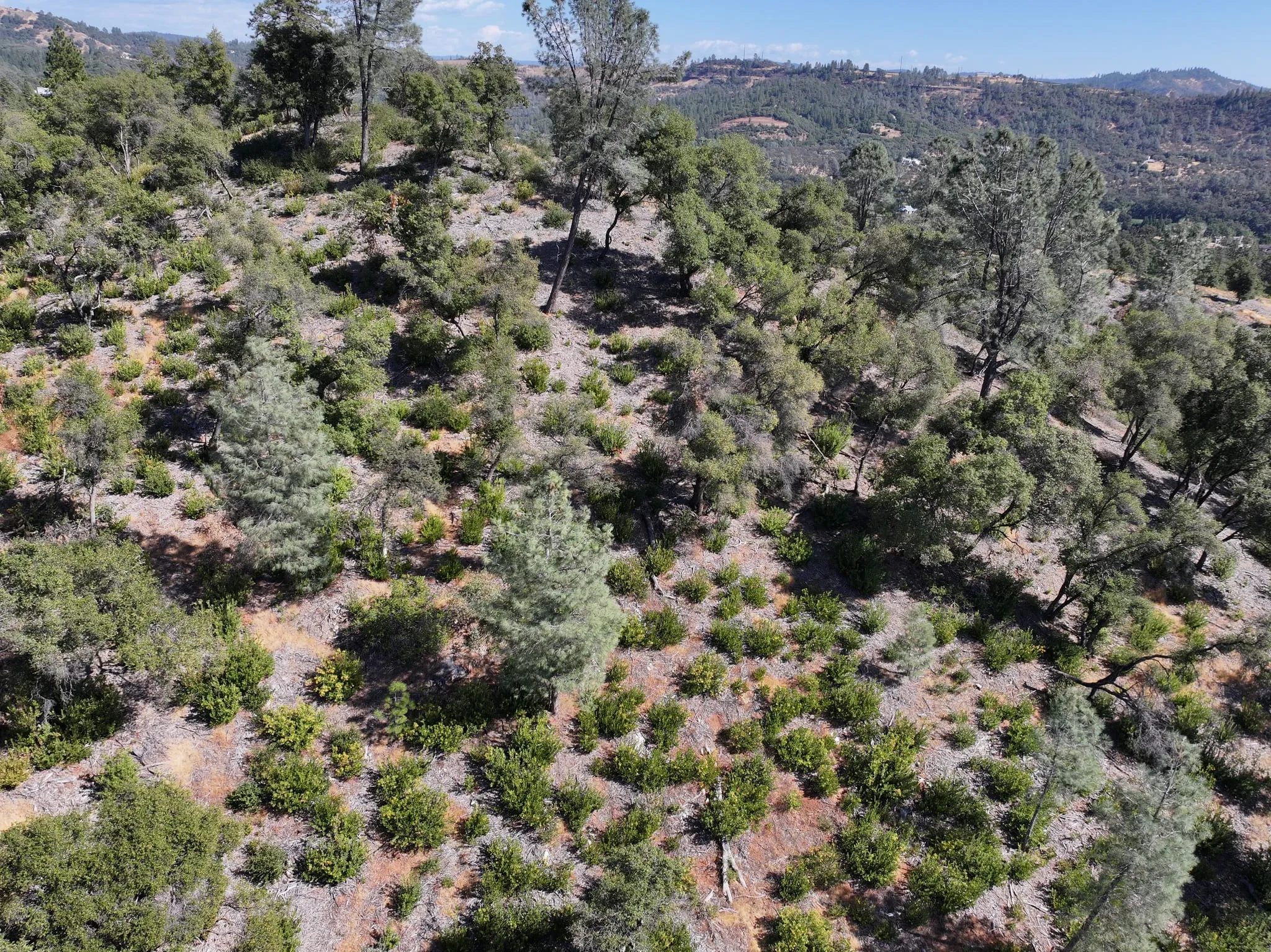
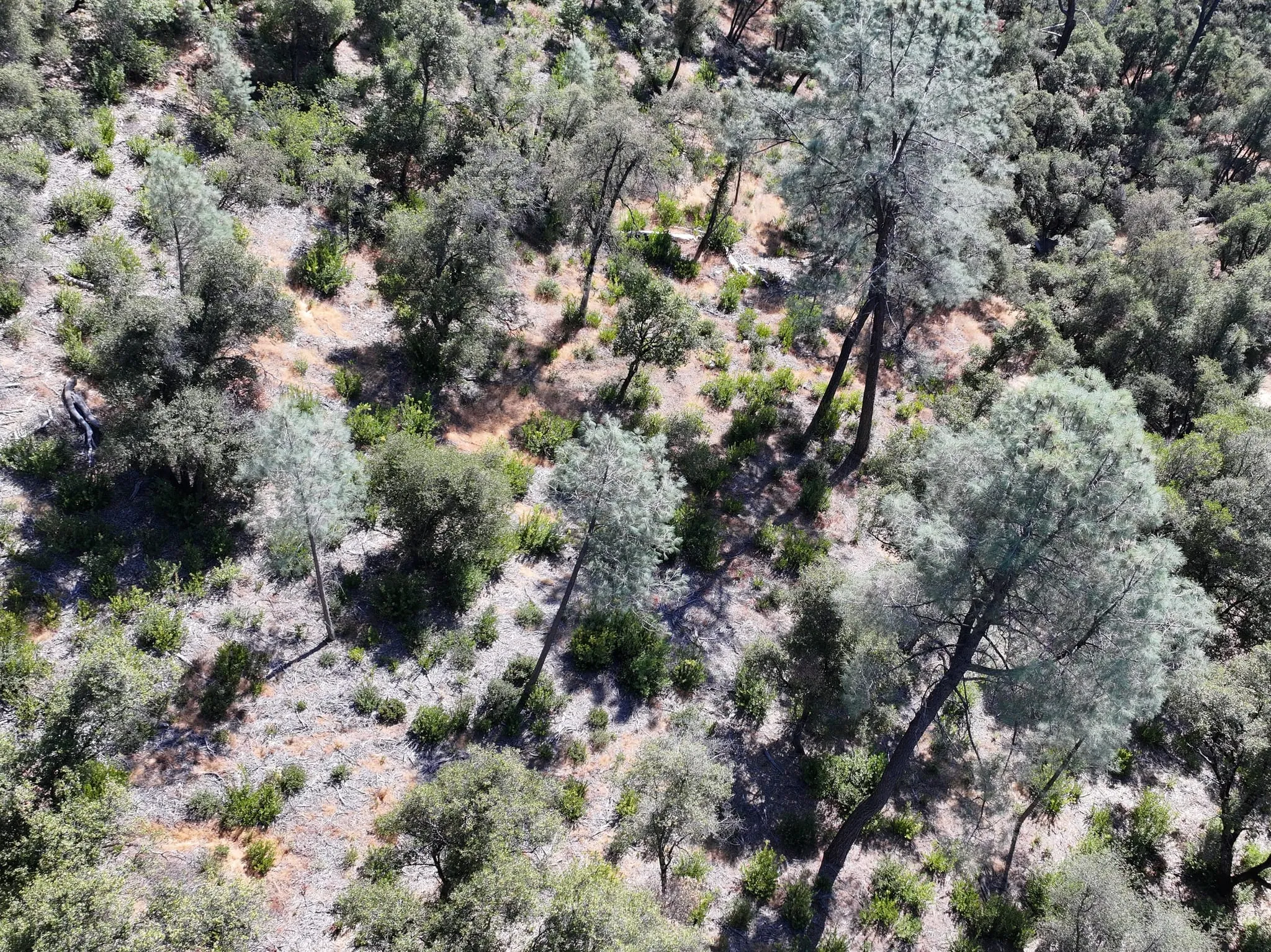
Manzanita (Arctostaphylos sp.) is growing back on a slope at Woodland Hilltop Arbory, where the old thicket was masticated in 2022. At midday on July 21, 2026, the resprouts made a low, dense cover over the gray wood chips: clumps of red-brown stems with oval, gray-green leaves, below taller shrubs and pines.
The previous owners had the thicket masticated through a subsidized program, before DeepForest acquired the land, so that unmanaged manzanita would no longer be an impenetrable brush-fire risk next to the homes in the neighborhood beside the hilltop. The aim now is a mixed overstory and understory back in balance: young pines and oak sprouts outgrowing the manzanita, with sections of the sprouts pruned back so it doesn’t close into a thicket again. How fast the manzanita grows back is part of what the Woodland Hilltop restoration follows in repeat photos.
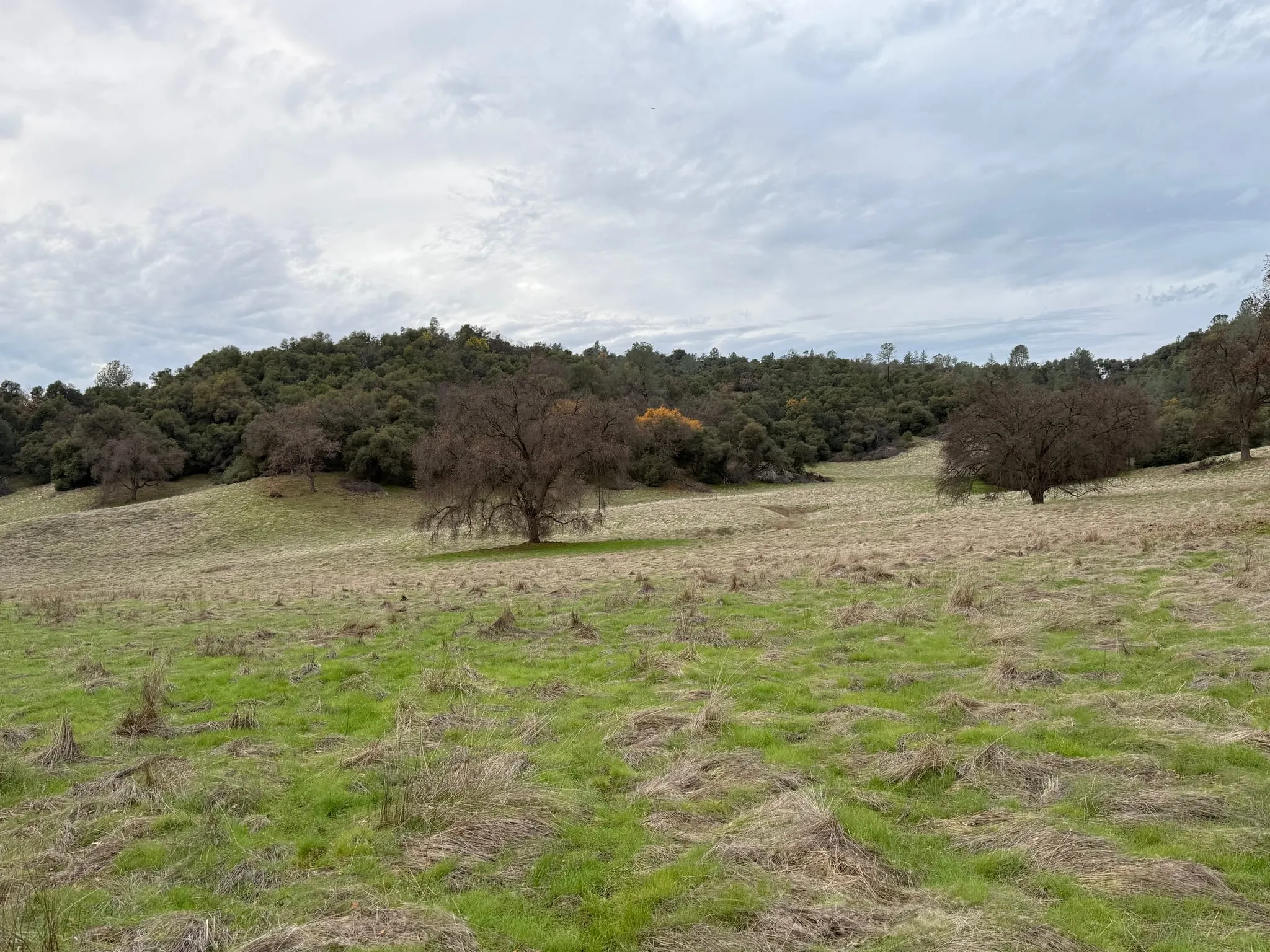
Late in the afternoon of December 23, 2025, new green grass was coming up through the flattened, bleached thatch of last summer’s growth in a meadow at San Domingo Arbory. Leafless trees stood out in the open, one tree at the woodland edge still held gold leaves, and heavy cloud sat over the oak and pine hills.
The foothills here have wet winters and long, dry summers, and the large grazing meadows follow that rhythm: dry and golden through summer and fall, green again once the winter rains take hold.
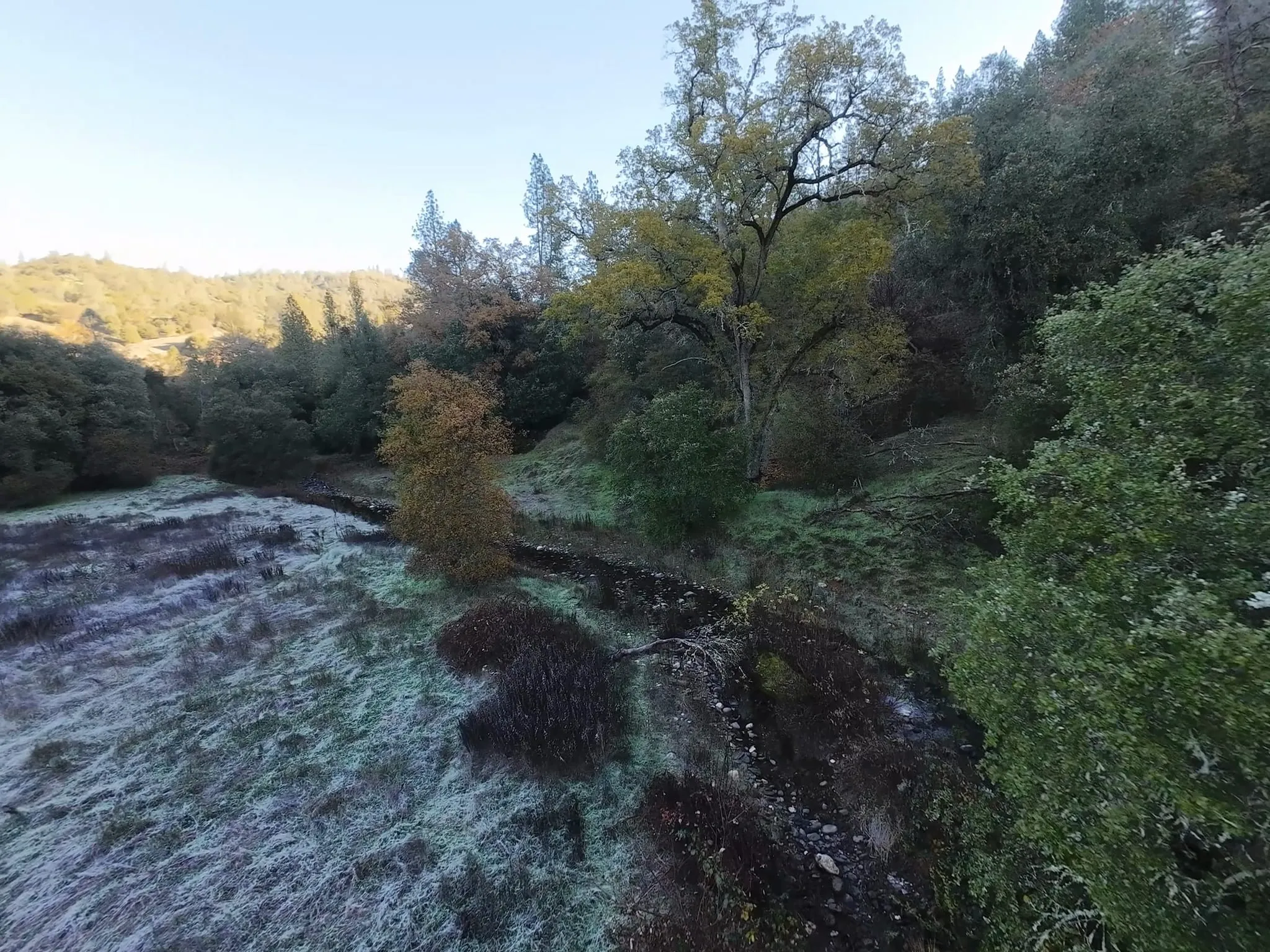
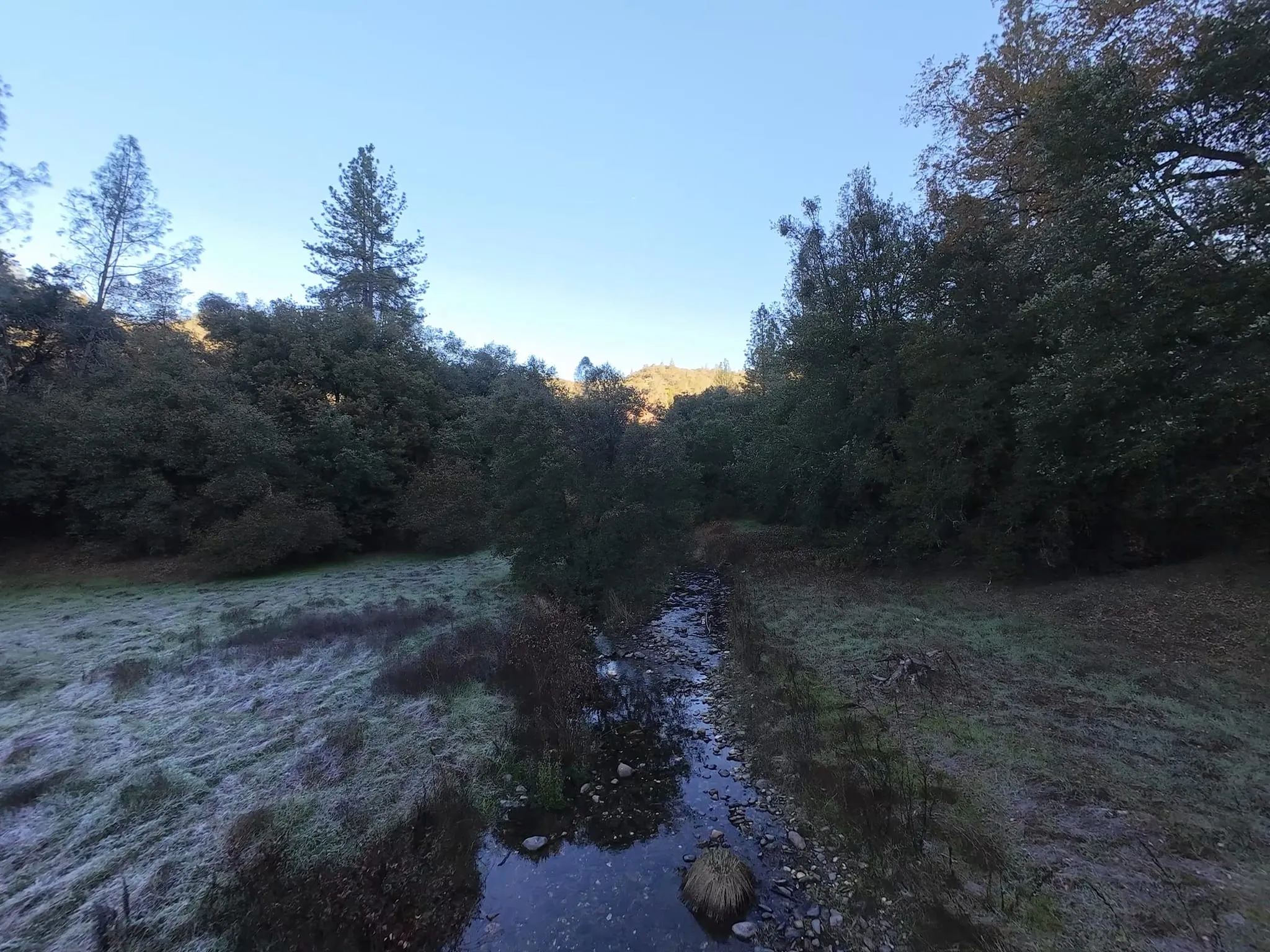
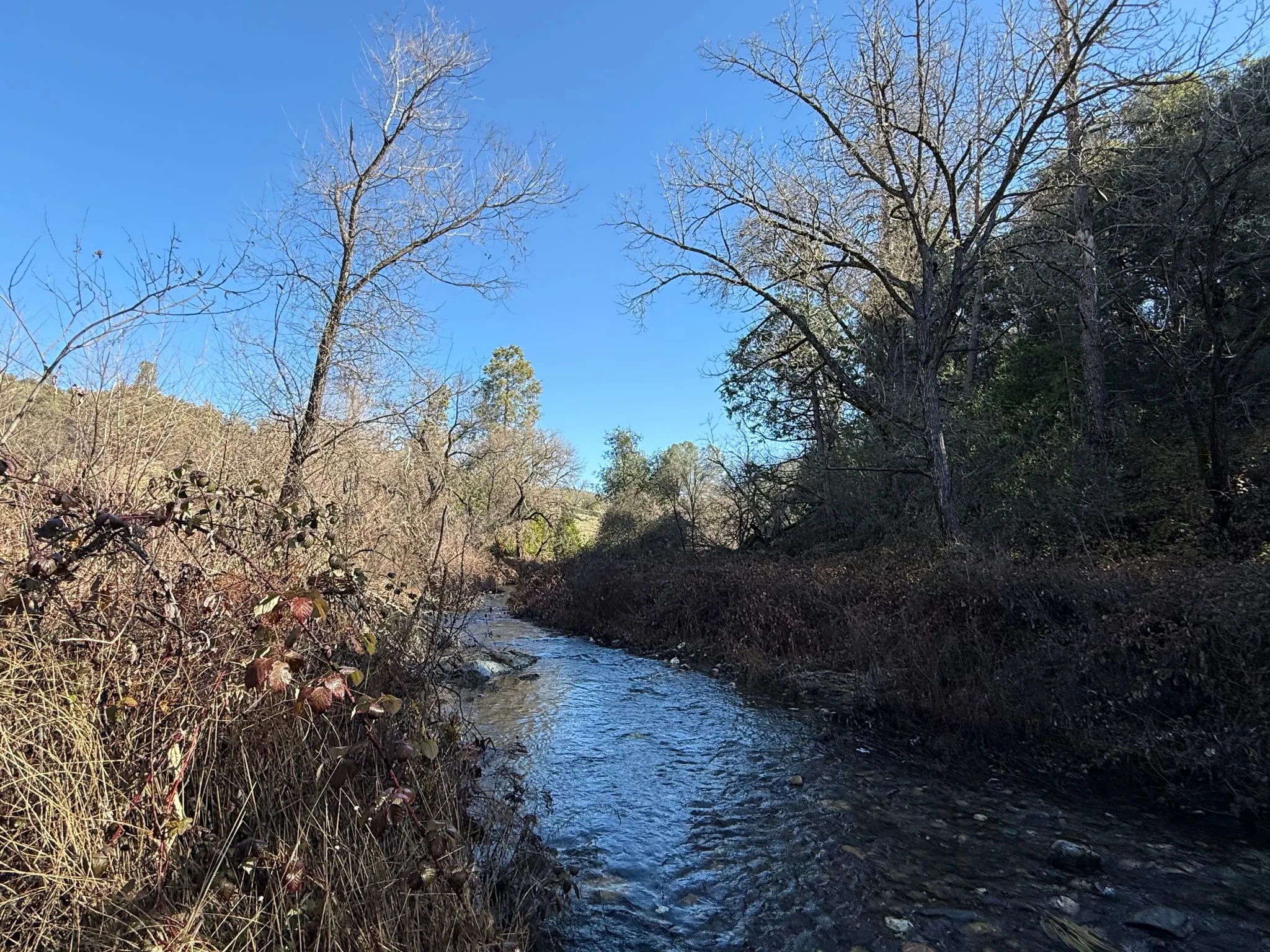
Frost still lay on the meadow along San Domingo Creek on the morning of December 13, 2025, when we flew a drone low along the creek at San Domingo Arbory. Frost whitened the meadow grass beside the creek, a large tree, probably an oak, still held its yellow leaves, and there was water in the channel between the frosted banks.
San Domingo Creek runs dry for about three months of the year, and the meadows along it are where that seasonal rhythm shows. Repeat views like this one, through the wet season and the dry, help us see how the creek and its meadows change over the year.
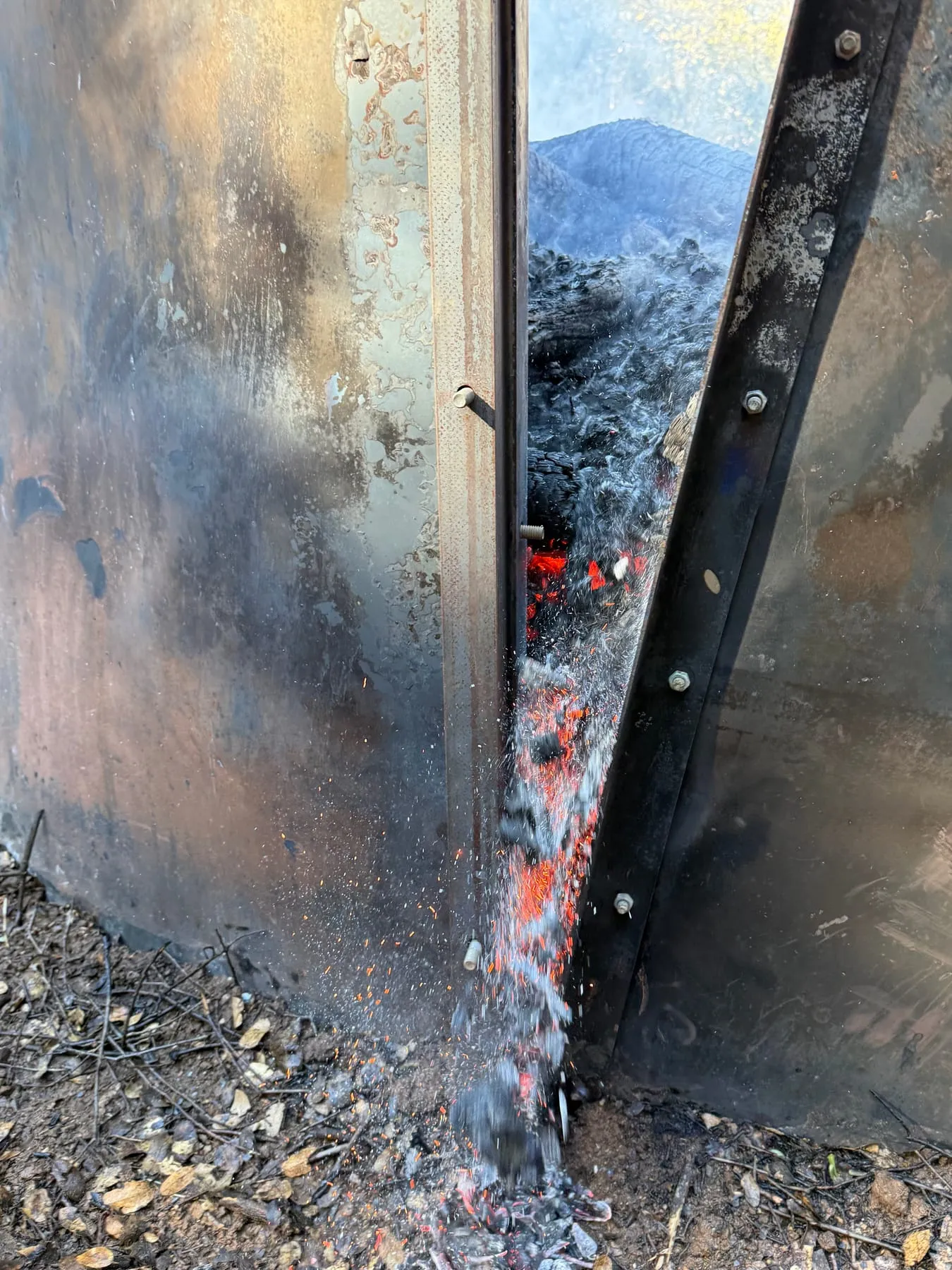
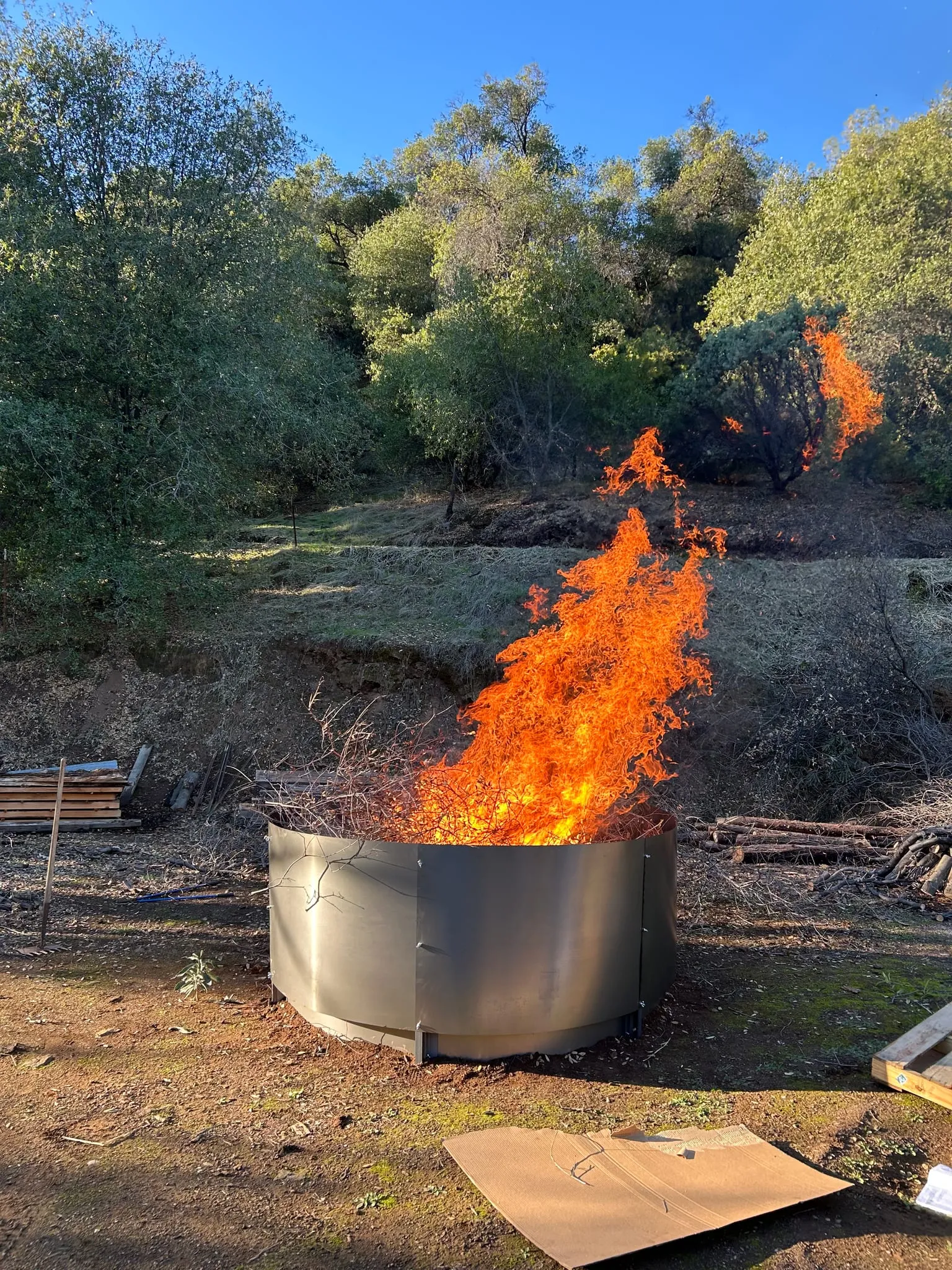
Burn day in the steel ring kiln at San Domingo, the day after the crew staged the burn. Slash from thinning goes in load by load, and a tall cap of flame burns off the gases and uses up the air, so the wood below chars instead of burning to ash.
When a batch is done, the coals are quenched with water, leaving biochar that is mixed back into the meadows and forests to help restore their soils.
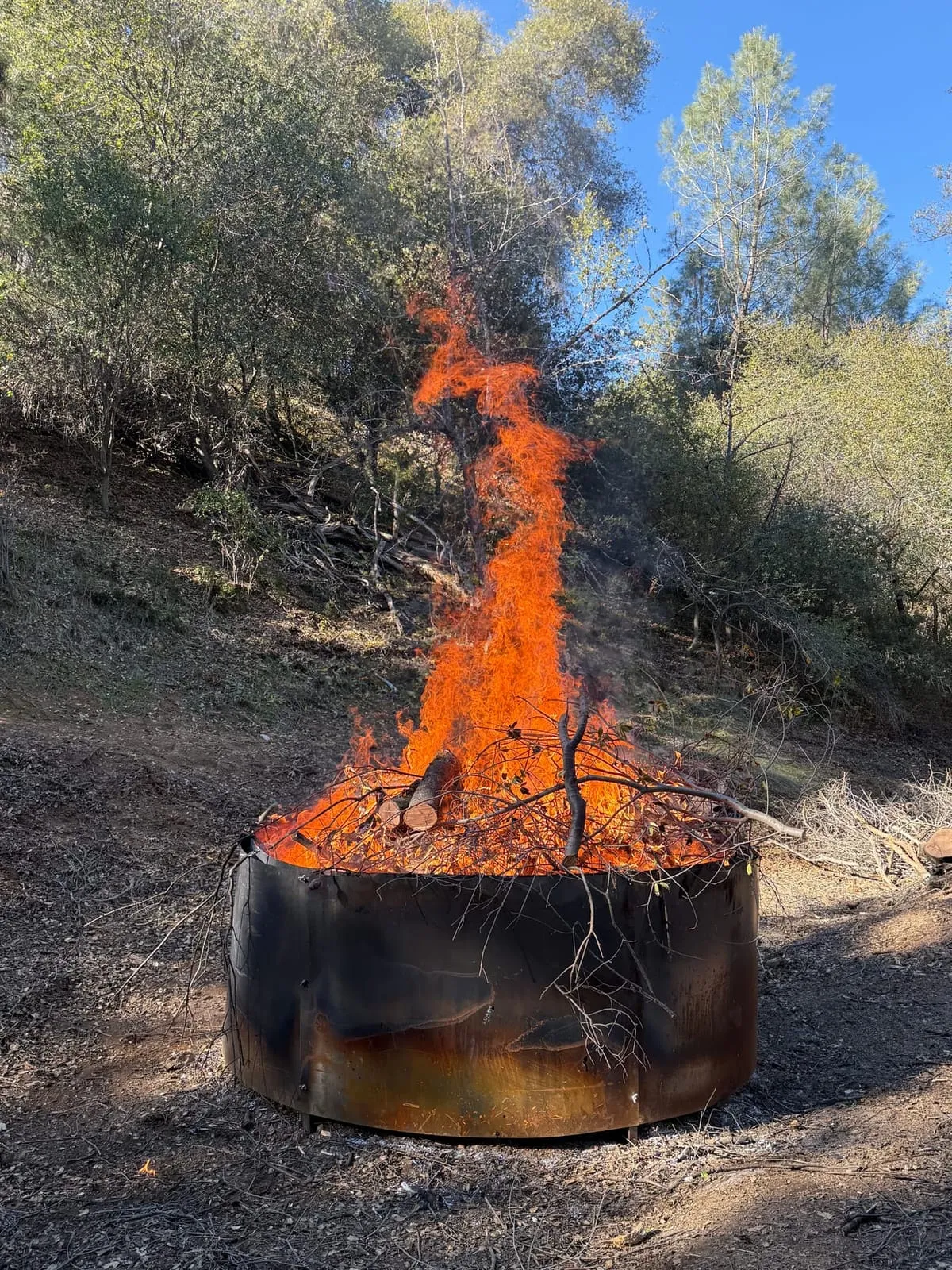
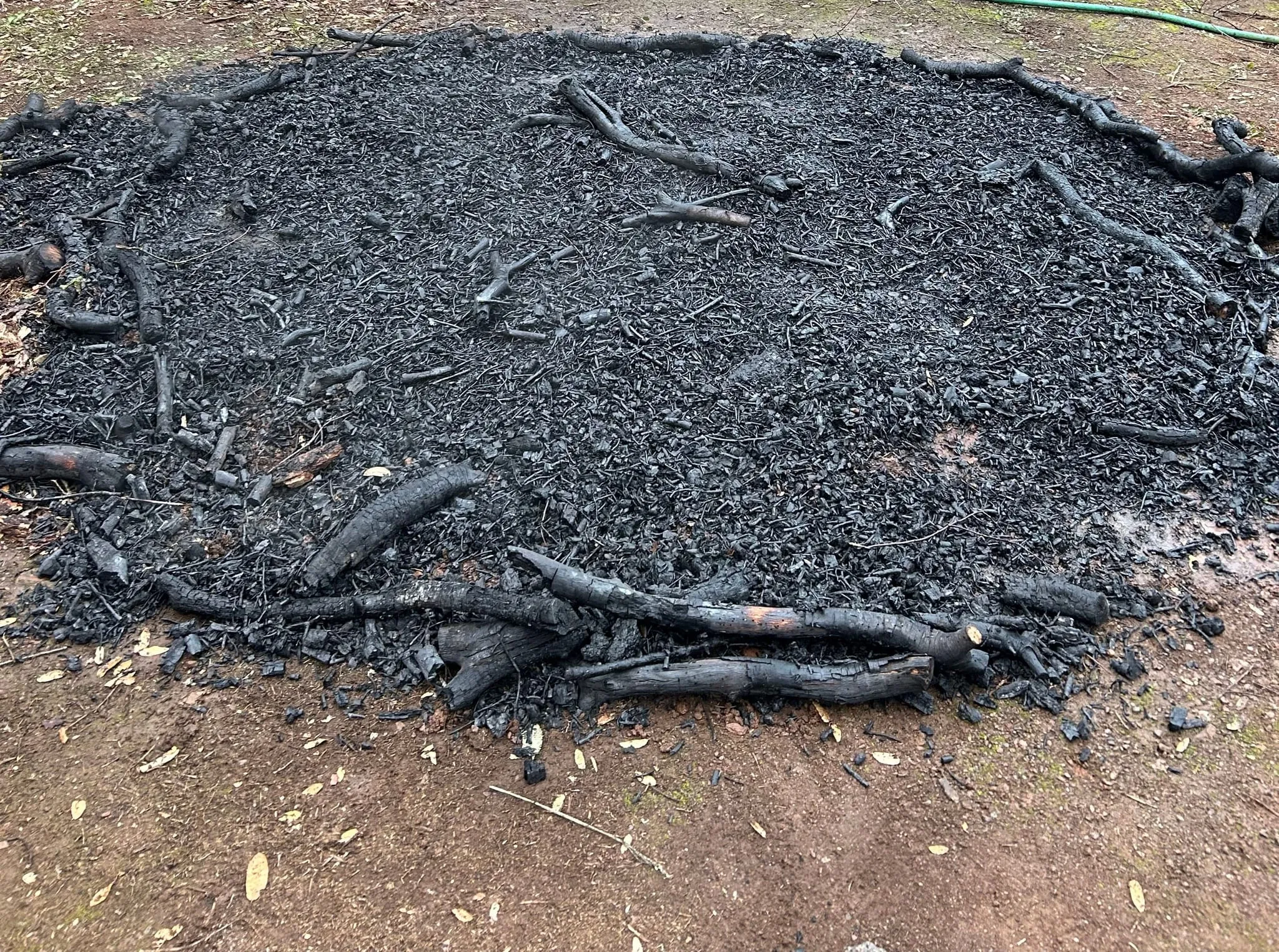
On November 24, 2025, we ran the first burn in a new steel ring kiln at San Domingo Arbory, among DeepForest’s first biochar burns. Its bolted panels were still bright when a load of brush went in mid-afternoon and the flames climbed well above the rim. By late afternoon a round layer of black char lay on the bare ground, wet from the hose.
The kiln is how the biochar from fuel reduction project turns wood from fuel reduction into biochar instead of ash, to be mixed back into the meadows and forests. A cap of flame across the top burns off the gases and uses up the air, so the wood below chars, and water stops the burn. Another burn followed on December 12, staged the day before (burn day).
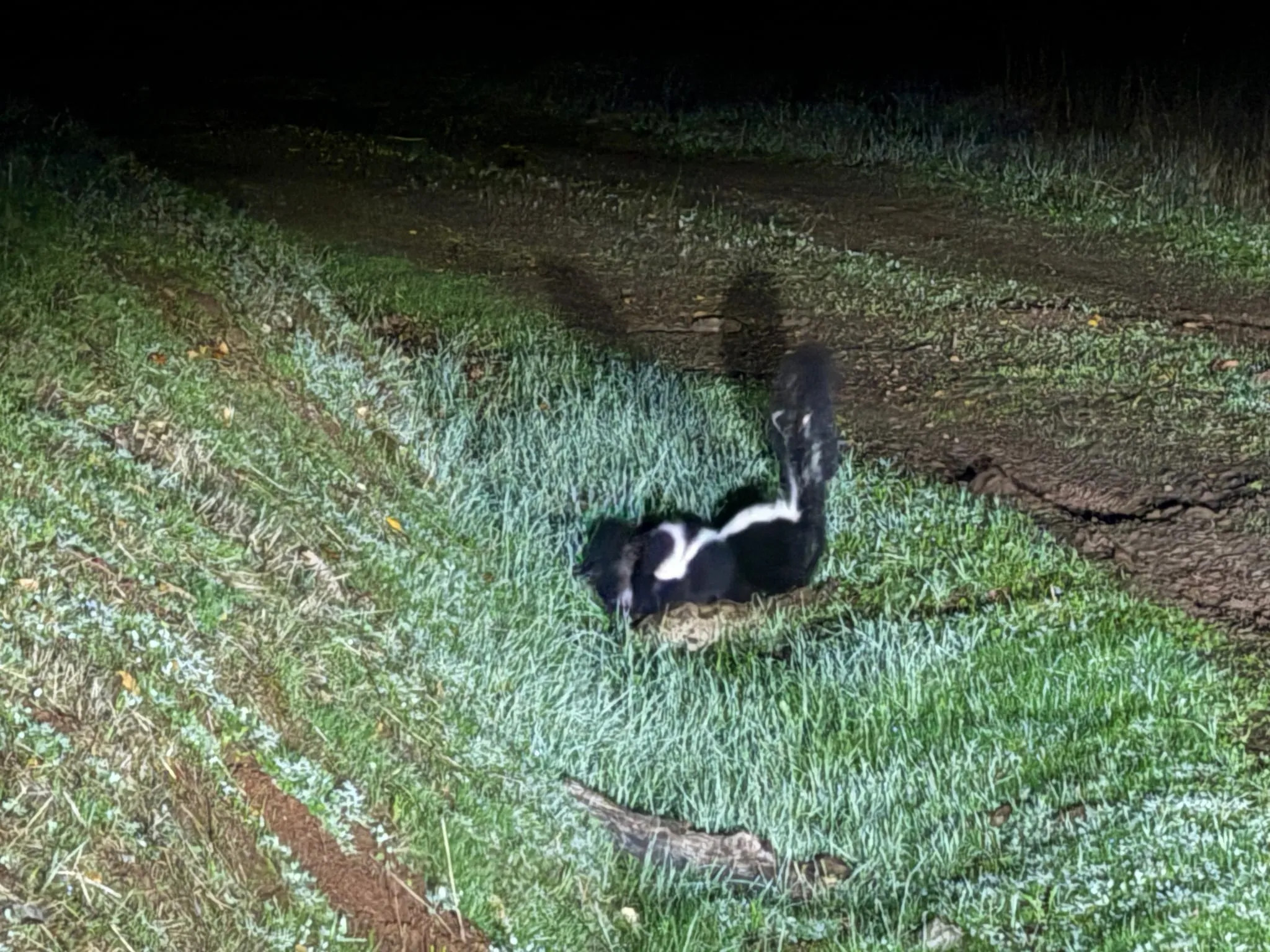
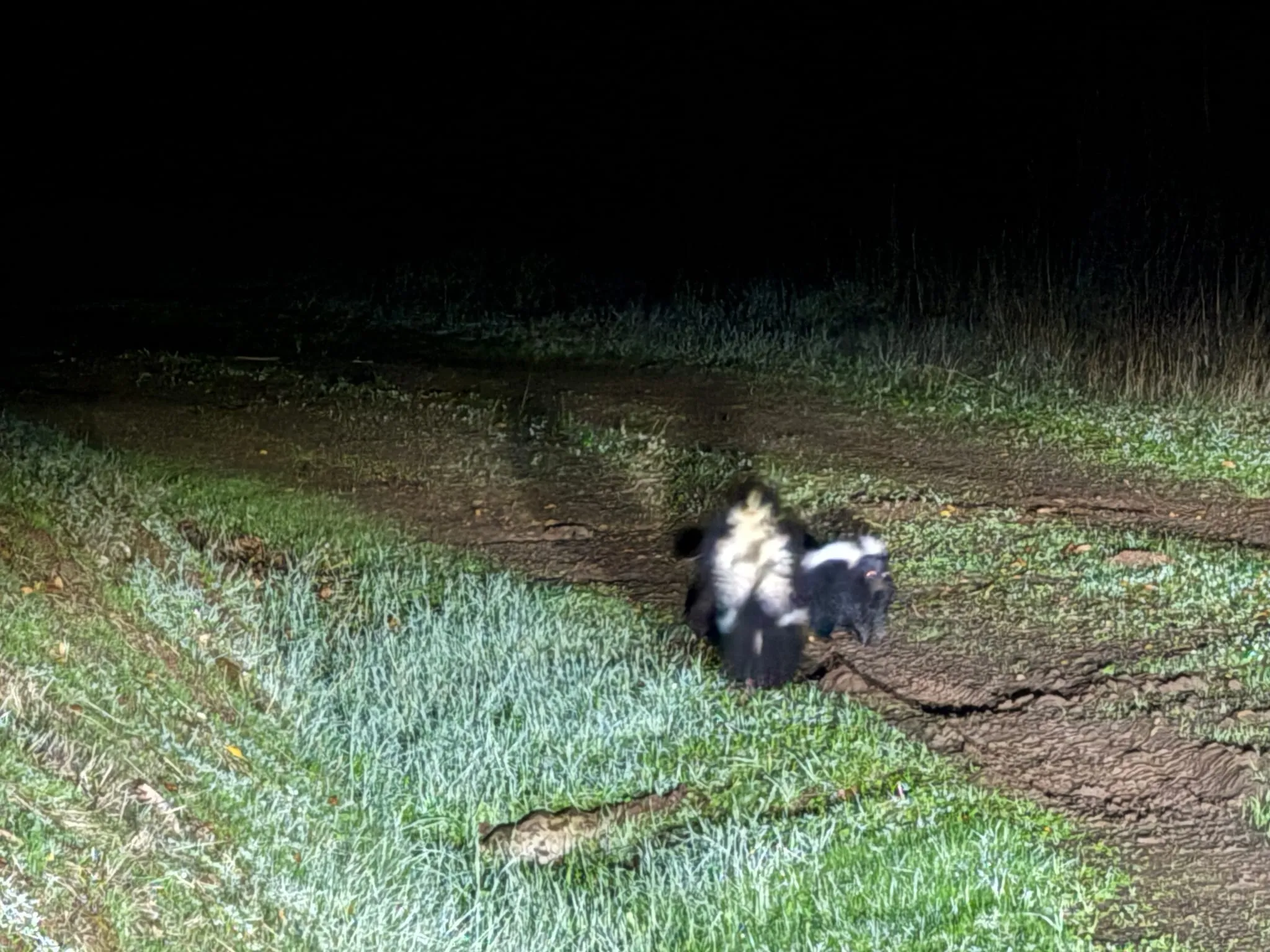
Two skunks crossed a grassy track on the hilltop at Woodland Hilltop Arbory at about 8:20 pm on November 21, 2025, caught in the beam of a light. From their broad white stripes and plumed tails, they are probably striped skunks (Mephitis mephitis). One raised its tail, often a skunk’s warning, before the pair moved on across the track.
Skunks forage at night for beetle larvae and other insects in soil and leaf litter, and the fall rains had turned the hilltop’s tracks green with new grass.
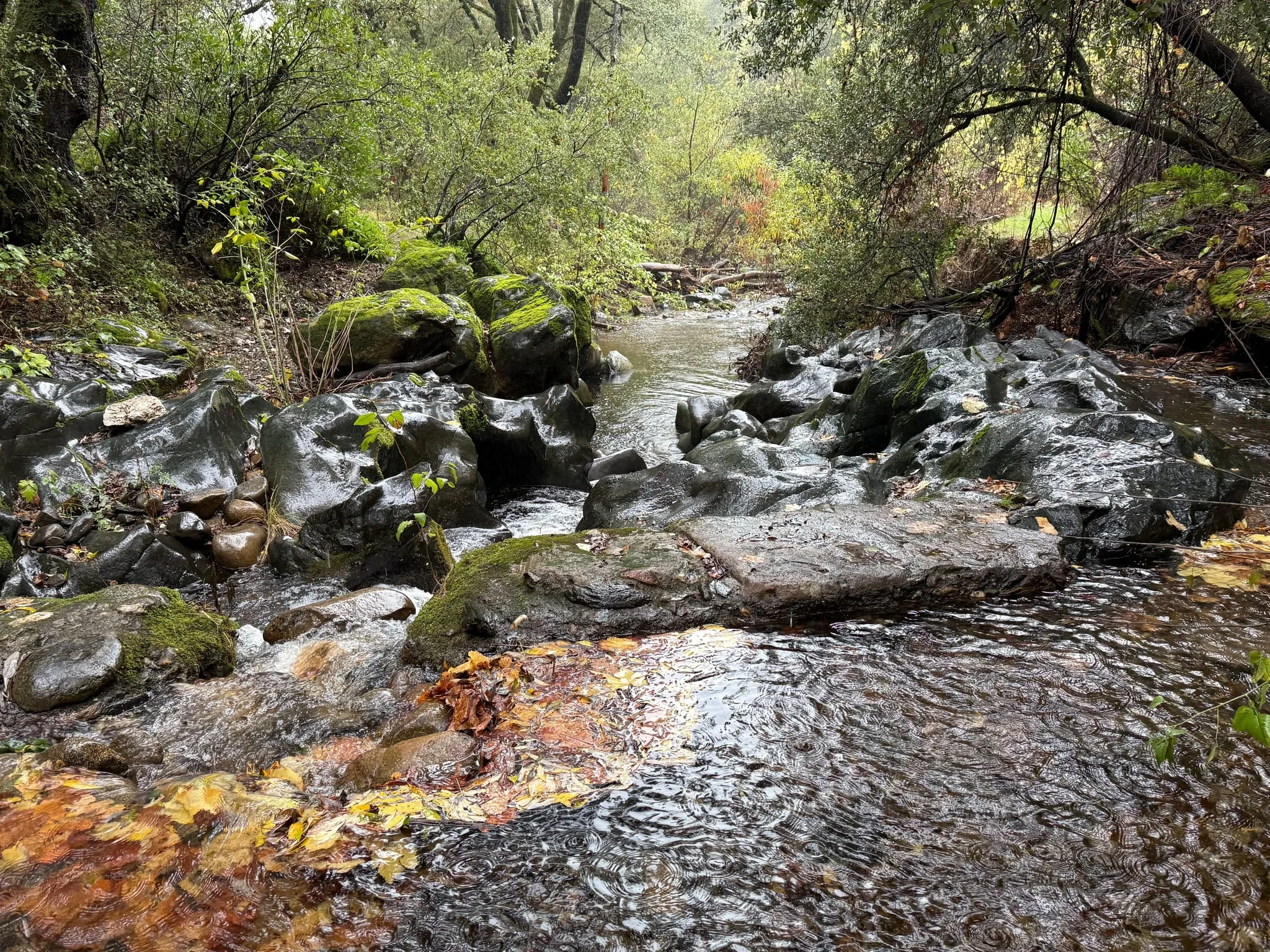
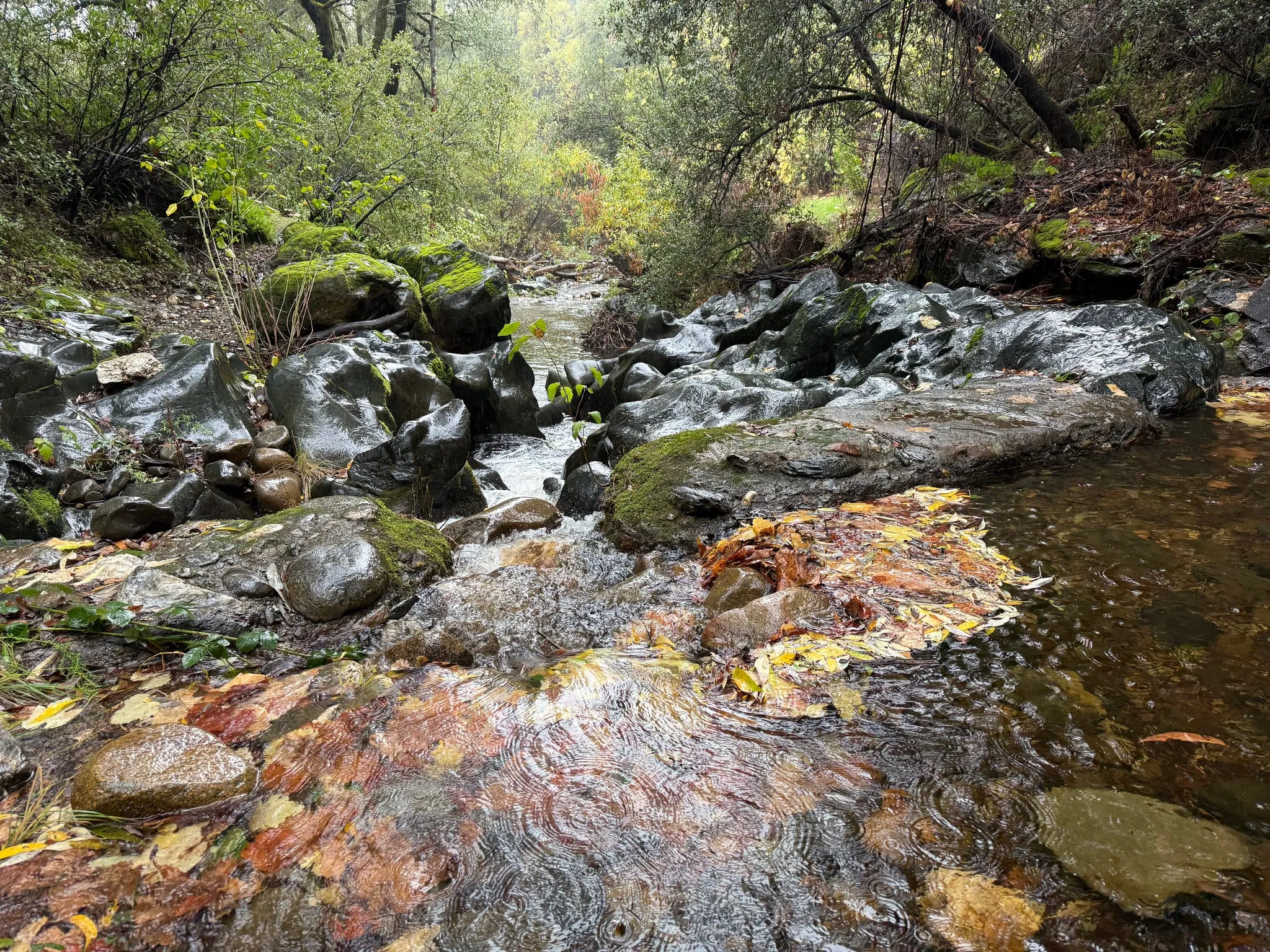
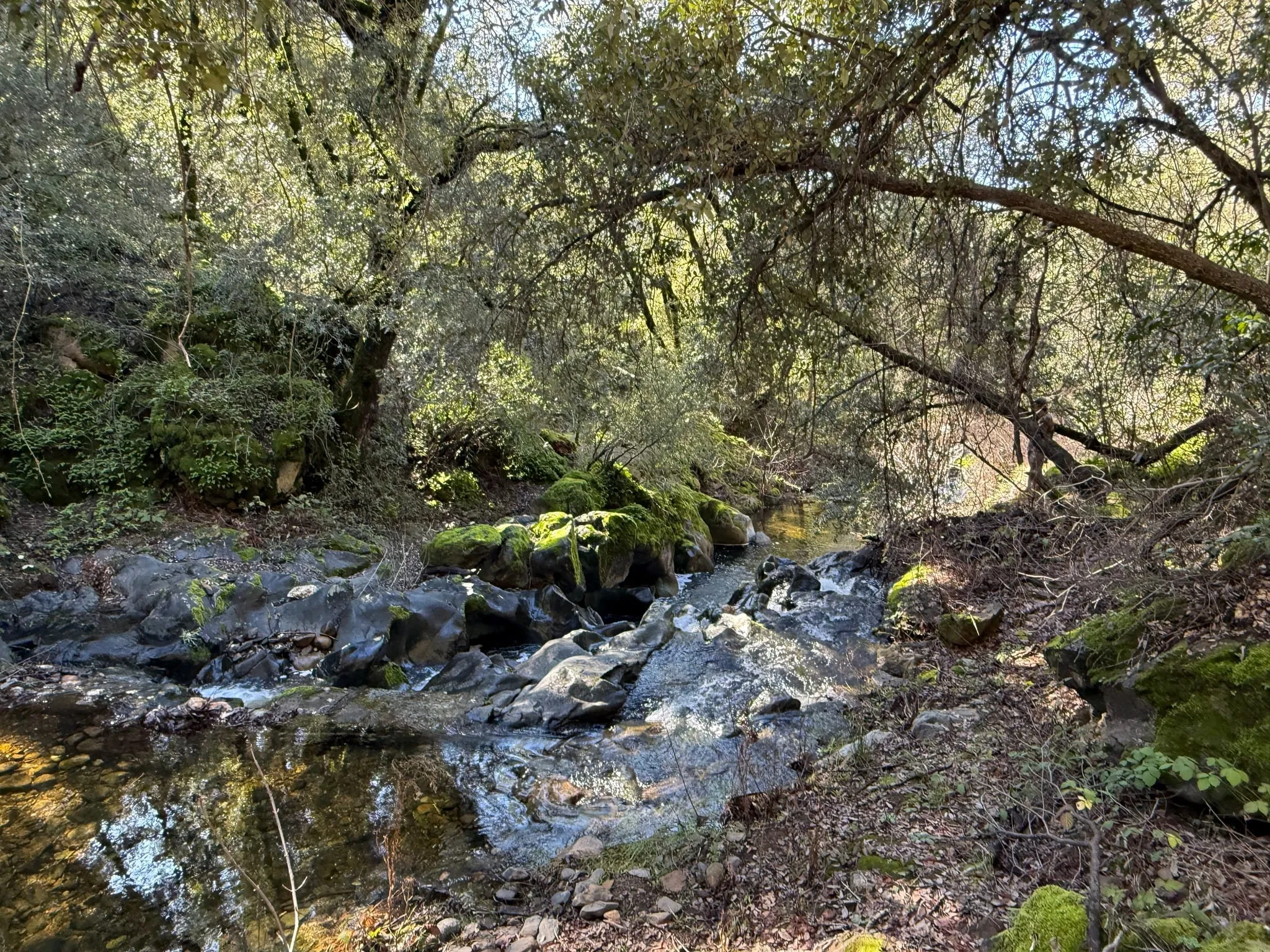
Rain was falling on the creek at San Domingo Arbory around midday on November 16, 2025, ringing the pools with drops. Water ran fast between dark, rounded boulders and mossy rocks, and fallen yellow and orange leaves gathered in the eddies.
The creeks here follow the foothill seasons. San Domingo Creek runs dry for about three months of the year and flows again through the wet foothill winter.
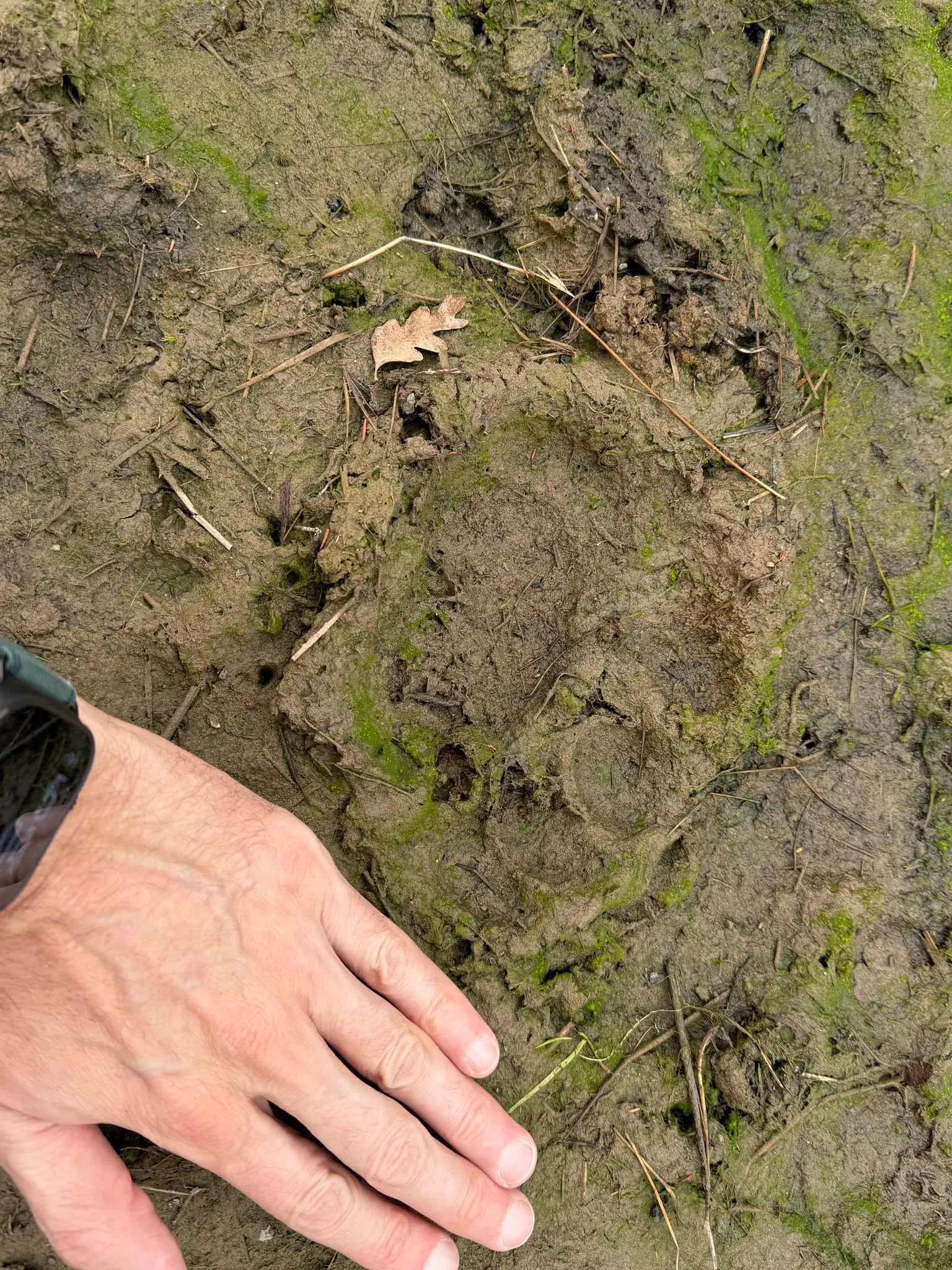
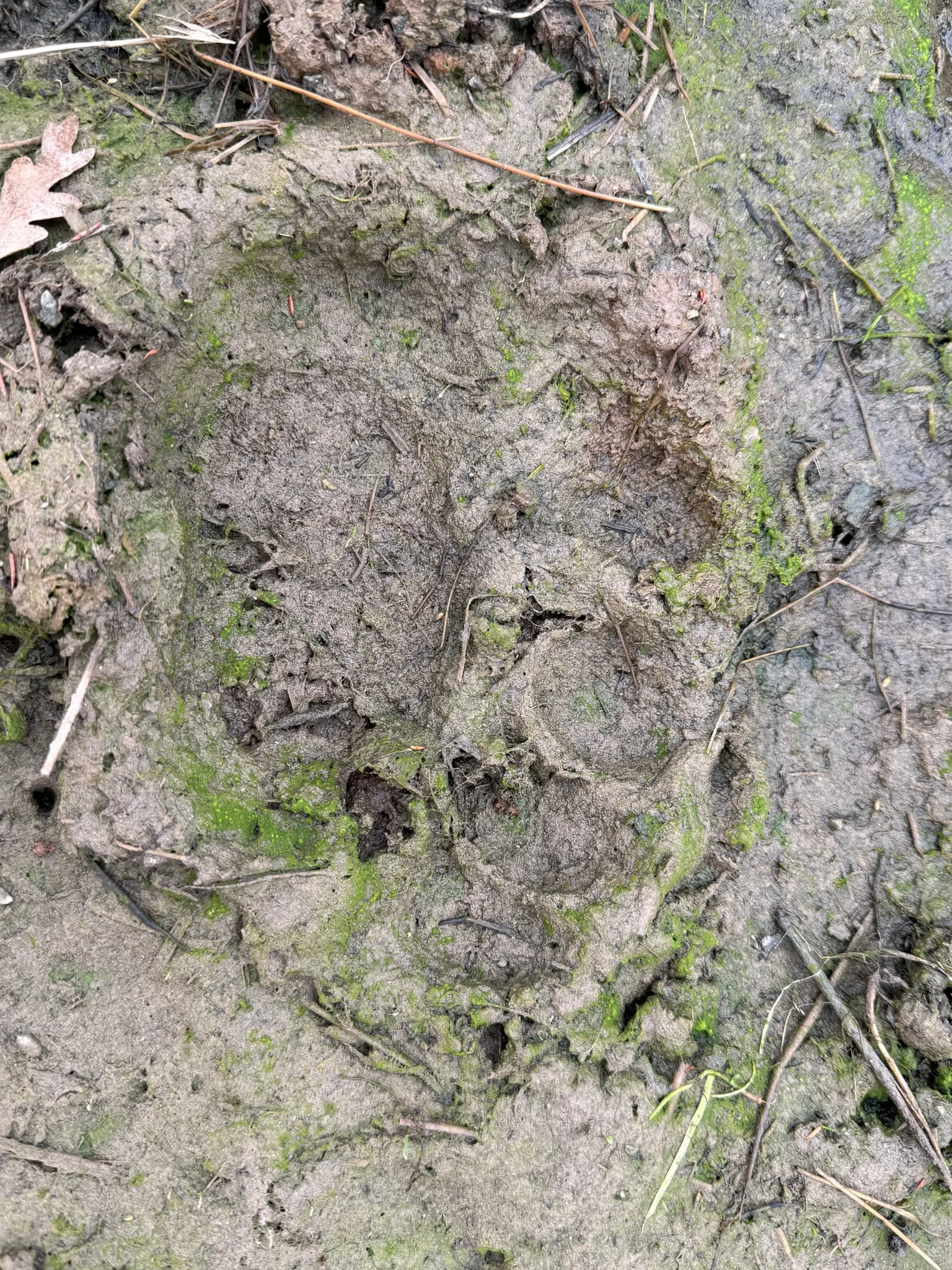
Late in the afternoon of October 22, 2025, we found a large paw print pressed into soft, algae-streaked mud at San Domingo Arbory. Beside an outspread hand it was about as wide as the hand itself. The size and the broad pad point to a black bear (Ursus americanus), but the toes and claws didn’t hold their shape in the mud, so we’re calling it probable, not confirmed.
The remote cameras we have since set up above one backcountry road, part of our AI-managed remote sensing, record black bears among their night visitors; tracks like this one hint at what moves through the rest of the property.
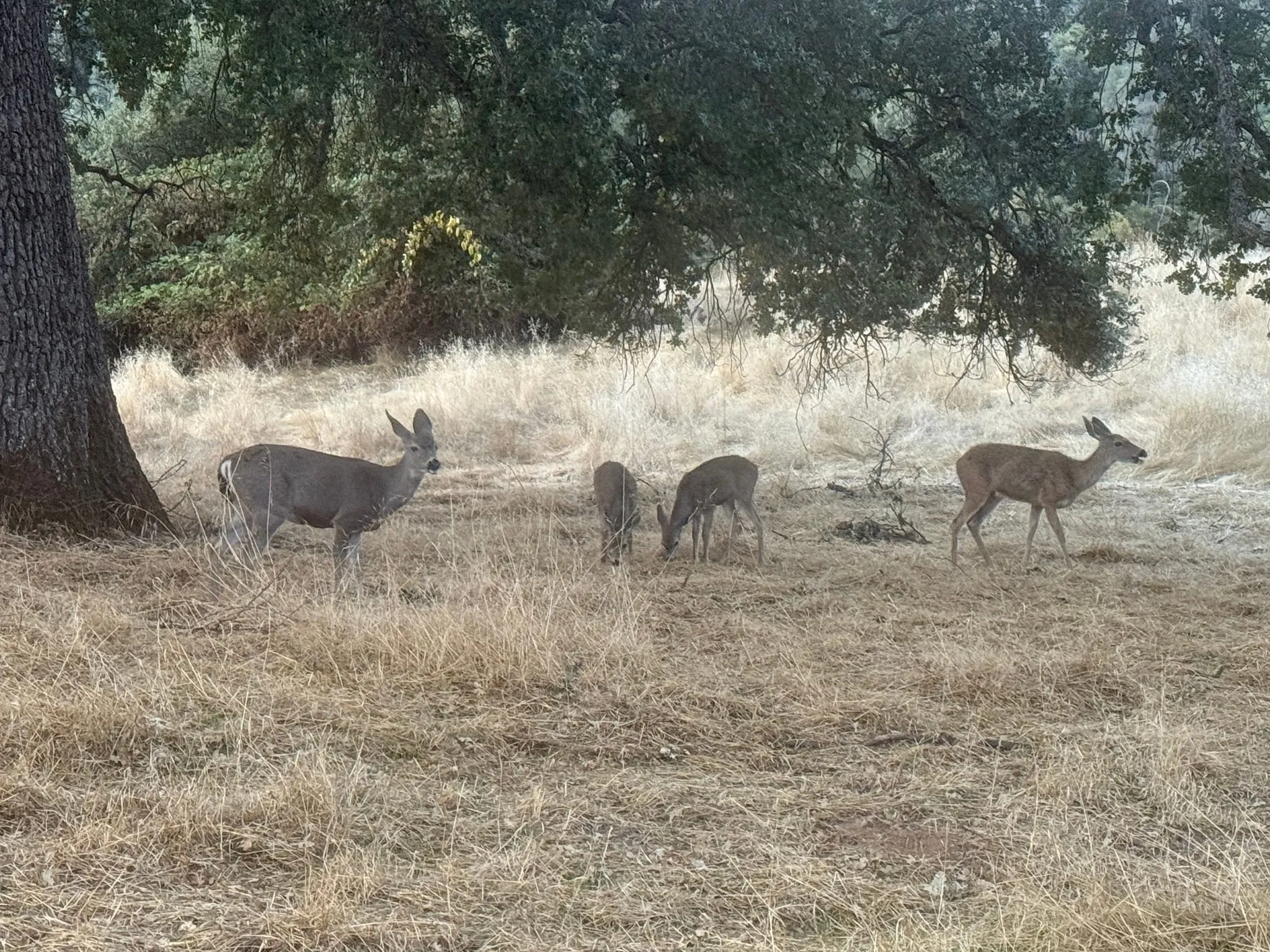
Four deer were grazing at the edge of a meadow under the oaks at San Domingo Arbory just before 7:30 am on October 11, 2025. Two were noticeably smaller than the others, probably this year’s young. They are most likely mule deer (Odocoileus hemionus); we haven’t confirmed the identification.
October comes at the end of the long, dry foothill summer, and the meadow grass was dry and golden. Sightings like this one are chance encounters. The remote cameras we have since set up above a backcountry road, part of our AI-managed remote sensing, now keep a steadier record, day and night.
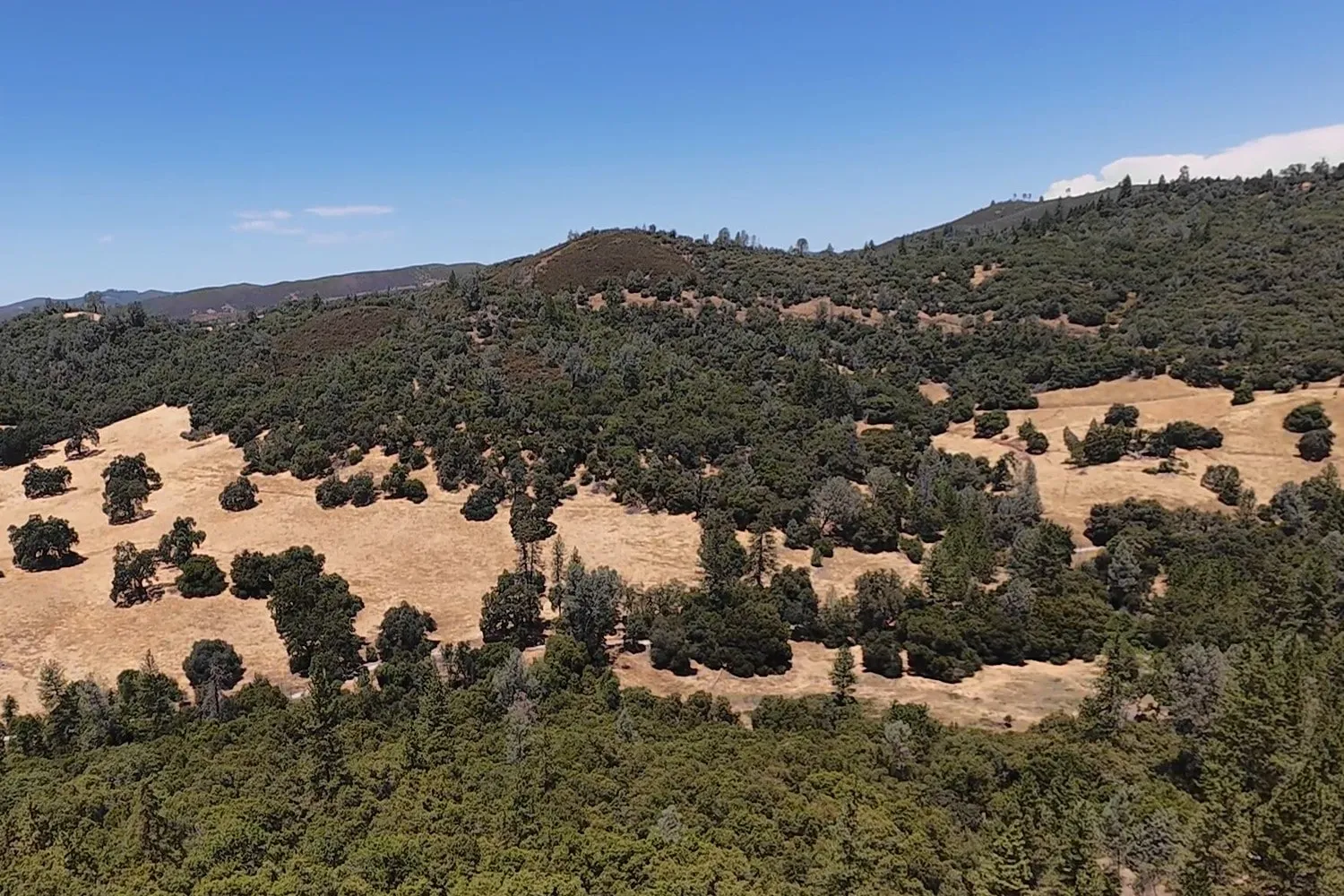
We flew a drone over San Domingo Arbory on July 26, 2025, in the middle of the dry season. The grass in the meadows on the far slope had cured to gold, while the oaks scattered through it and the mixed oak and pine forest in the foreground stayed dark green.
That contrast marks the long, dry foothill summer that follows each wet winter. Flights like this one add to the drone record of the site we’ve kept since February 2025, so we can compare the same meadows and woodland across the seasons and the years.
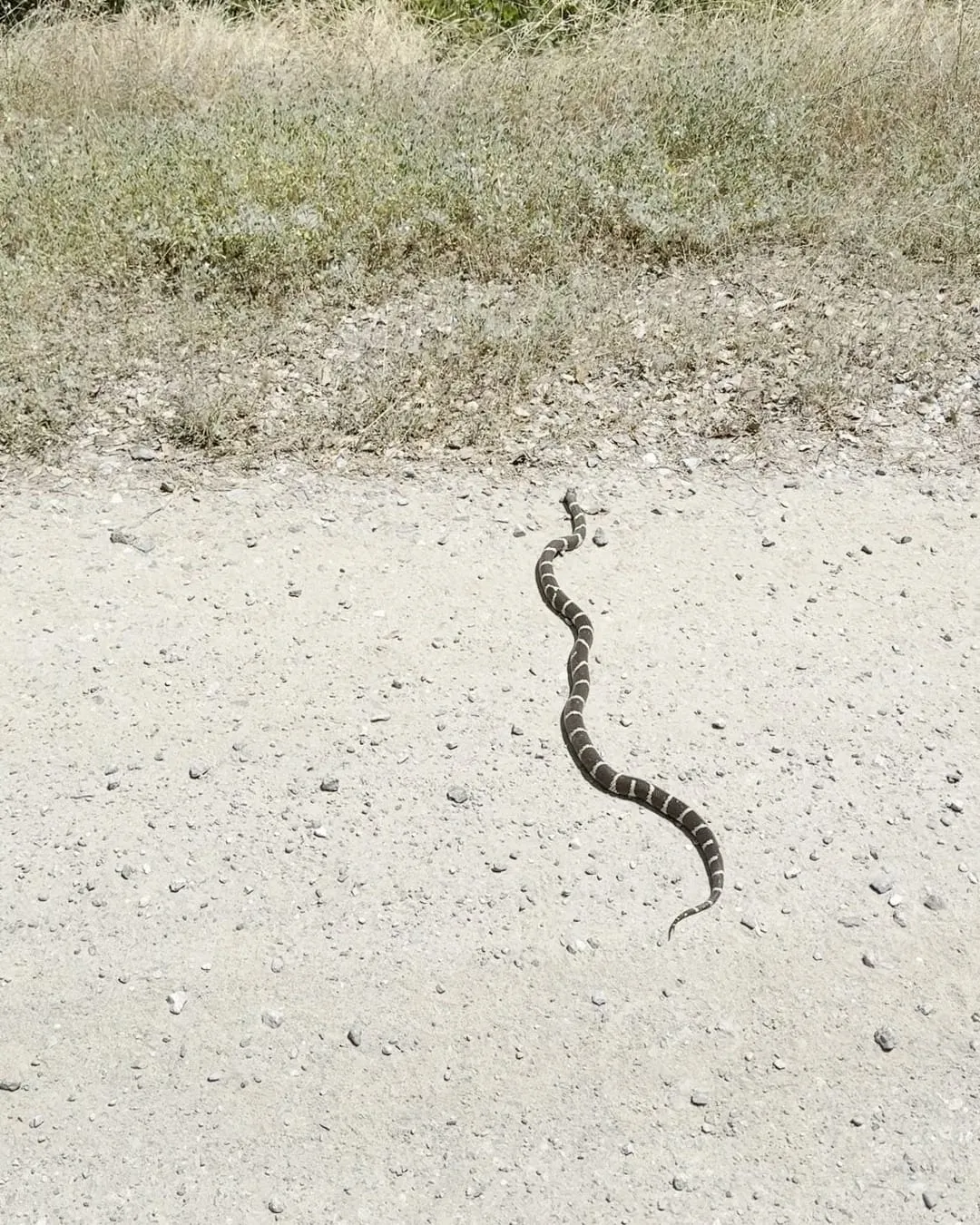
In the early afternoon of June 14, 2025, a snake banded in dark brown and cream crossed a gravel ranch road at San Domingo Arbory and slipped into the dry grass on the far bank. From its bold, even bands it is probably a California kingsnake (Lampropeltis californiae); we filmed it on a phone and haven’t confirmed the identification.
Chance sightings like this one add to the picture of what lives at San Domingo. The remote cameras we have since set up, part of our AI-managed remote sensing, now keep a steadier record.
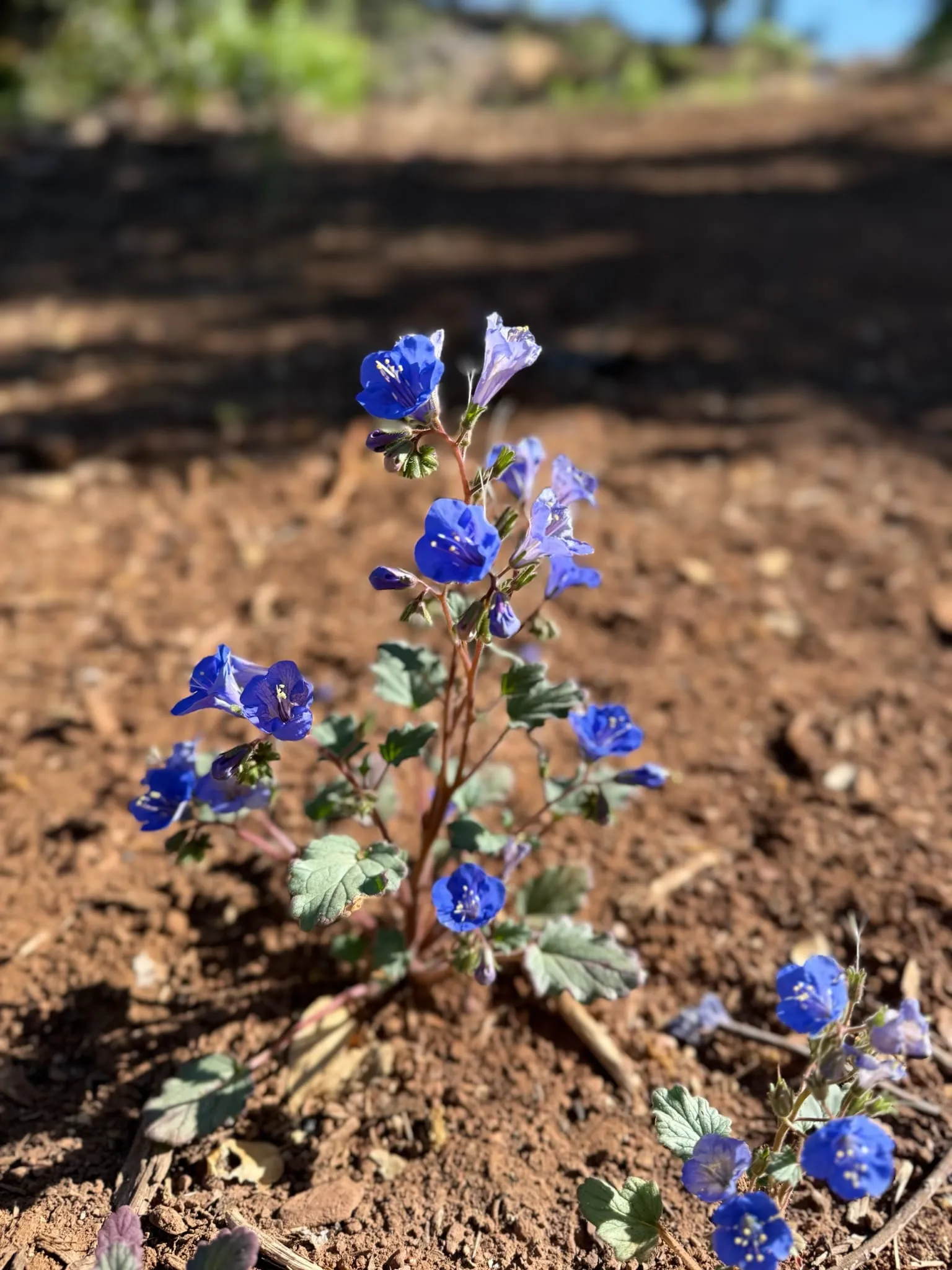
One of the native wildflowers from the seed mix we sowed at Woodland Hilltop Arbory, in bloom on bare ground beside a path in mid-June. We sowed the mix in the old mine ditches (several times from January through March 2025), in the contour swales and on soil newly exposed by the fuel-reduction work. Whenever we do trail work, we spread some grass and flower seed afterward to help prevent erosion on the trails.
From the photo, this one looks like California bluebell (Phacelia campanularia, also called desert bluebell): deep blue, bell-shaped flowers over round, toothed leaves.
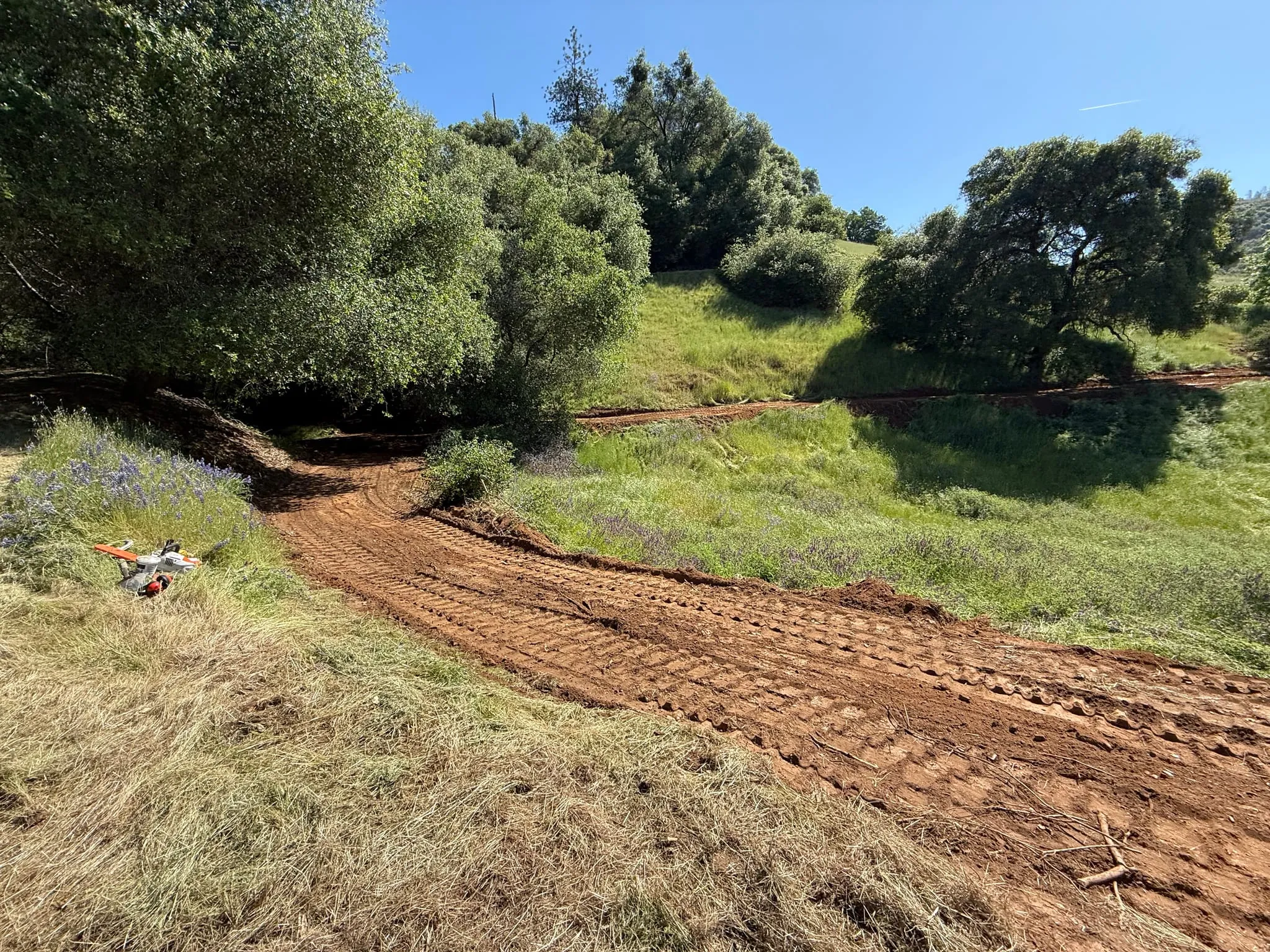
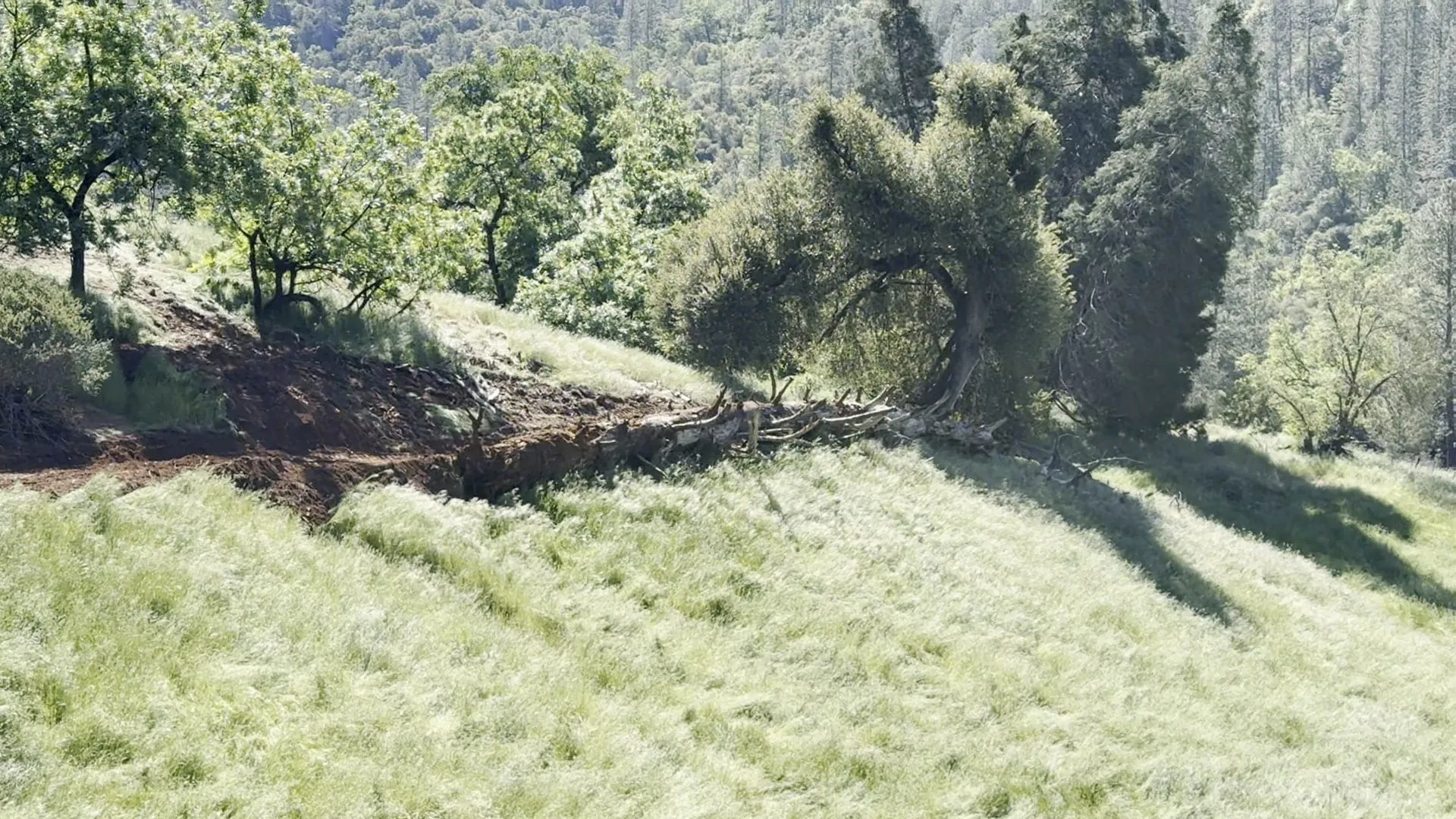
On the morning of May 2, 2025, a newly cut trail of bare red soil curved along the edge of a meadow at San Domingo Arbory. The soil still carried the cleat marks of a tracked machine, cut grass lay flat beside it, and a chainsaw rested at the edge of the cut. The meadow grass was still green and tall, with lupine (Lupinus sp.) in bloom on the bank.
The trail is part of the work Two Crows Ecological Design did at San Domingo from about April 30 to May 2: restoring the old flume trail and a fuel break along a ridgetop, the first framework for the restoration work here. The trails give access for fuel reduction and meadow management, and help manage water on the hillside. Whenever we do trail work, here and at Woodland Hilltop, we spread some grass and flower seed afterward to help prevent erosion on the trails.
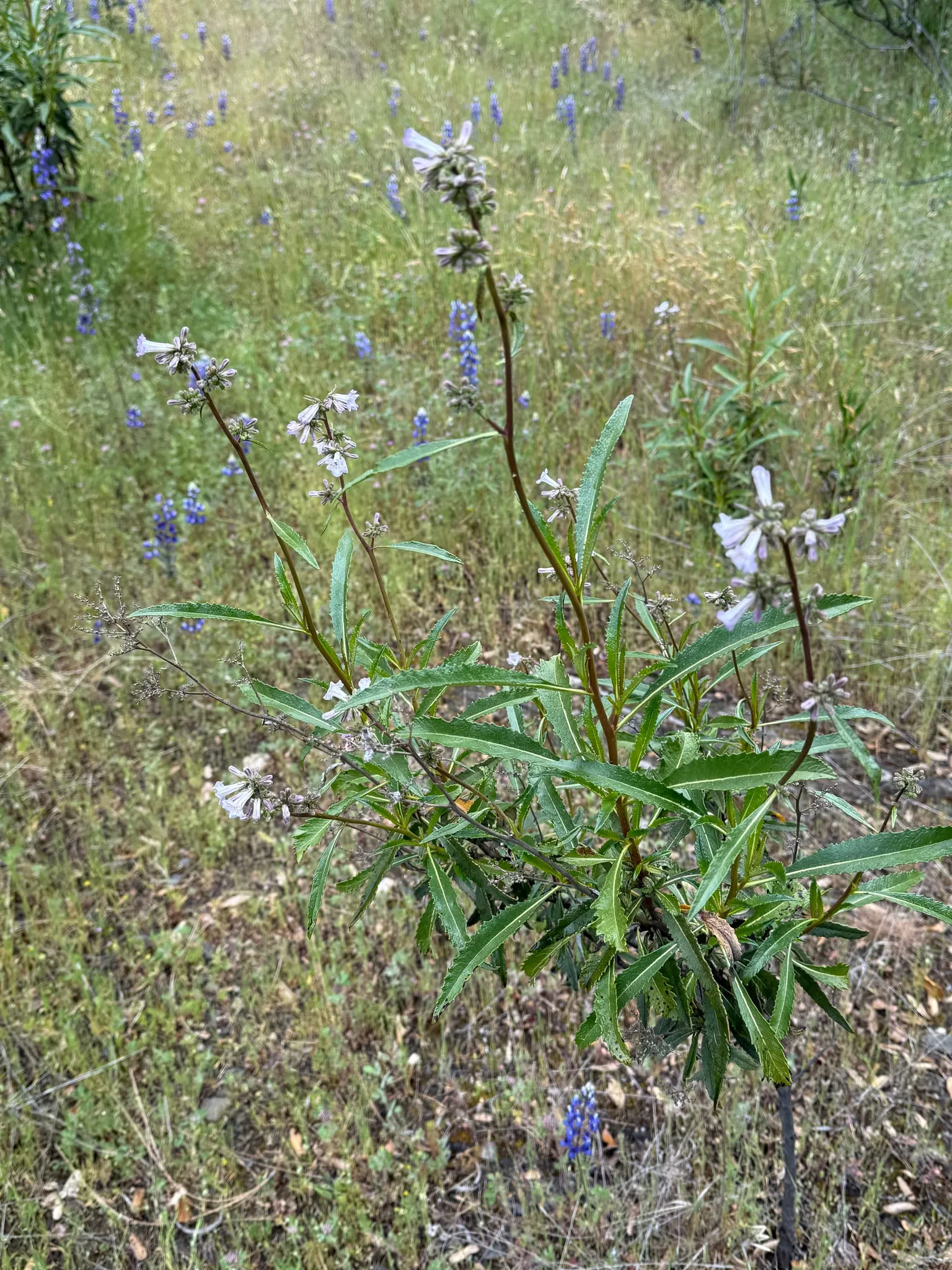
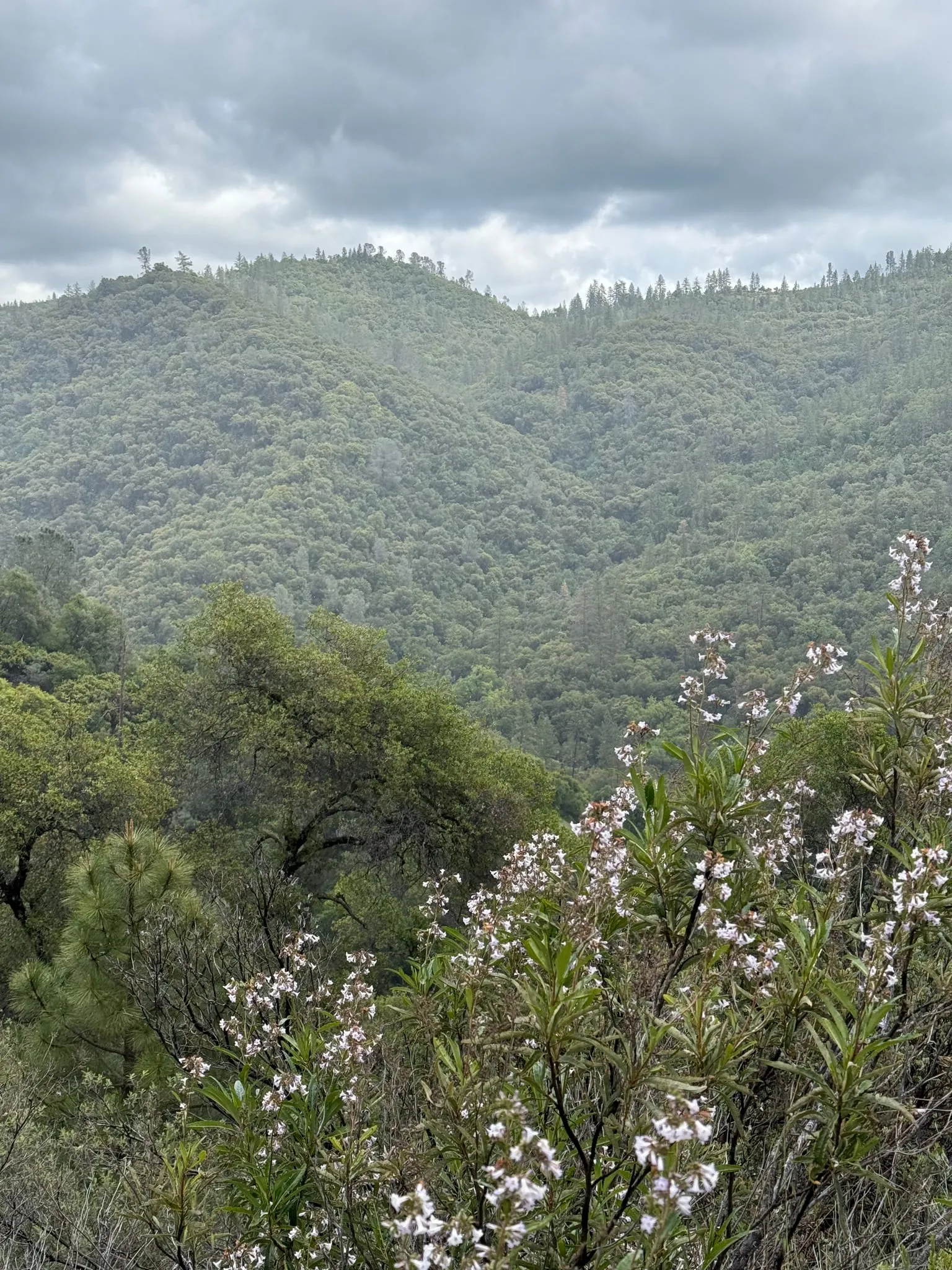
On a cloudy afternoon on April 26, shrubs with long, toothed leaves and clusters of pale lavender flowers were in bloom on the open slopes at San Domingo Arbory, among scattered blue lupine (Lupinus sp.). From the leaves and flowers, they are probably yerba santa (Eriodictyon californicum), a native shrub of the foothills.
Below them, the slope dropped away to a canyon of dense oak and pine forest. The shrubs are part of the mix of chaparral, open ground and forest across the site.
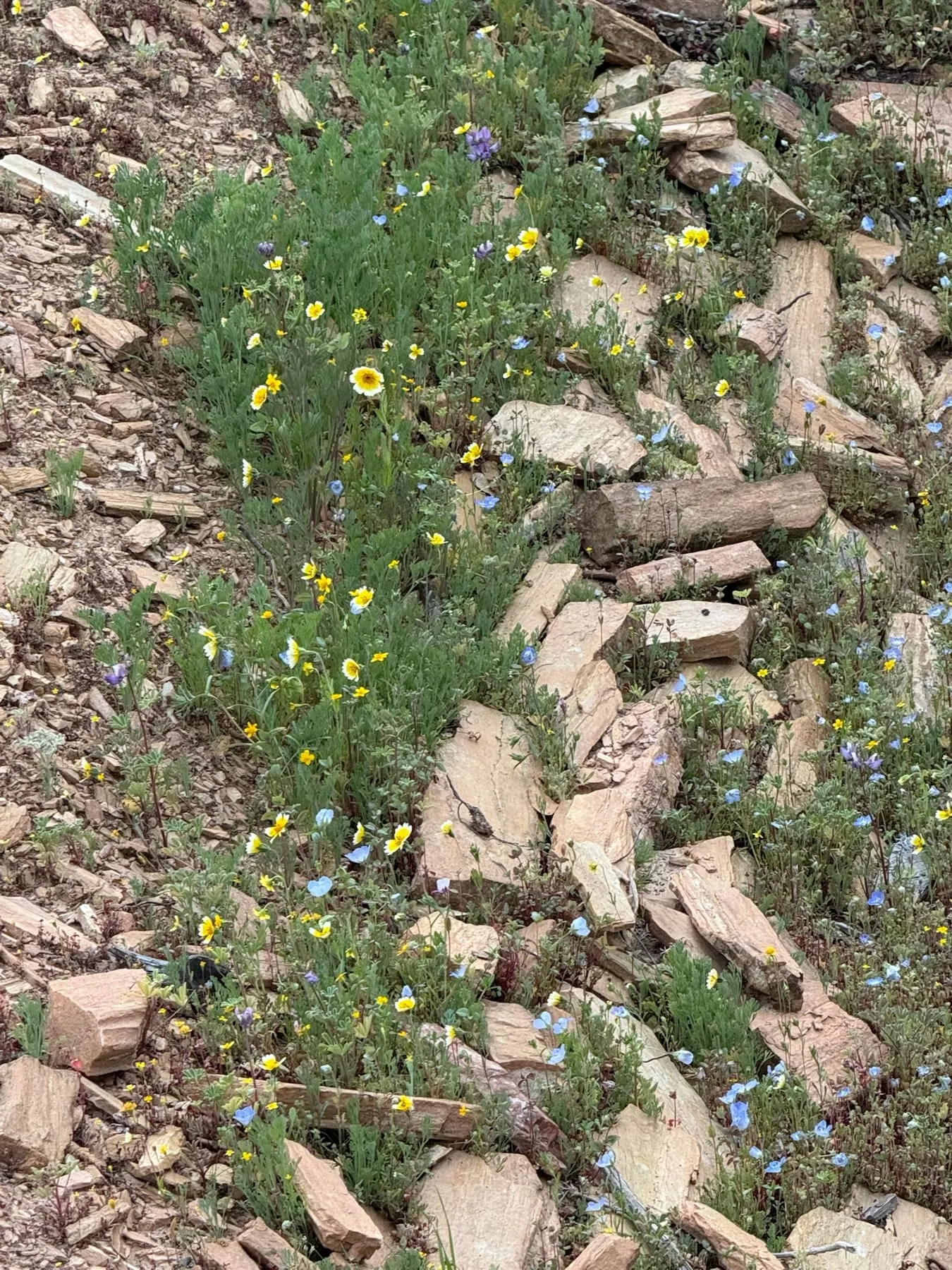
Tidy tips (Layia platyglossa) and baby blue eyes (Nemophila menziesii) are blooming in one of the rock-lined contour swales at Woodland Hilltop, which we began digging in October 2024 as a test, to slow runoff and hold water on the slope. Both are in the native wildflower mix we sowed in the swales. Lupine (Lupinus sp.) is out on the hilltop too.
It’s the first spring since the swales went in. We’ll keep photographing them through the dry season to see how long they stay green.
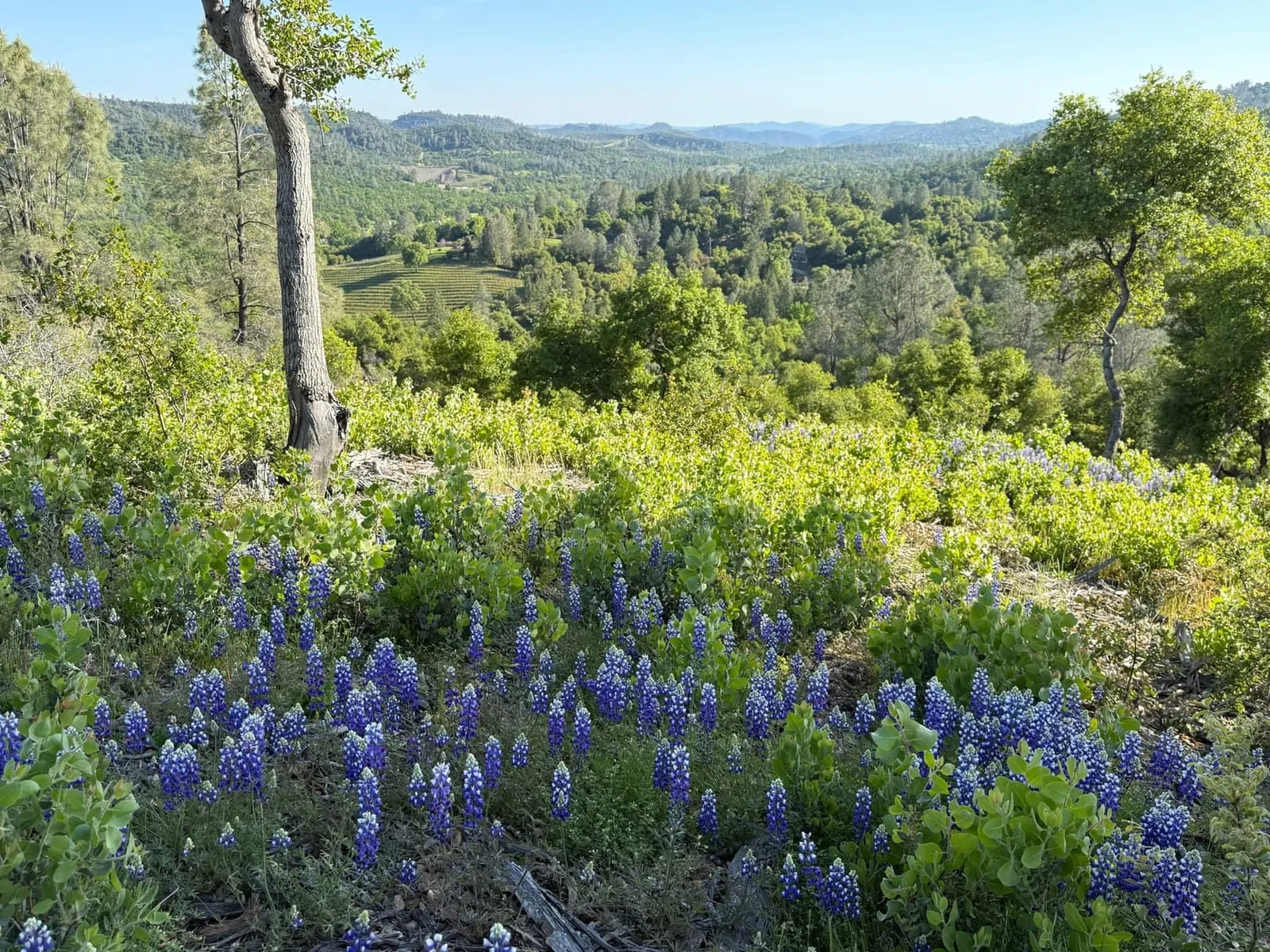
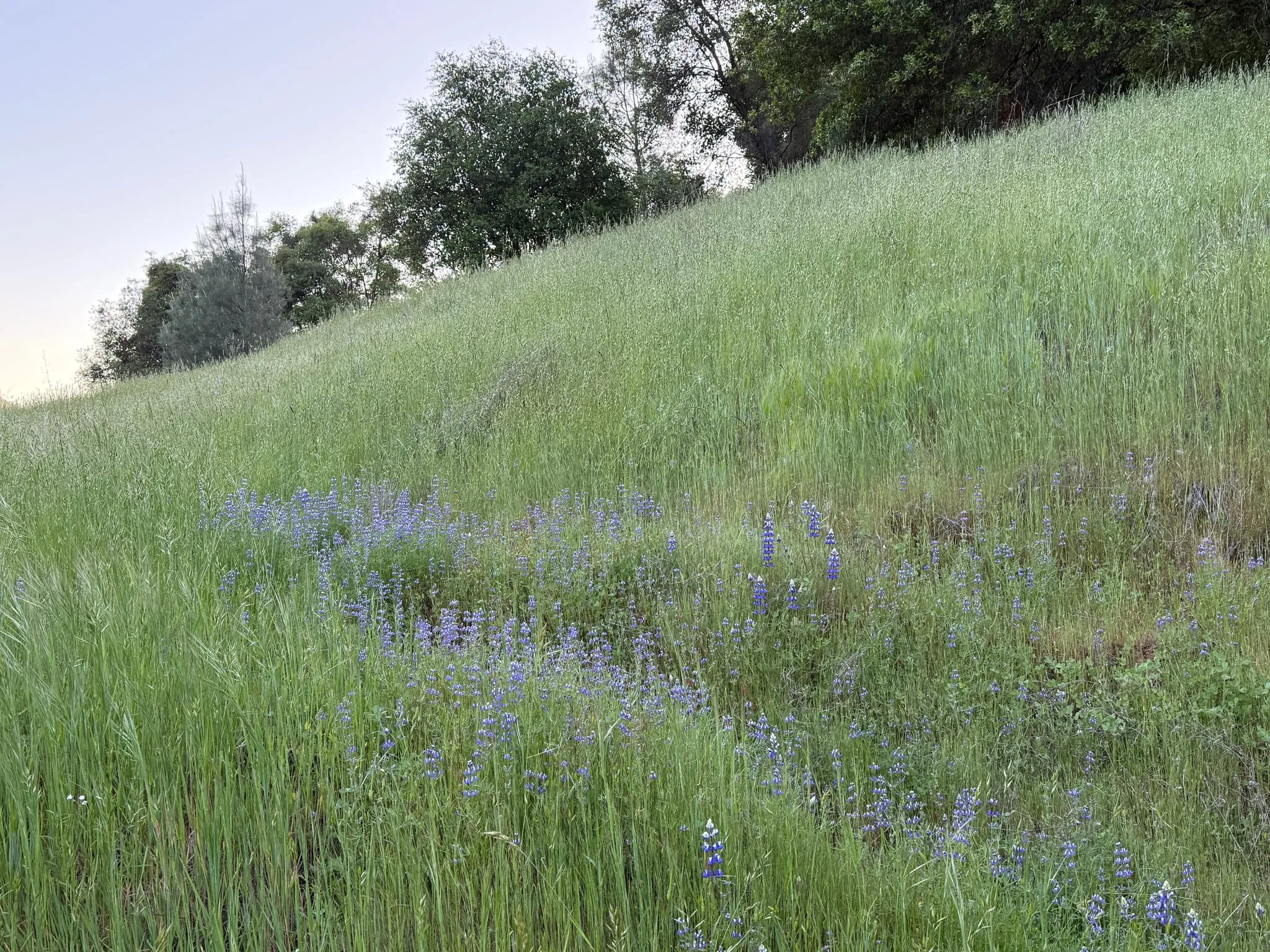
By the evening of April 18, the grass in one of the meadows at San Domingo Arbory had grown tall and bright green, and patches of lupine (Lupinus sp.) were in bloom on a grassy slope nearby. At about 7:15 pm, the last sun lit the conifers along the ridge beyond the pines and oaks at the meadow’s edge.
The large meadows are one of San Domingo’s main habitats, alongside the mixed forest and the creek valley. In mid-April they were tall and green; by late summer, after months without rain, the meadows turn gold.
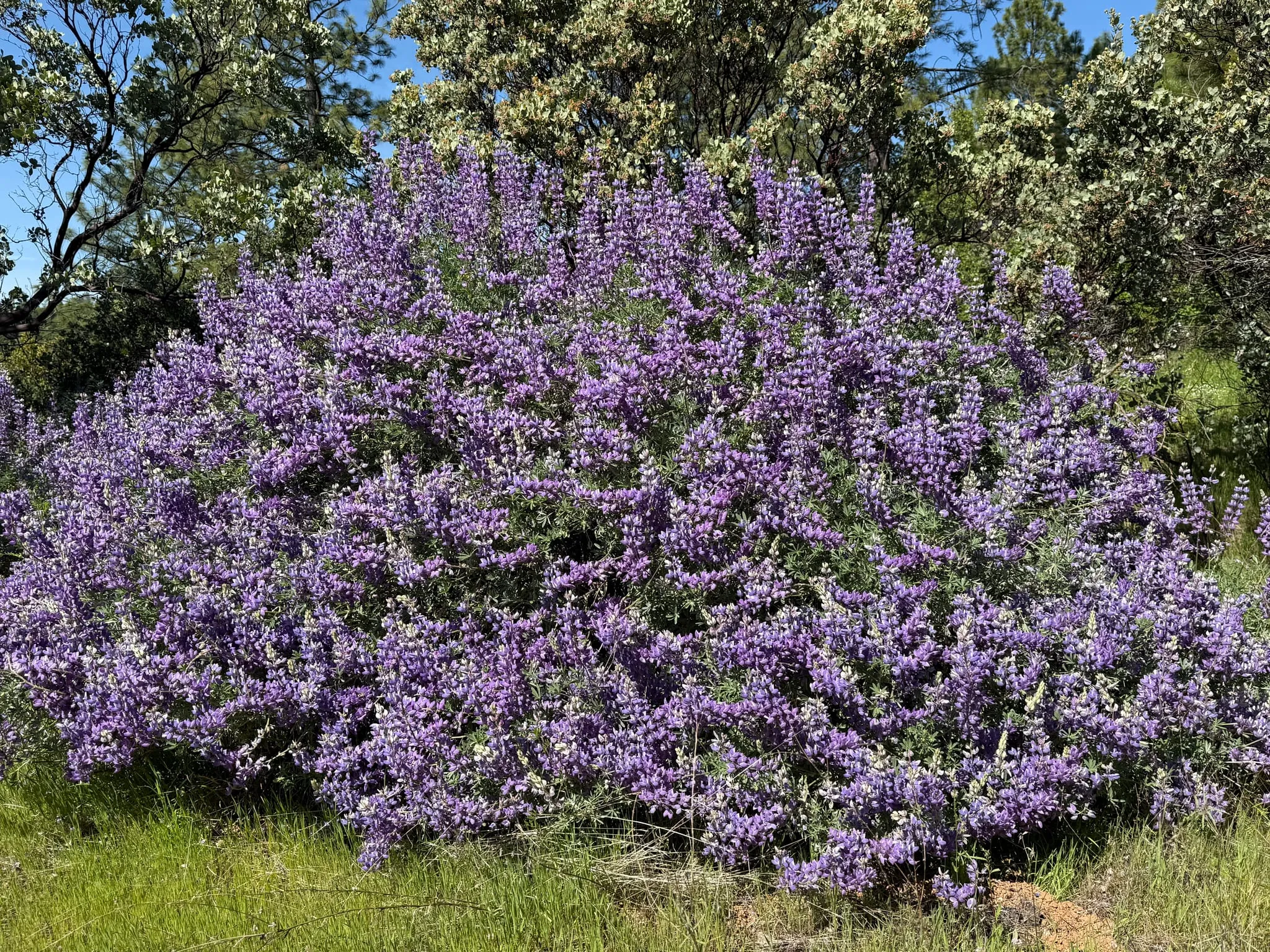
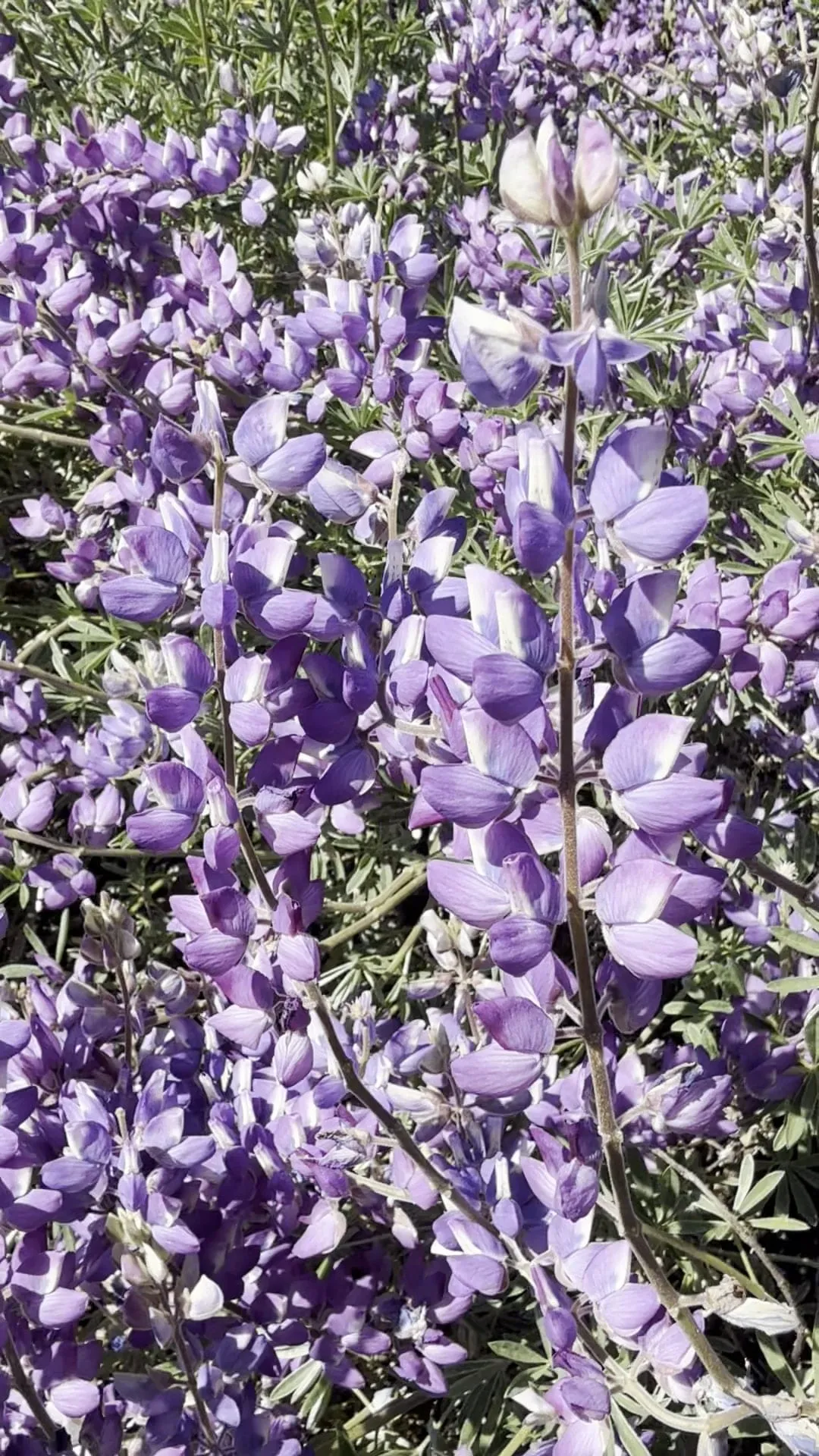
A bush lupine at San Domingo Arbory was in full bloom on the afternoon of April 12: a broad, rounded shrub covered in spikes of purple and lavender flowers, standing in green grass at the edge of the woodland. From its shrubby habit and silvery leaves, it is probably silver bush lupine (Lupinus albifrons).
Lupine was out across the open ground at San Domingo in April 2025, from single shrubs like this one to patches of smaller spikes in the meadow grass and along the ranch tracks.
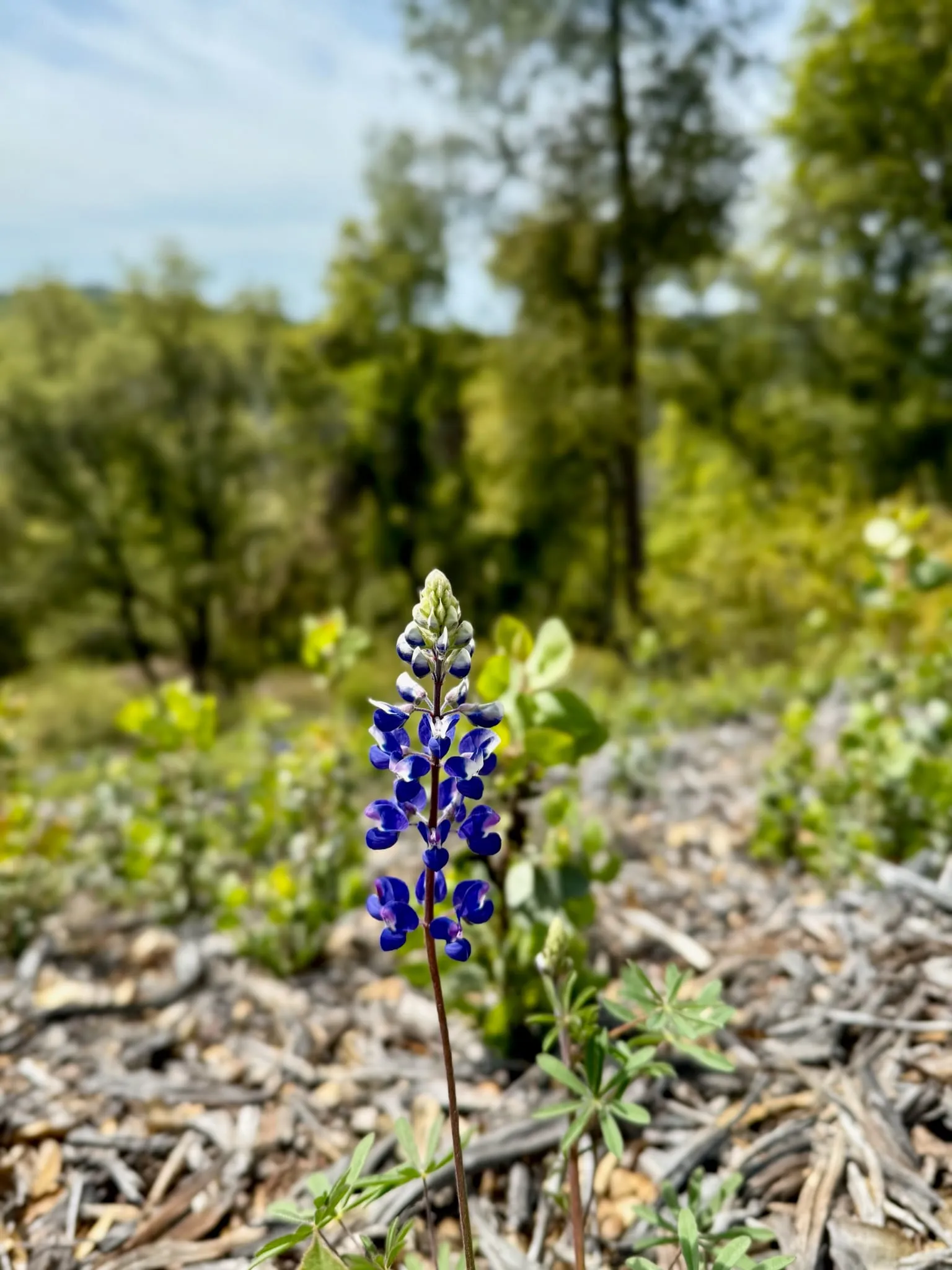
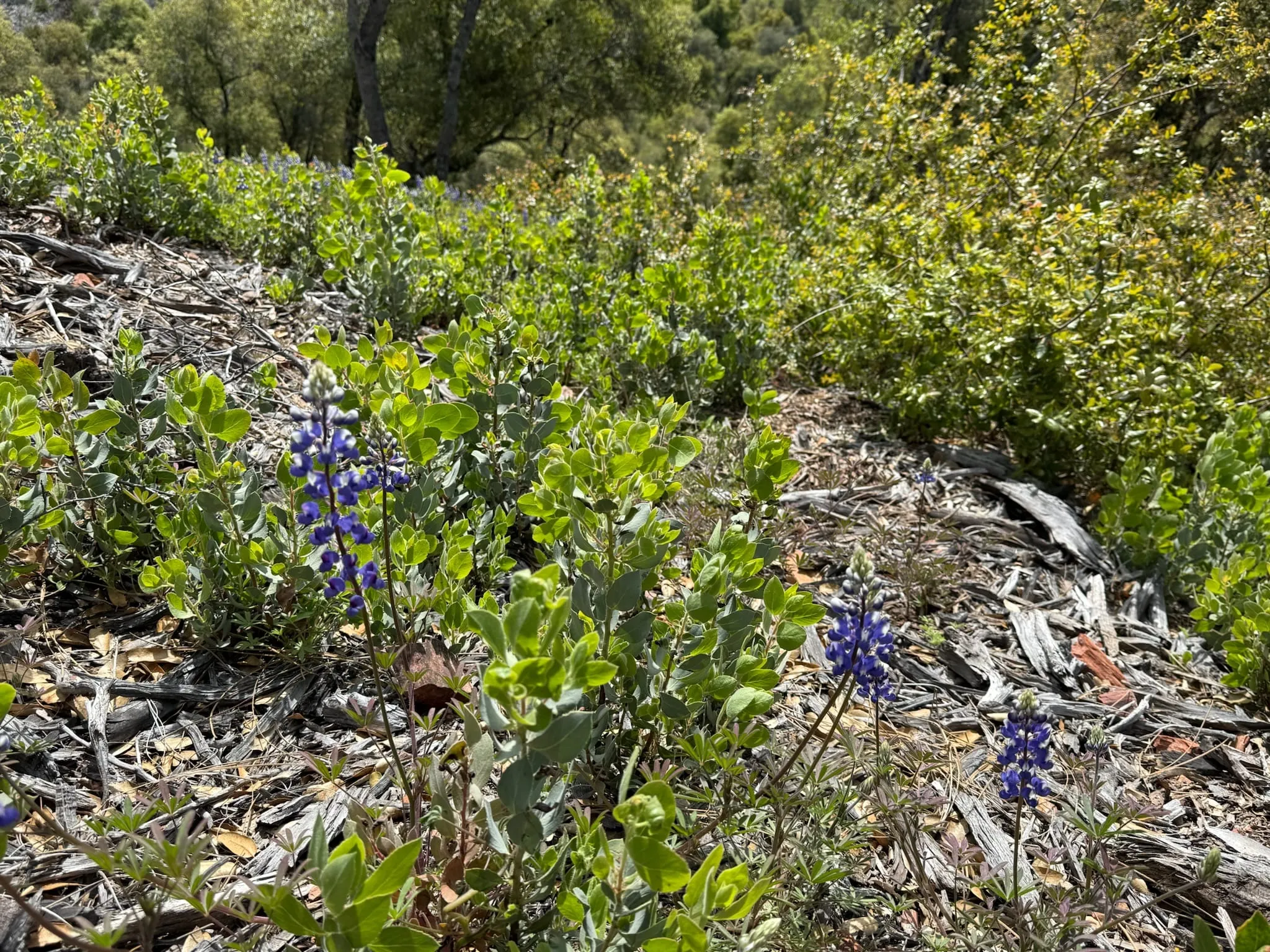
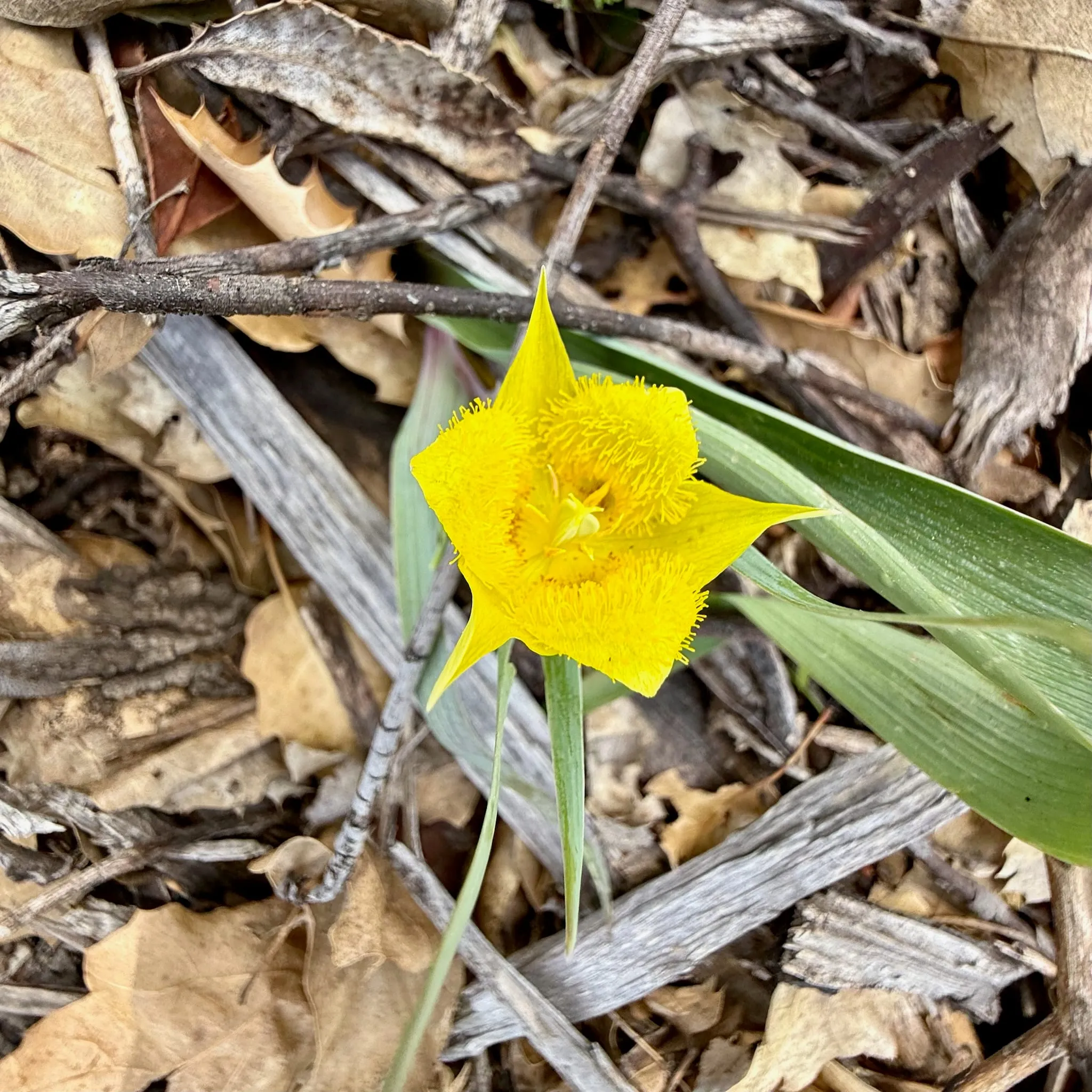
Lupine (Lupinus sp.) was flowering through the wood-chip mulch at Woodland Hilltop Arbory on April 6, 2025, among low, leafy shrubs, on masticated ground. In the leaf litter nearby was a single yellow flower with hairy, cupped petals, probably a yellow star-tulip (Calochortus sp.).
How the thinned and mulched ground grows back is one of the things the Woodland Hilltop restoration follows in repeat photos. That spring, the chips were filling in with green.
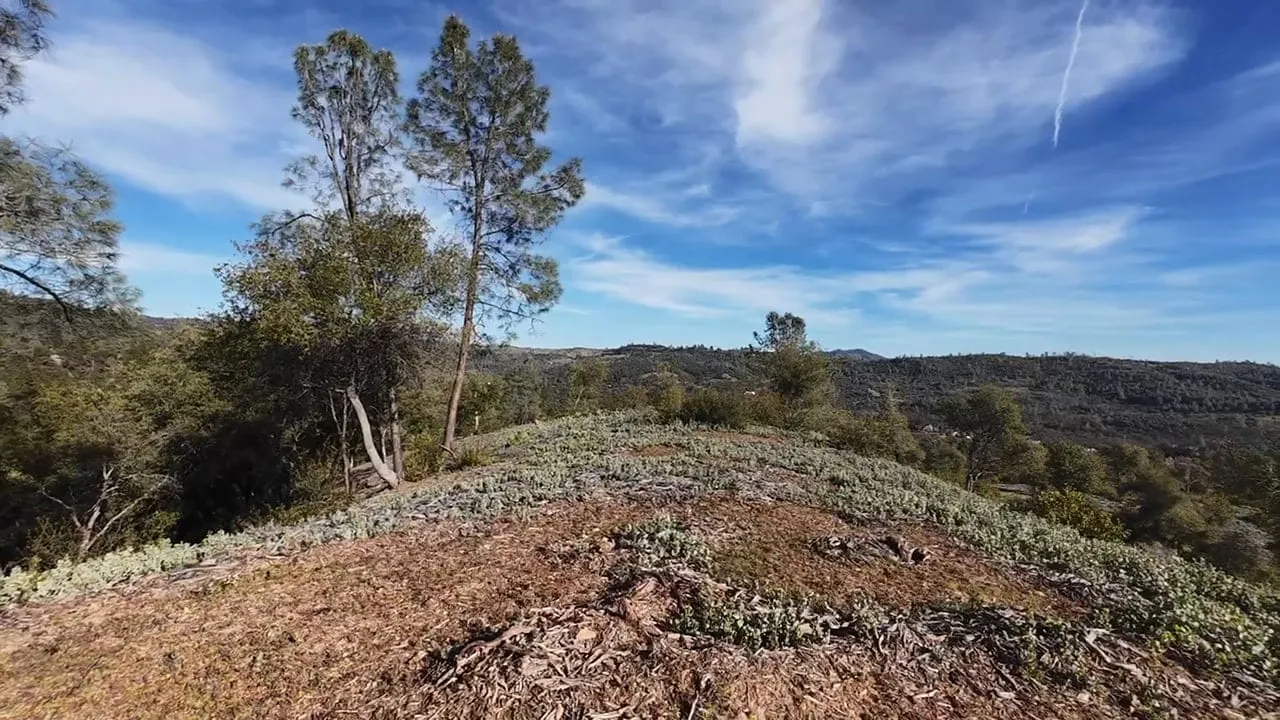
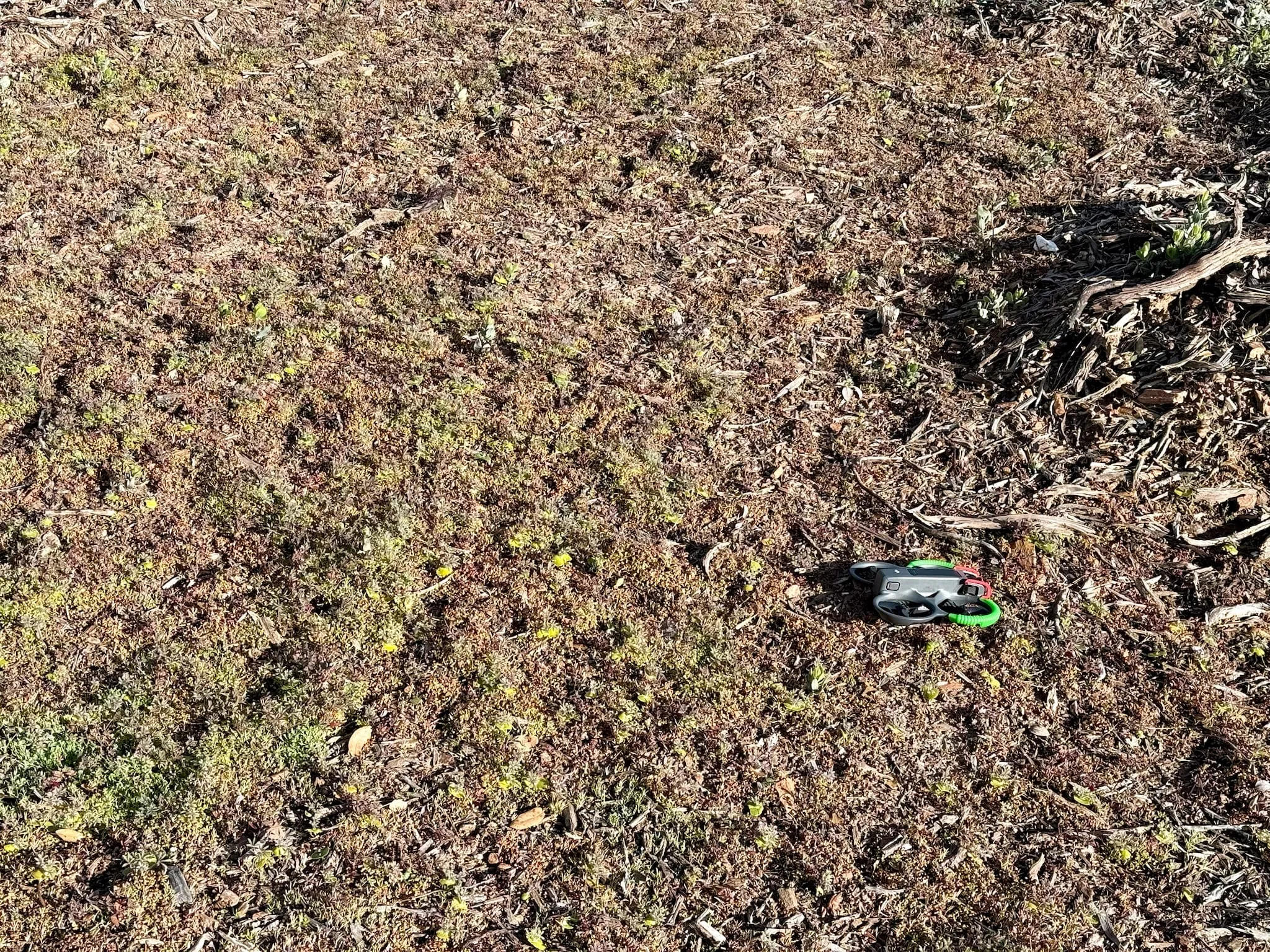
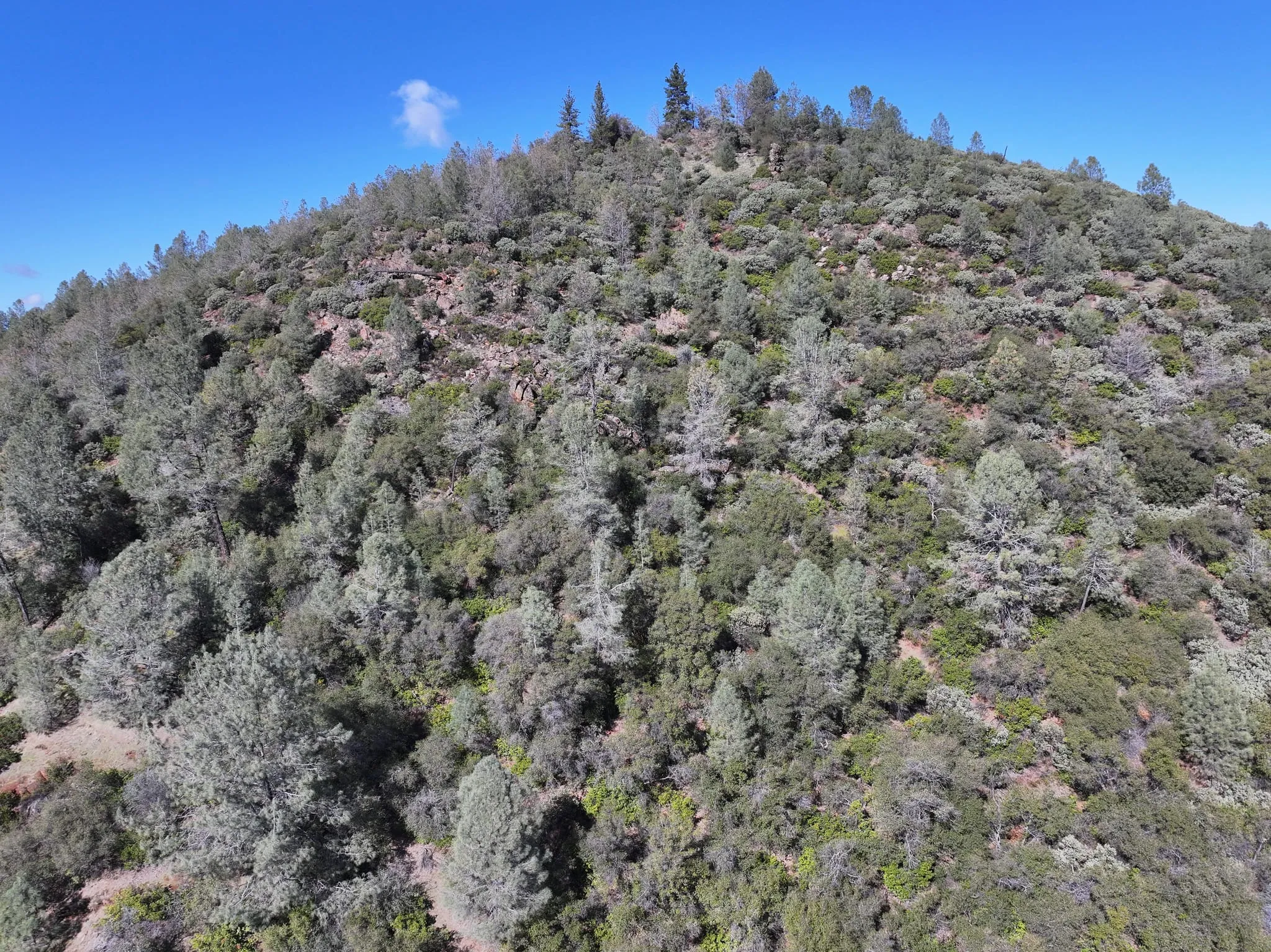
On the afternoon of March 23, 2025, we flew a small drone low over the top of Woodland Hilltop Arbory, skimming the masticated ground. From the air, much of the hilltop had a low gray-green cover under the pines and oaks, probably manzanita sprouting back since the 2022 mastication. On the ground where the drone came down, tiny seedlings were coming up through the chips.
Video and stills from flights like this one are a running record of the hilltop from above, kept since September 2024. Alongside repeat photos on the ground, they show how the masticated and thinned ground grows back, one of the things the Woodland Hilltop restoration tracks.
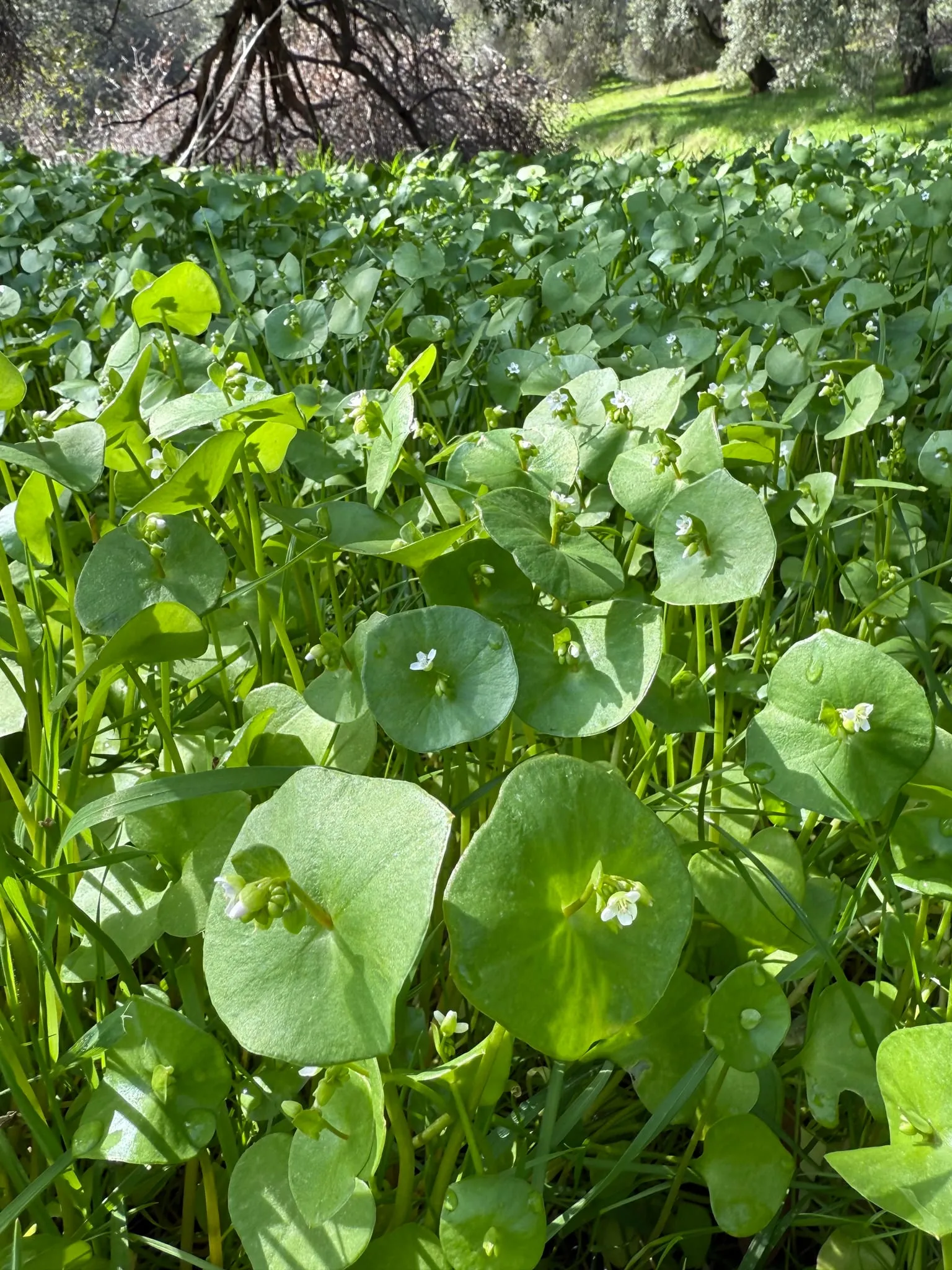
By mid-March, miner’s lettuce (Claytonia perfoliata) carpeted the ground under the oaks at San Domingo Arbory. Each stem grows up through a round leaf and carries a small cluster of white flowers from its center. On the morning of March 16 the patch ran unbroken from the shade under the trees toward the sunlit grass.
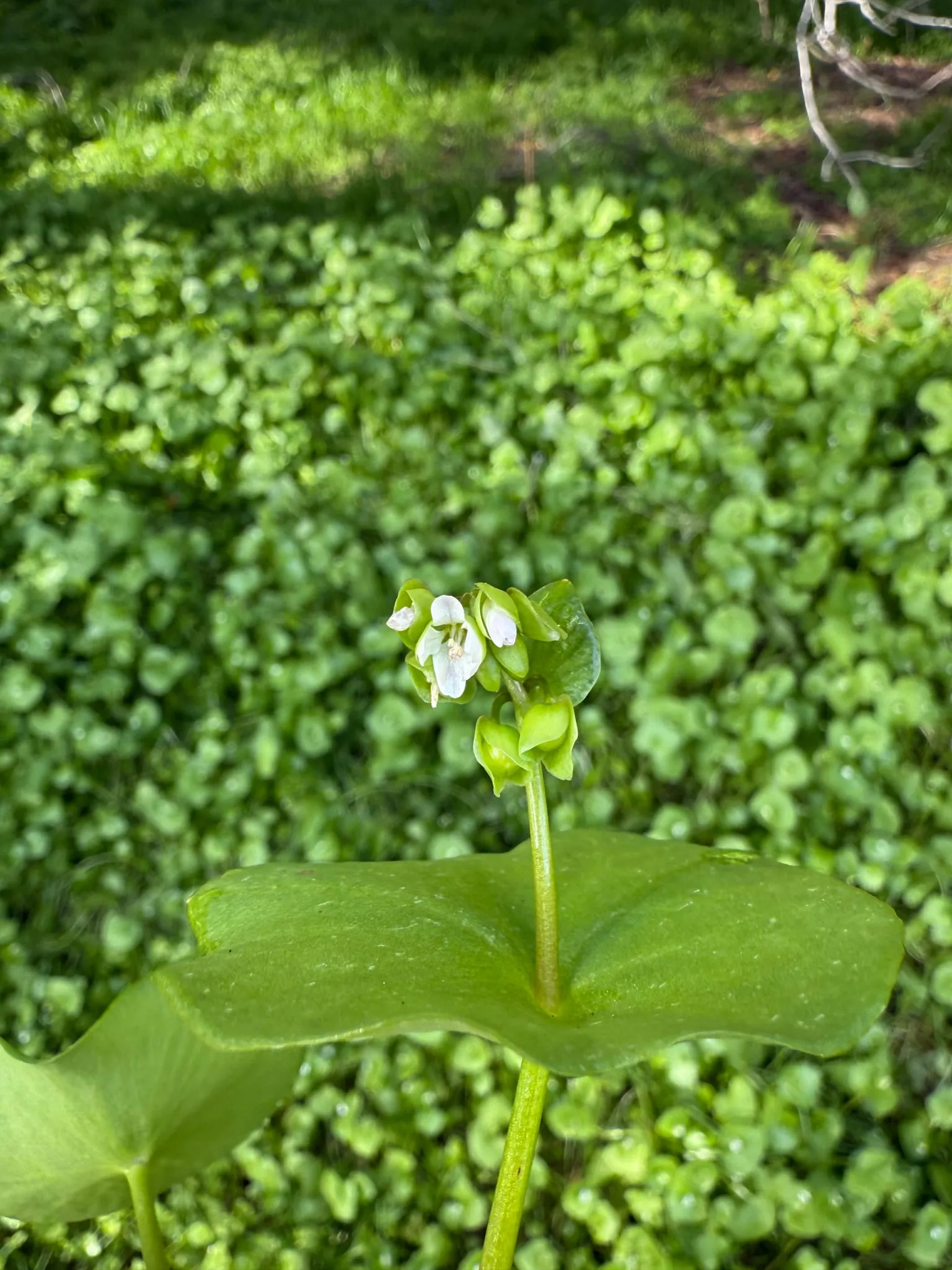
Up close, the open flowers were small and white, with more green buds below them on the same short stalk.
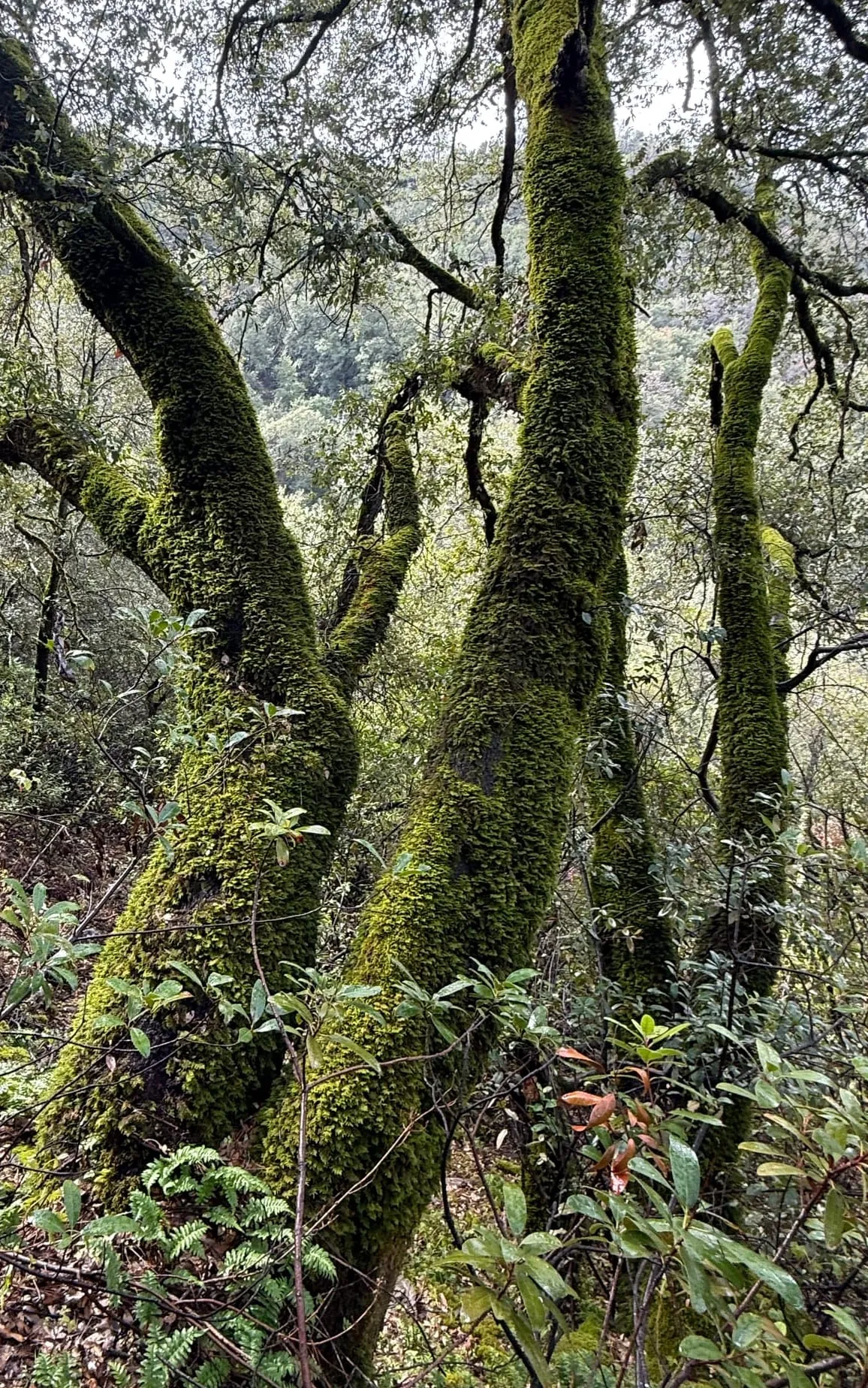
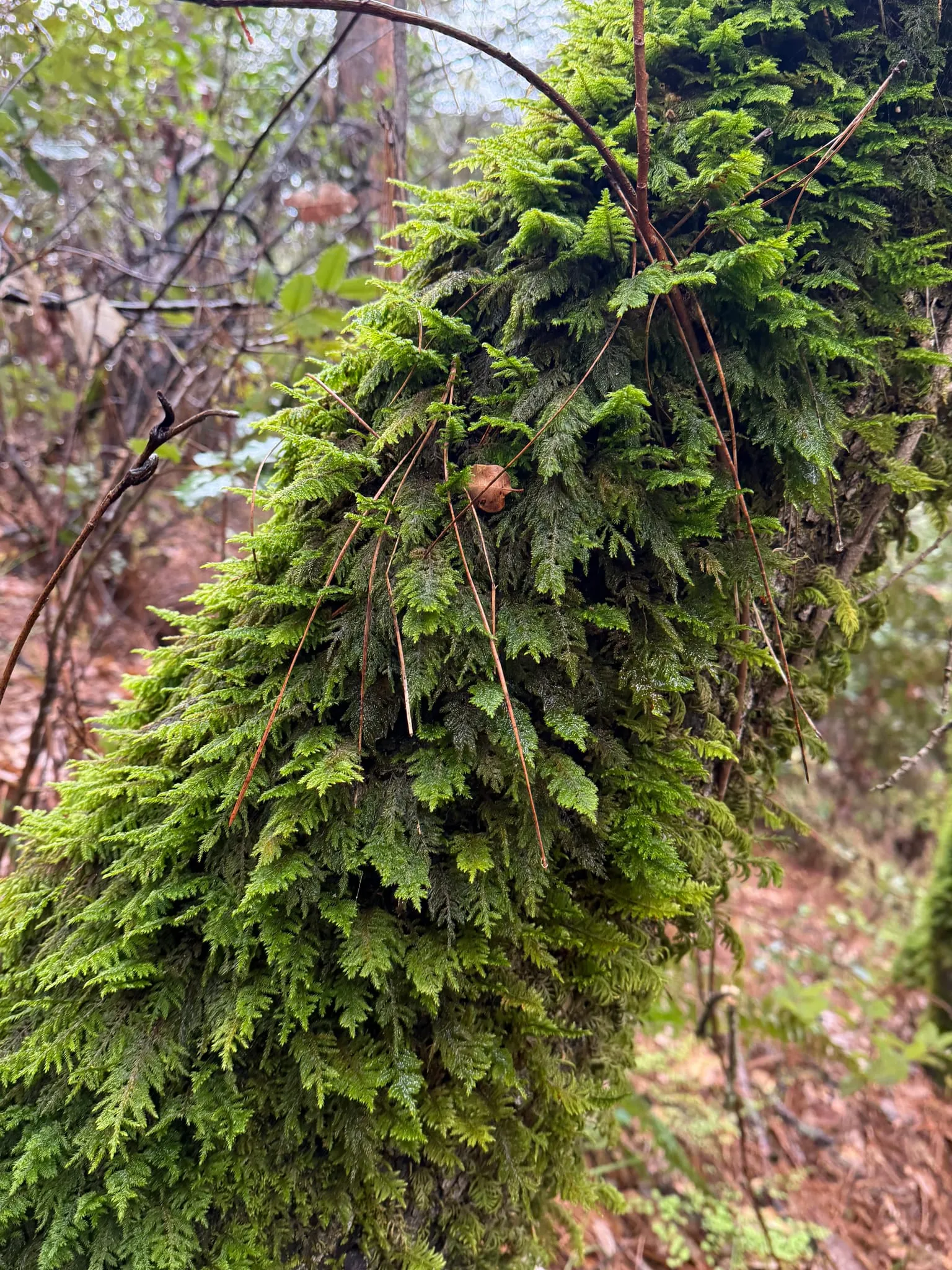
On a damp, misty morning on March 2, the oaks on a shaded slope at San Domingo Arbory were coated in thick, bright green moss, from the base of the trunks well up into the branches. Ferns and young shrubs filled the slope below, and the canyon beyond was soft with mist.
The foothills here have wet winters and long, dry summers. In early March, after the winter rains, shaded slopes like this one were green with moss and ferns.
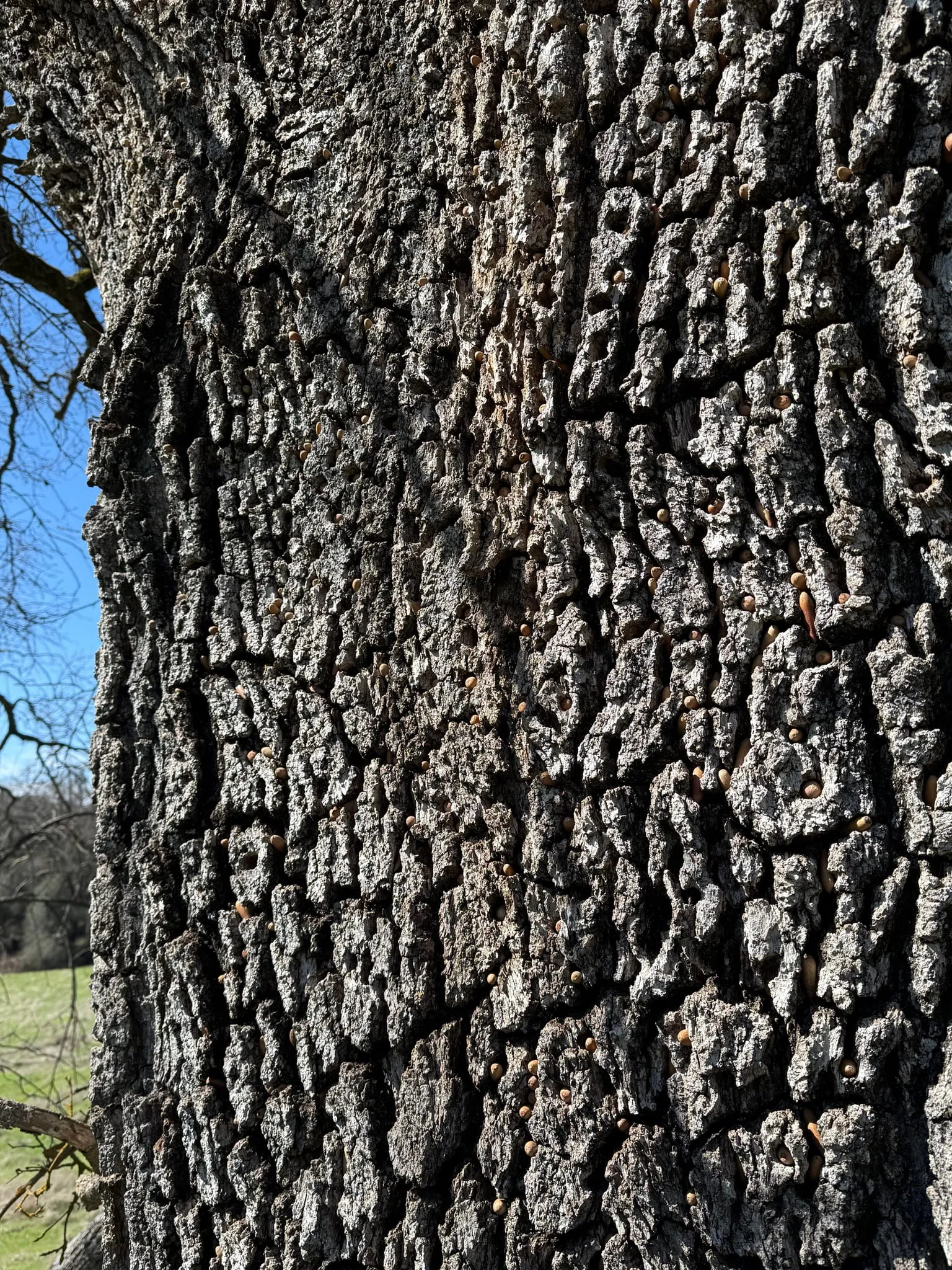
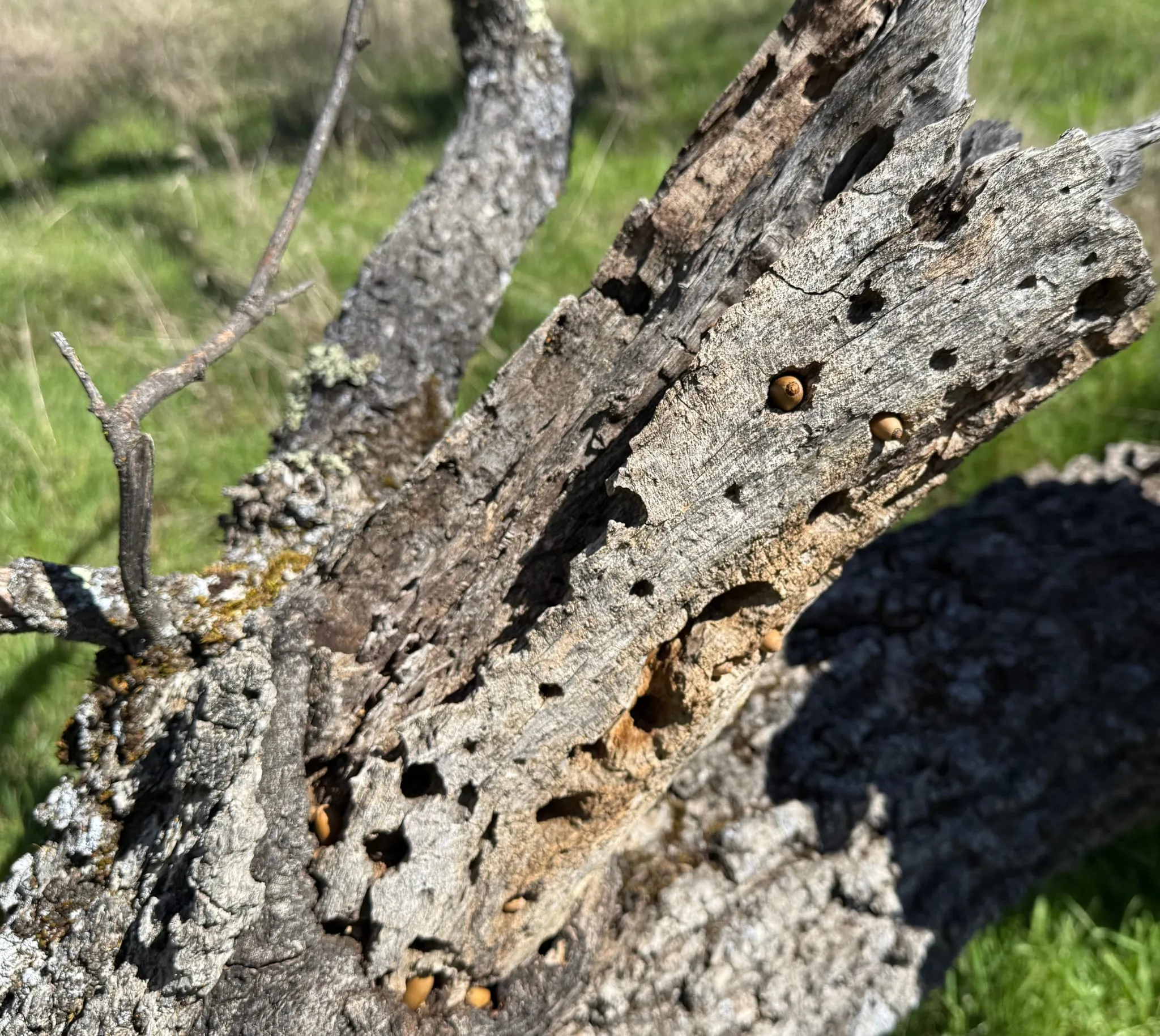
On March 1 we found a large oak at the edge of a meadow at San Domingo Arbory with its bark studded with acorns, each pressed into its own small hole. A granary like this is the work of acorn woodpeckers (Melanerpes formicivorus), which drill the holes and fill them with acorns as a food store. A broken dead limb nearby was riddled with the same drilled holes, a few still holding acorns.
Old oaks and dead wood like these are part of the mixed forest and meadow edges we look after at San Domingo.
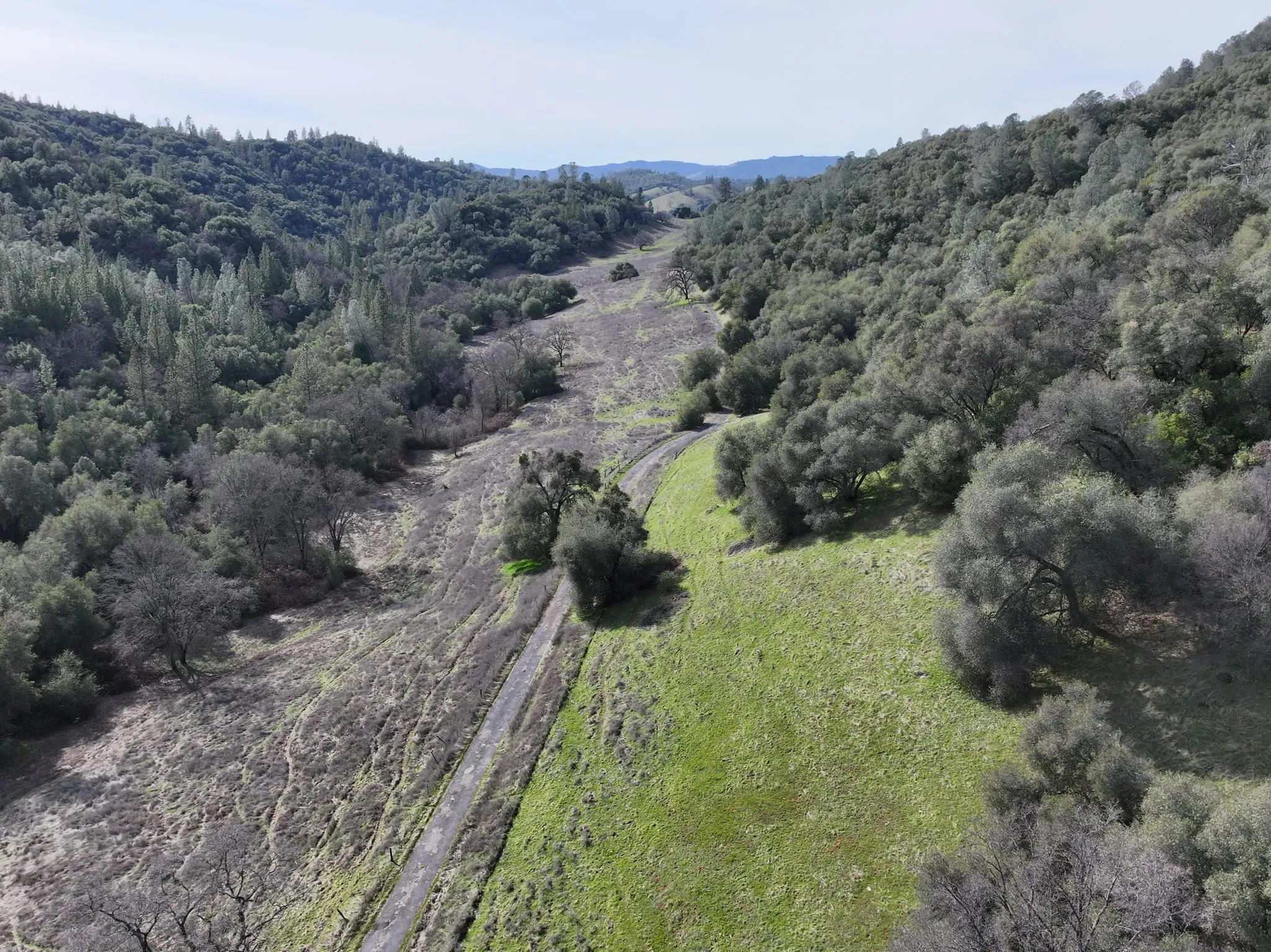
Low sun lit up the canyon at San Domingo Arbory on an evening drone flight on February 28, 2025. Looking down the valley, the meadow along the floor was green and the conifers on the slopes caught the last light, while the rounded crowns below them, probably oaks, sat in shadow.
Late February is still the wet season here. Set beside summer flights, when the meadows have gone gold and the creek has slowed or stopped, views like this one show how much the valley changes through the year.
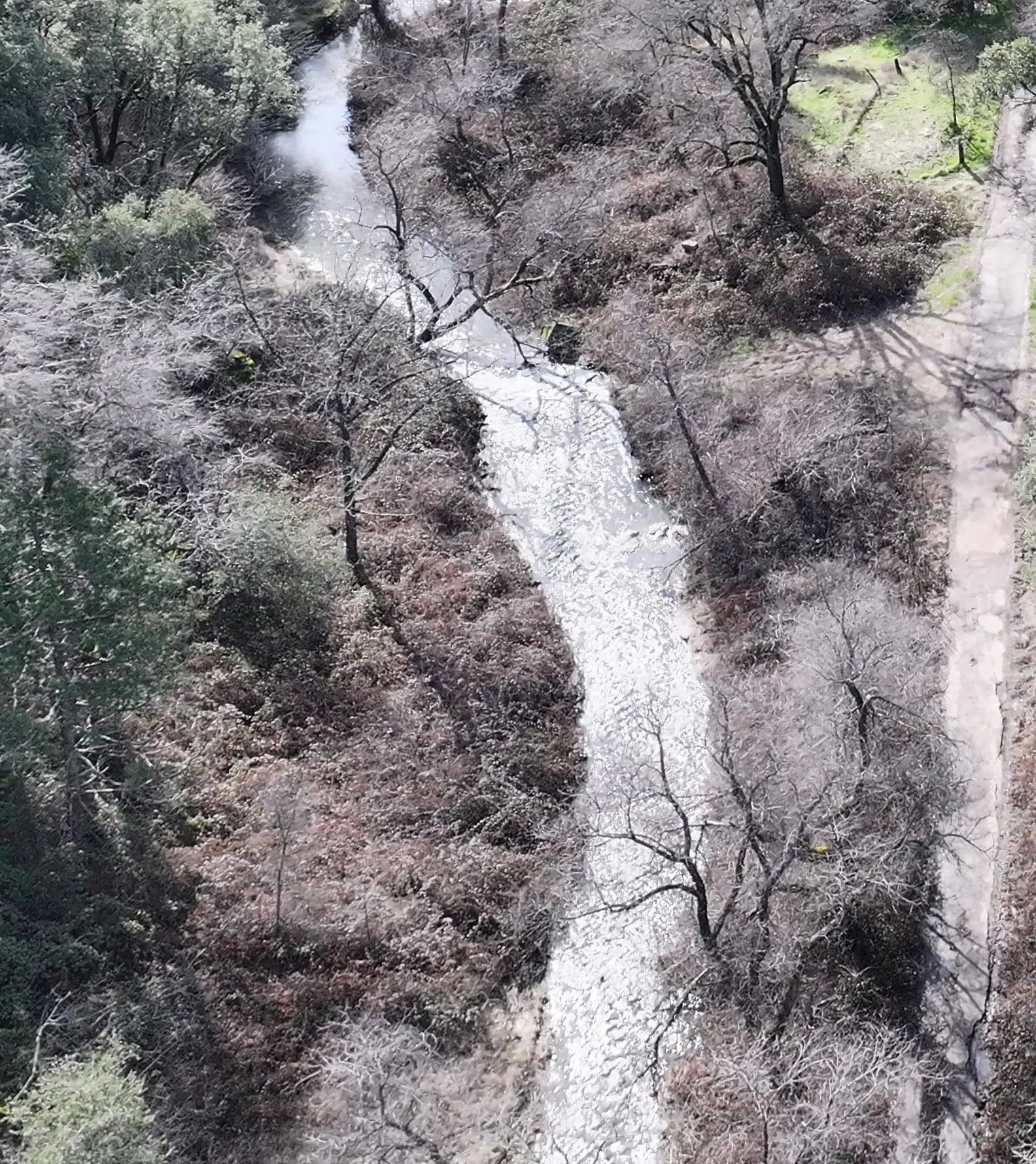
On the afternoon of February 15, 2025, a drone flight at San Domingo Arbory found San Domingo Creek running fast and white over its rocks, between banks of bare winter trees and brush. In the valley meadow nearby, new grass was coming in bright green on one side of the ranch track, beside pale, flattened stems from last season on the other.
The creek runs dry for about three months of the year, so winter flights like this one record the wet half of that cycle. Set beside dry-season views of the same valley, they show how the creek and its meadows change through the year.
San Domingo Creek was flowing on February 8, 2025, in the wet season. Clear water ran between banks of bare winter trees and brush, and further along it spilled over dark, water-polished boulders under the oaks, with moss thick on the rocks at the edge.
The creek runs dry for about three months of the year, so dated winter photos like these record it in its flowing season. Set beside dry-season views of the same stretch, they show how the creek and its banks change through the year.
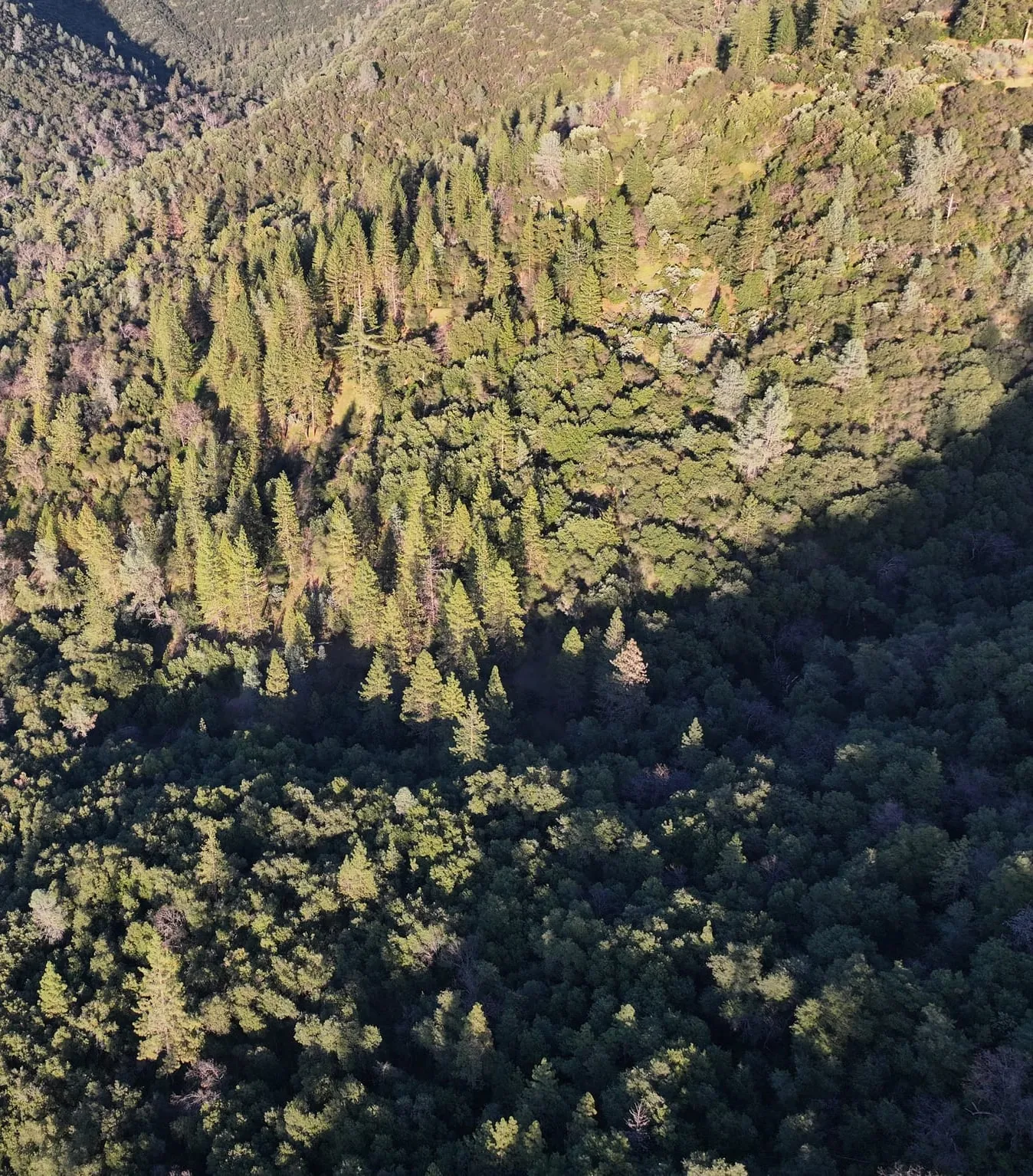
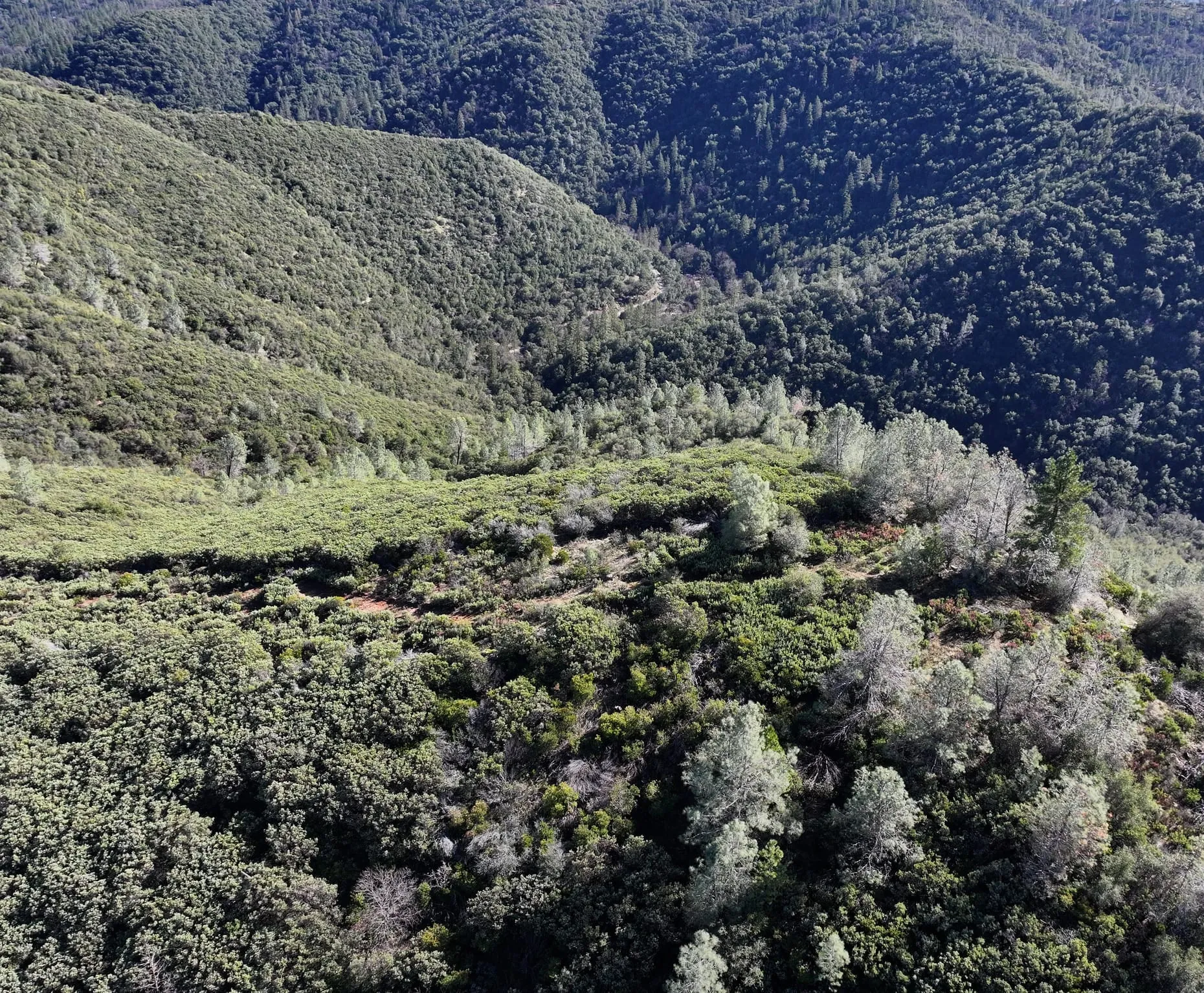
We flew a drone over the steep canyon slopes at San Domingo Arbory on February 8, 2025. From above, the winter canopy sorts itself by color: dark evergreen woodland on the slope across the canyon, a few darker conifers, pale gray-green crowns that are probably gray pine (Pinus sabiniana), and dense, low chaparral shrubs on the ridge in front.
These are among the earliest photos in the drone record of the site we’ve kept since February 2025. Flying the same slopes again in other seasons and years shows how the woodland and brush change over time.
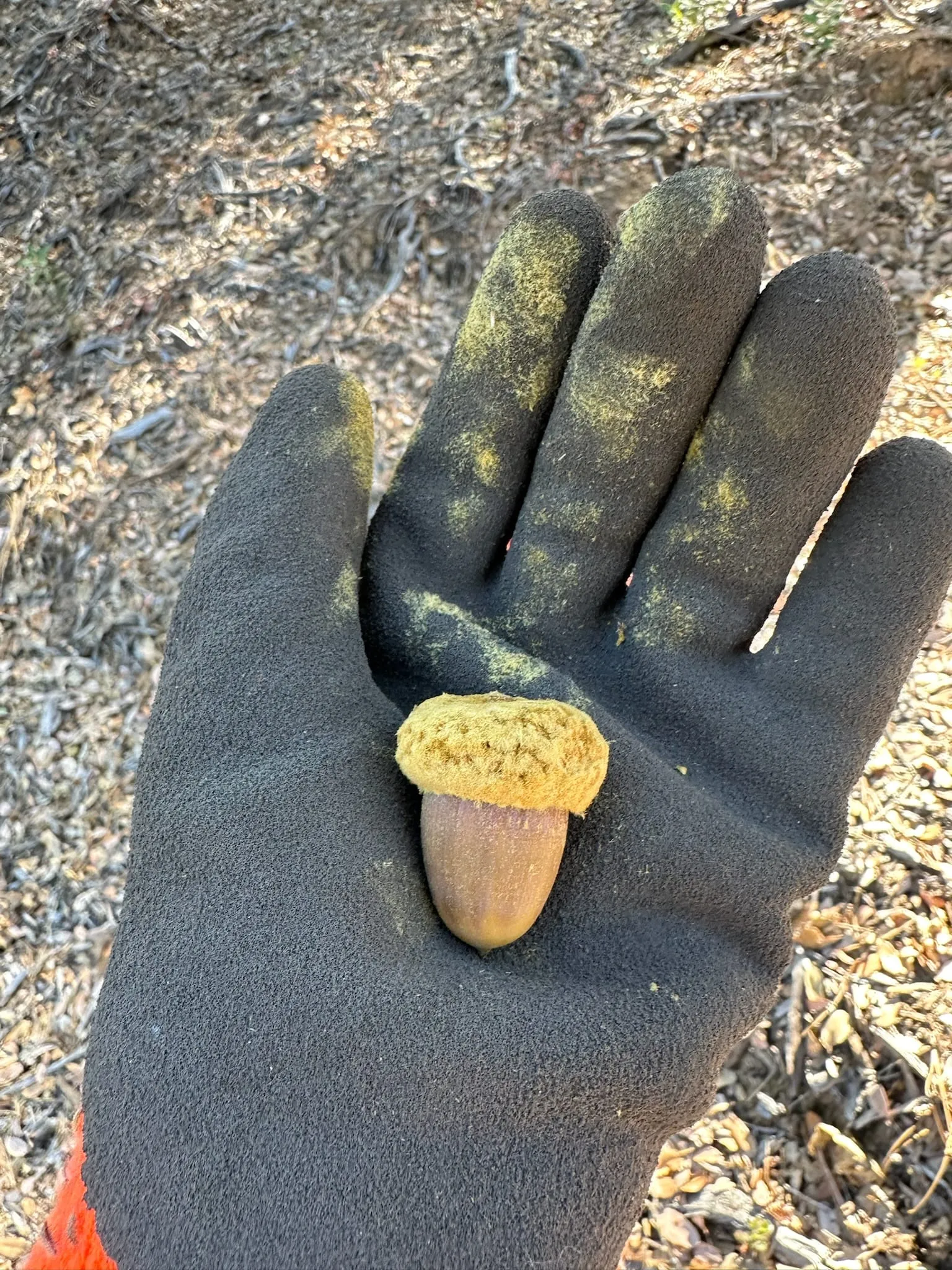
An acorn with a thick, golden, felted cup, held in a work glove at Woodland Hilltop Arbory on October 28. Yellow dust, probably fuzz from the cup, coated the glove’s fingers. From the cup, it is probably from a canyon live oak (Quercus chrysolepis).
Oaks are part of the forest mix the Woodland Hilltop restoration favors on the hilltop, along with gray pine, ponderosa pine and incense cedar. Where oaks have sprouted from old stumps, we prune them so they grow as trees rather than shrubs: stronger, more durable stores of carbon that in time become part of the overstory.
On a clear night at Woodland Hilltop Arbory, around 9 pm on September 29, the Milky Way stood over the oaks and pines on the hilltop, with only a faint glow and a few lights along the horizon.
Just after 7 the next morning, a band of orange light lay along the horizon above the forested foothills.
We flew a drone over Woodland Hilltop Arbory on the afternoon of September 22, 2024, at the end of the dry season. From above, pale-crowned pines, probably gray pine (Pinus sabiniana), and darker oaks stand over pale ground of shredded wood, probably left by the 2022 mastication under the previous owners, and dry grass, with small green shrubs scattered across the slope.
These stills are among the earliest views in our drone record of the hilltop, taken shortly before we began digging test contour swales for the Woodland Hilltop restoration that October. Later flights over the same ground show how it changes.
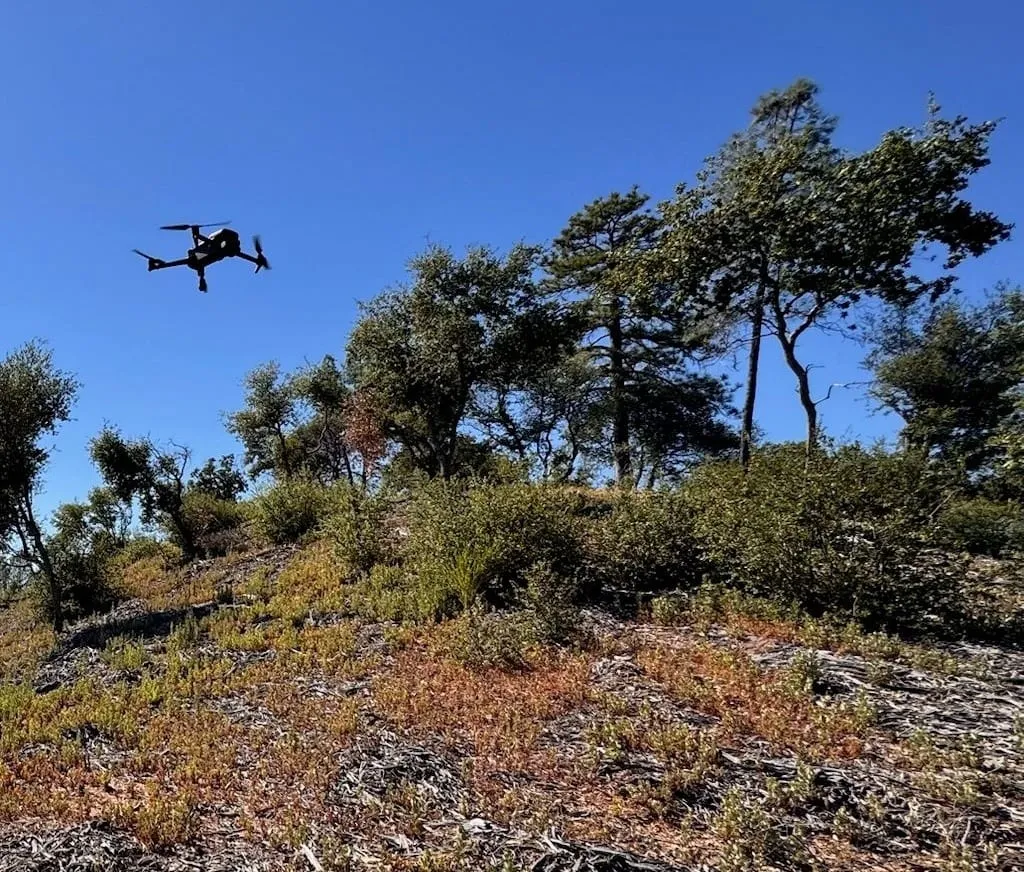
A drone in the air over Woodland Hilltop Arbory on the afternoon of September 21, hovering above the oaks and pines near the top of the hill under a clear sky. Below it, low shrubs and wood-chip mulch cover the slope.
Video and stills from flights like this one are a running record of the hilltop from above, kept since September 2024 and available on request. Flight logs, with their positions, are never published.
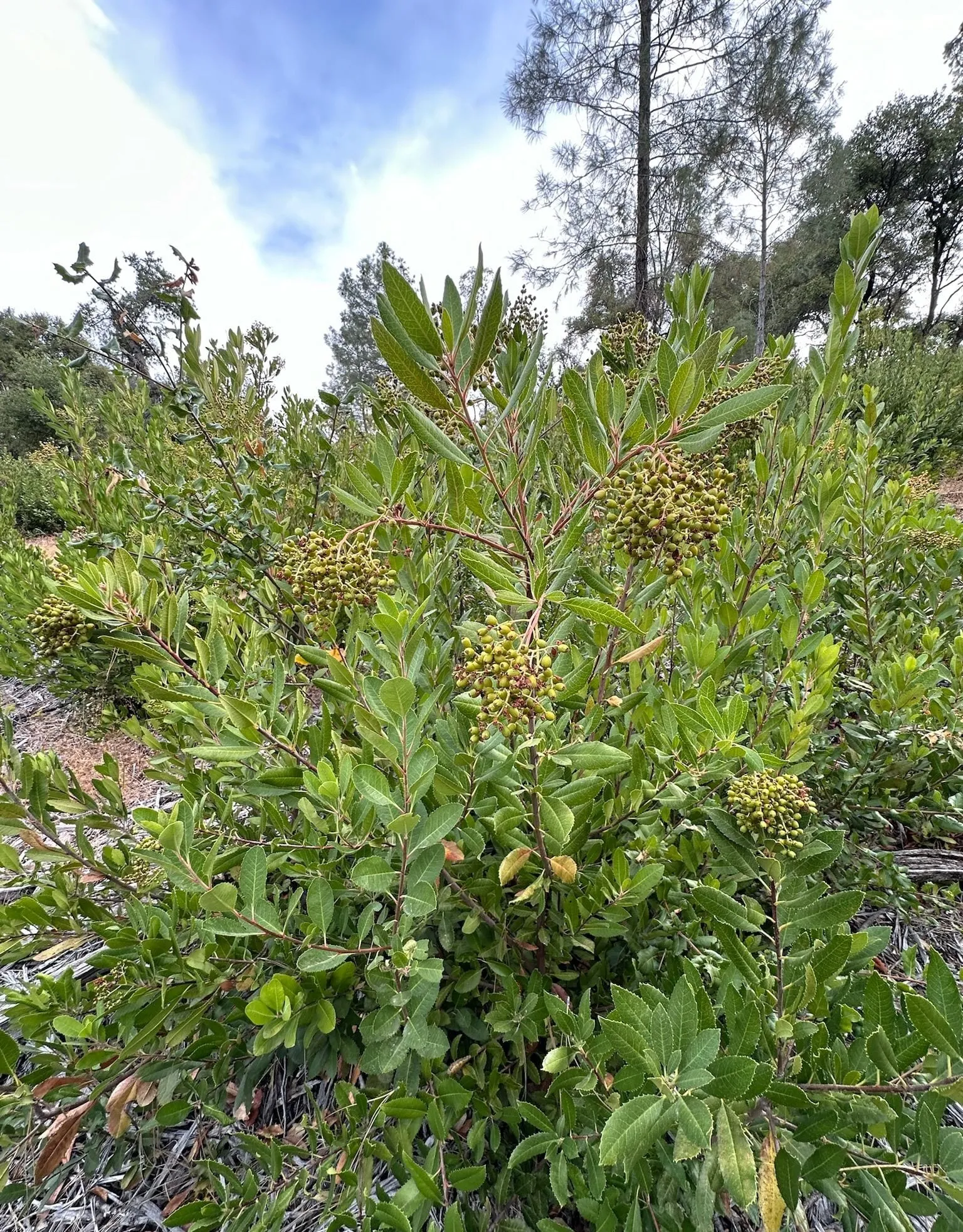
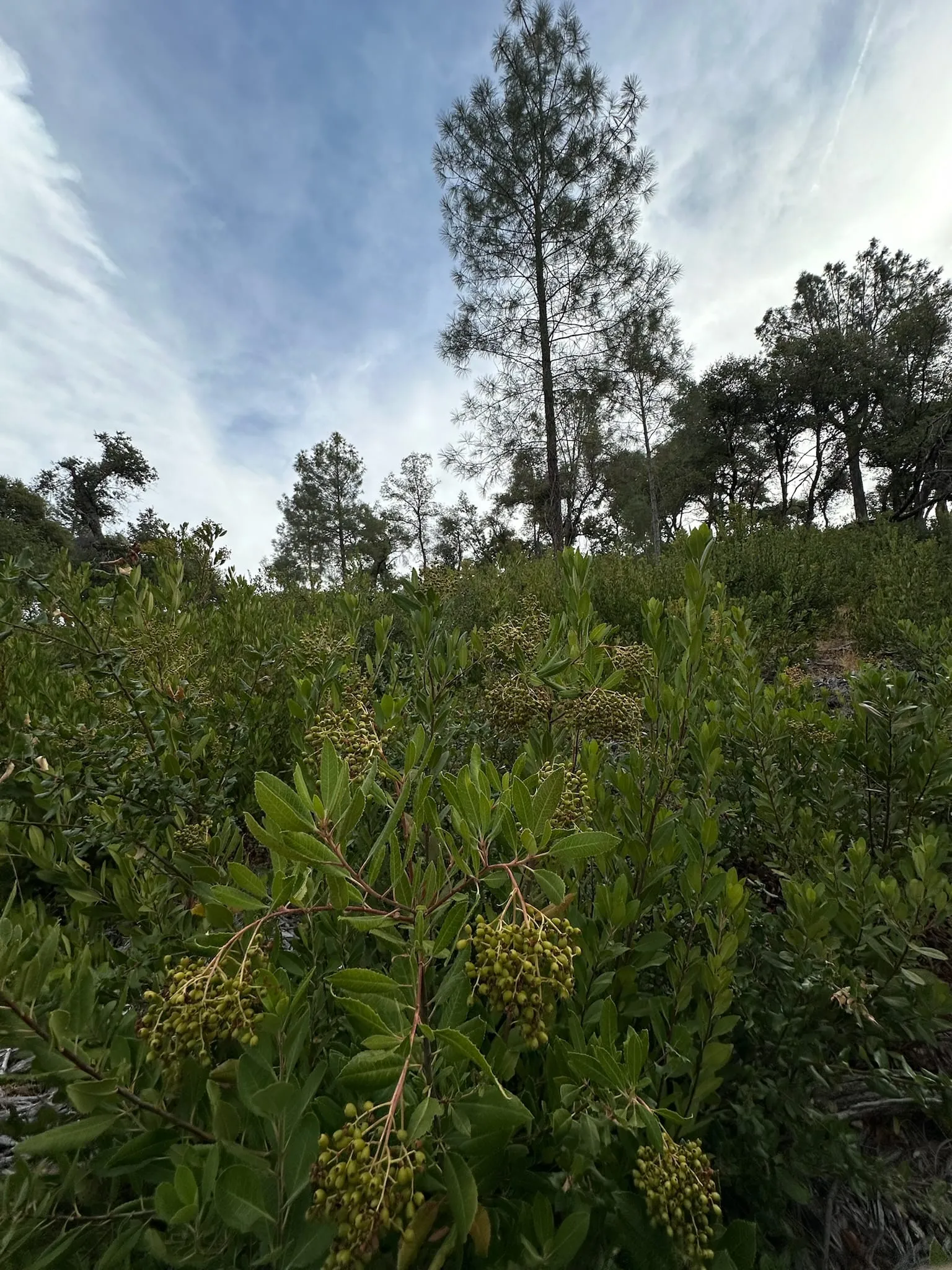
Toyon (Heteromeles arbutifolia) on the slopes of Woodland Hilltop Arbory was hung with heavy clusters of hard green berries on the morning of September 18, under a partly cloudy sky. The shrubs grow thick on parts of the hilltop, over wood-chip mulch and below oaks and tall pines.
The berries ripen red later in the fall: by November, toyon on the hilltop was heavy with red fruit (there’s a photo on the site page).