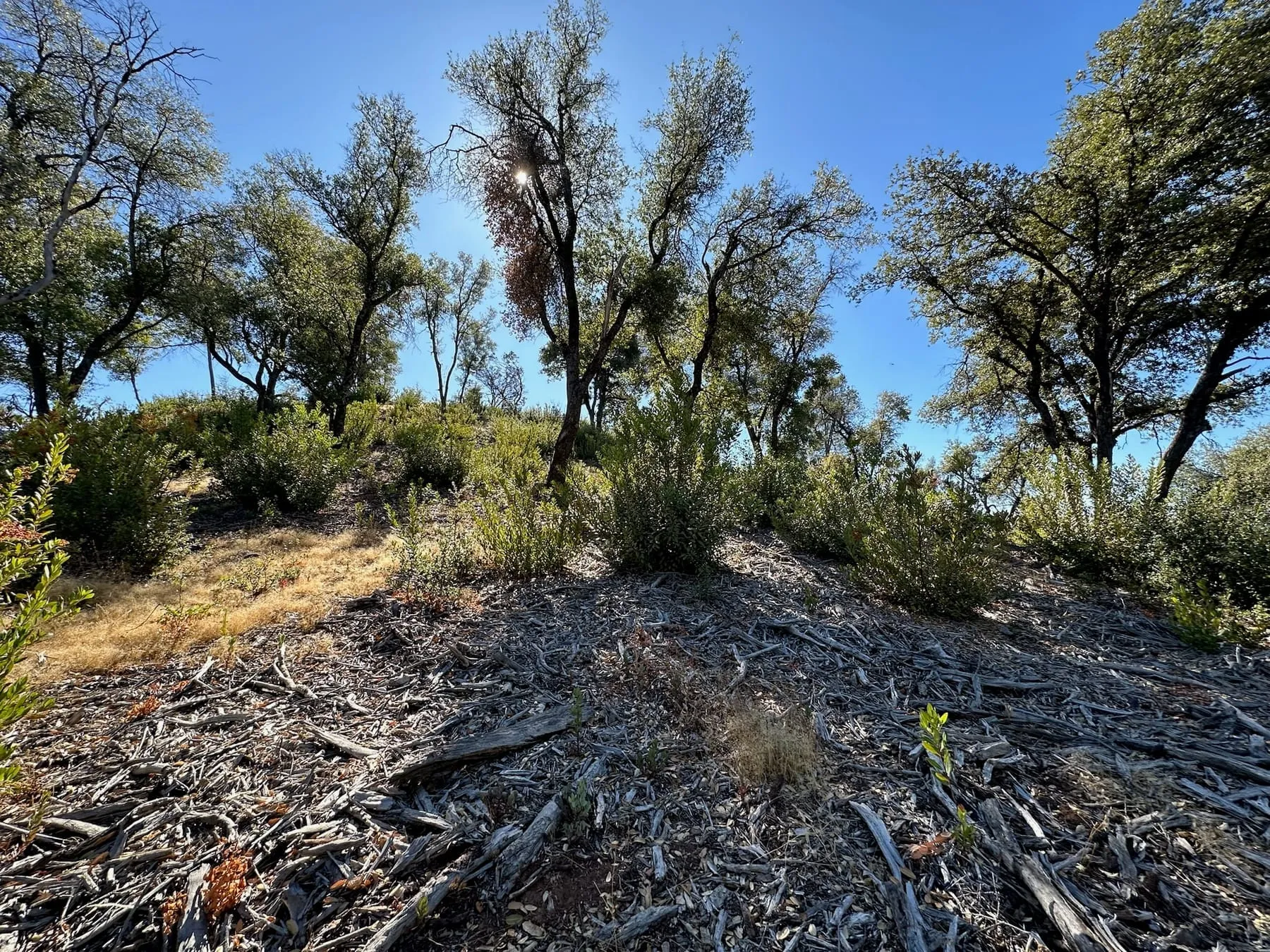
Oaks against a clear blue sky above a slope of gray, shredded wood mulch, with green shrubs and a patch of dry grass coming up through it.
Project · Active

Woodland Hilltop restoration

Restoring a mixed pine and oak woodland on 22 acres next to downtown Murphys, where a fire-prone thicket of manzanita and toyon grew up after past clear-cutting and gold mining. The work includes contour swales, native wildflower seeding, targeted thinning, walkable trails, an access road and pruning oaks so they grow as trees.

Photo: DeepForest

About this project

What we’re tracking

  • Regrowth on thinned and mulched ground, in repeat photos
  • How the contour swales hold water and soil through the wet season
  • Fuel conditions after thinning
  • Manzanita regrowth, and the pine seedlings and oak sprouts growing up through it, in repeat photos
  • Which sown wildflowers come back each spring

Woodland Hilltop Arbory is 22 acres of hilltop woodland next to downtown Murphys. It was probably clear-cut and mined for gold until about 1910, and the oak and pine woodland never came back: manzanita (Arctostaphylos) and toyon (Heteromeles arbutifolia) sprang up and tangled into a dense thicket. After more than a century without management, that regrowth had become a significant fire danger to the Murphys community. In 2022, before DeepForest acquired the land, the previous owners had the thicket masticated, grinding the brush into mulch left on the ground. That lowered the fire risk for a time, but without continued management the thicket grows back.

This project restores a healthy woodland on the hilltop: pines and oaks in the overstory, an understory back in balance, lower fire hazard, and soils that hold together and hold water again. It is also a place to test ideas at a small scale, such as contour swales and a native wildflower mix on bare ground, and to see what works.

Approach

Our starting point is the trees already growing here.

  • Oaks grown as trees. We prune stump-sprouting oaks so they grow as trees rather than shrubs: stronger trees and more durable stores of carbon that in time become part of the overstory.
  • Pines and oaks ahead of the manzanita. Pine seedlings and natural oak sprouts are left to outgrow the manzanita, and we prune back sections of the manzanita sprouts so the thicket doesn’t close in again.
  • Targeted thinning of fast-growing toyon, manzanita and poison oak (Toxicodendron diversilobum) and of crowded stems, so the trees that remain have room to grow. Crowded trees compete for water and light, and stressed trees are more likely to die of drought, disease or beetles, or to burn. The goal is a lower fire hazard and a fire-resilient forest mix in which the carbon stored in trees lasts longer.
  • Water and soil. Contour swales slow runoff on the slopes, and native wildflowers cover bare ground.
  • Roads and trails that shed water. Restoration work needs a way in, but a road or trail can divert natural water courses and start erosion. The hilltop’s trails and access road were built to keep that impact small.

The overstory we’re working toward favors native gray pine (Pinus sabiniana), ponderosa pine (Pinus ponderosa), oaks and incense cedar (Calocedrus decurrens). Gray pine grows quickly in its early years, so it can shade and hold bare ground soon after it takes hold.

What has been done

  • Contour swales, some lined with rock, that DeepForest dug as its own test of slowing runoff and holding water on the slope, and a rock-lined spillway.
  • A California native wildflower seed mix, sown several times over one winter and early spring: much of it on the floors of the old mine ditches, and also in the swales, on raked seedbeds and on soil exposed by fuel reduction. It is one of several seed mixes we’ve used here and at San Domingo.
  • Old mine ditches cleared. Decades of woody debris were cleared out of the old mine ditches that remain on the land, leaving bare floors for the wildflower mix. As with any historical feature, we don’t publish where they are.
  • Targeted thinning and fuel reduction by Jay’s Tree Service: fast-growing toyon, manzanita and poison oak thinned to make room for a durable, balanced woodland under a restored pine and oak overstory.
  • A crew pile-burn day to burn the slash piles from the fuel-reduction work.
  • Walkable trails, planned and built by Two Crows Ecological Design. They give access for fuel reduction and restoration work and help manage water on the hillside. As we do after trail work here and at San Domingo, we spread grass and flower seed on them to help prevent erosion.
  • An access road, built by Two Crows Ecological Design with DeepForest. Its design keeps the impact on water small: careful route selection; an out-sloped surface, tilted slightly toward the downhill edge so rain sheets off across the road instead of running down it; rolling dips that turn water off the road at intervals; and gravel armoring on vulnerable sections.

The wildflower mix has 13 California native species: white yarrow (Achillea millefolium), elegant clarkia (Clarkia elegans), Chinese houses (Collinsia heterophylla), California poppy (Eschscholzia californica), globe gilia (Gilia capitata), goldfields (Lasthenia glabrata), tidy tips (Layia platyglossa), blue flax (Linum lewisii), golden lupine (Lupinus microcarpus), arroyo lupine (Lupinus succulentus), baby blue eyes (Nemophila menziesii), California bluebell (Phacelia campanularia) and yellow owl’s clover (Triphysaria versicolor). Wildflowers that aren’t on this list may have come from one of the other mixes or grown on their own.

What we’ve seen so far

These are observations from repeat photos, not measurements.
  • Soon after they were dug, smooth patches of fine silt in the floors of the new swales showed where water seems to have stood.
  • Native wildflowers from the seed we sowed have bloomed each spring: in the swales, on raked bare ground, on the ditch floors and along the trails.
  • Water stood in the cleared ditches after rain in each wet season, and seedlings came up on their floors after the fall rains.
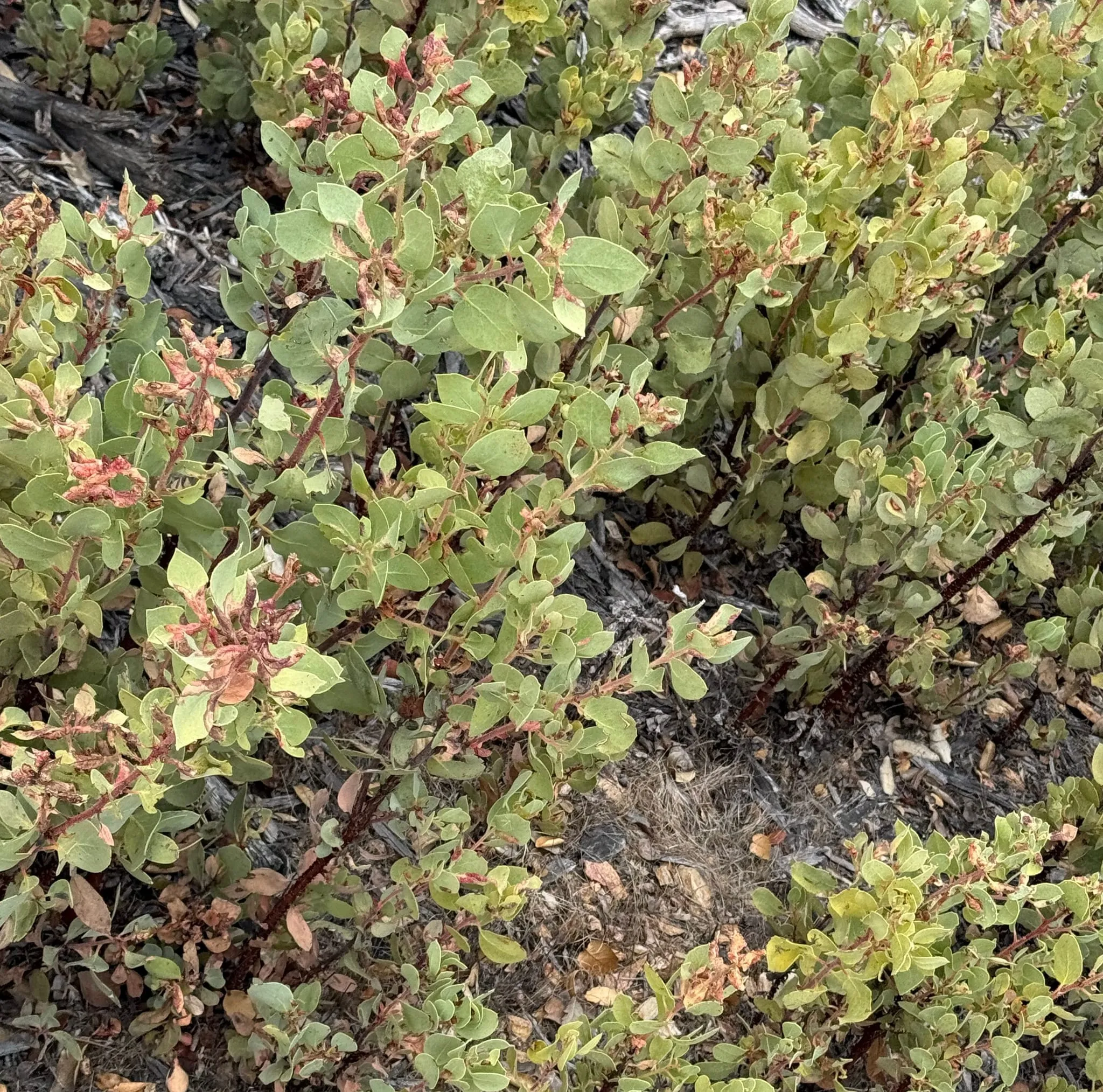
  • Manzanita is growing back densely where the thicket was masticated in 2022. Pruning back sections of those sprouts is how we aim to keep the thicket from forming again.

Change over time

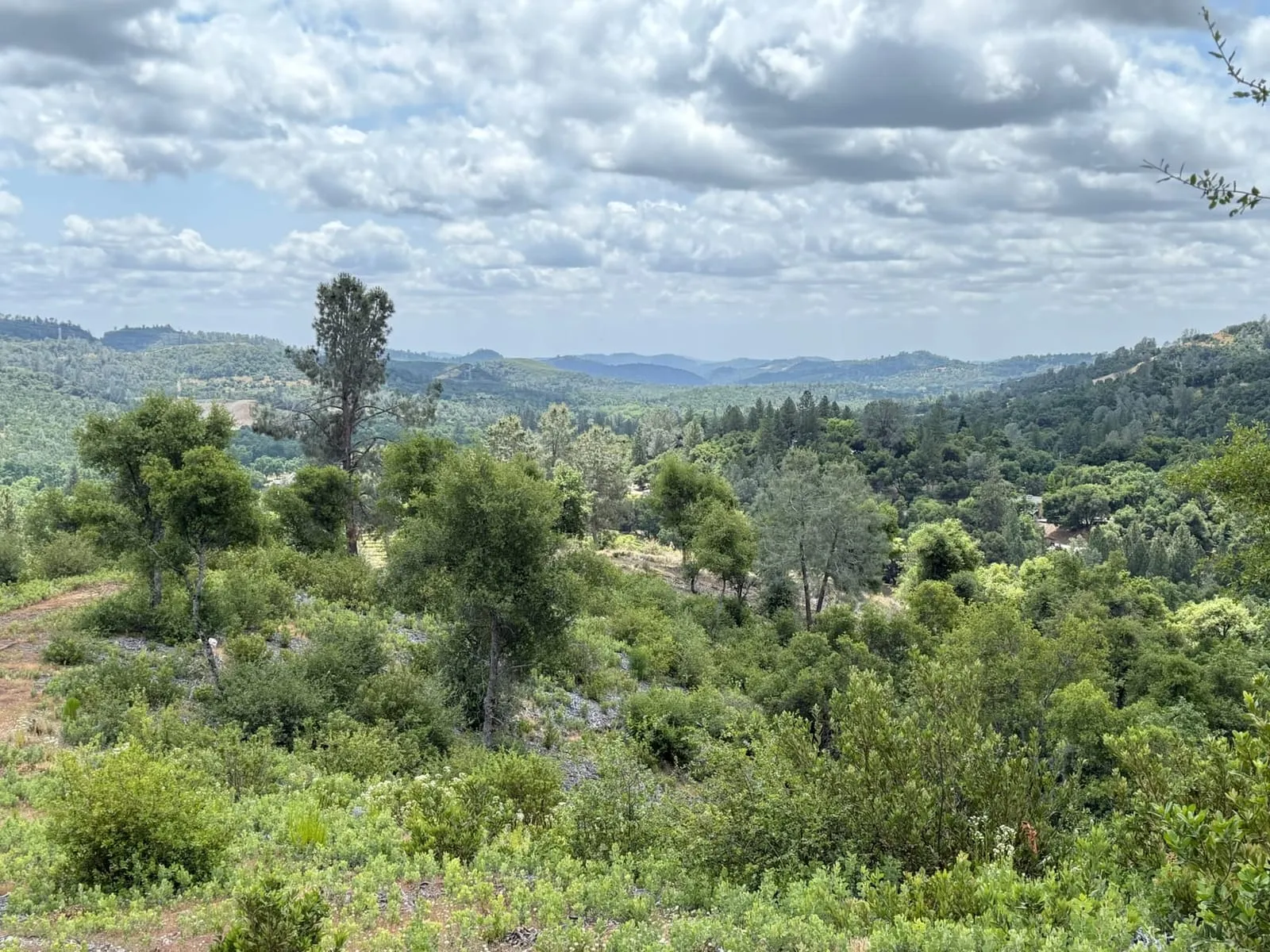
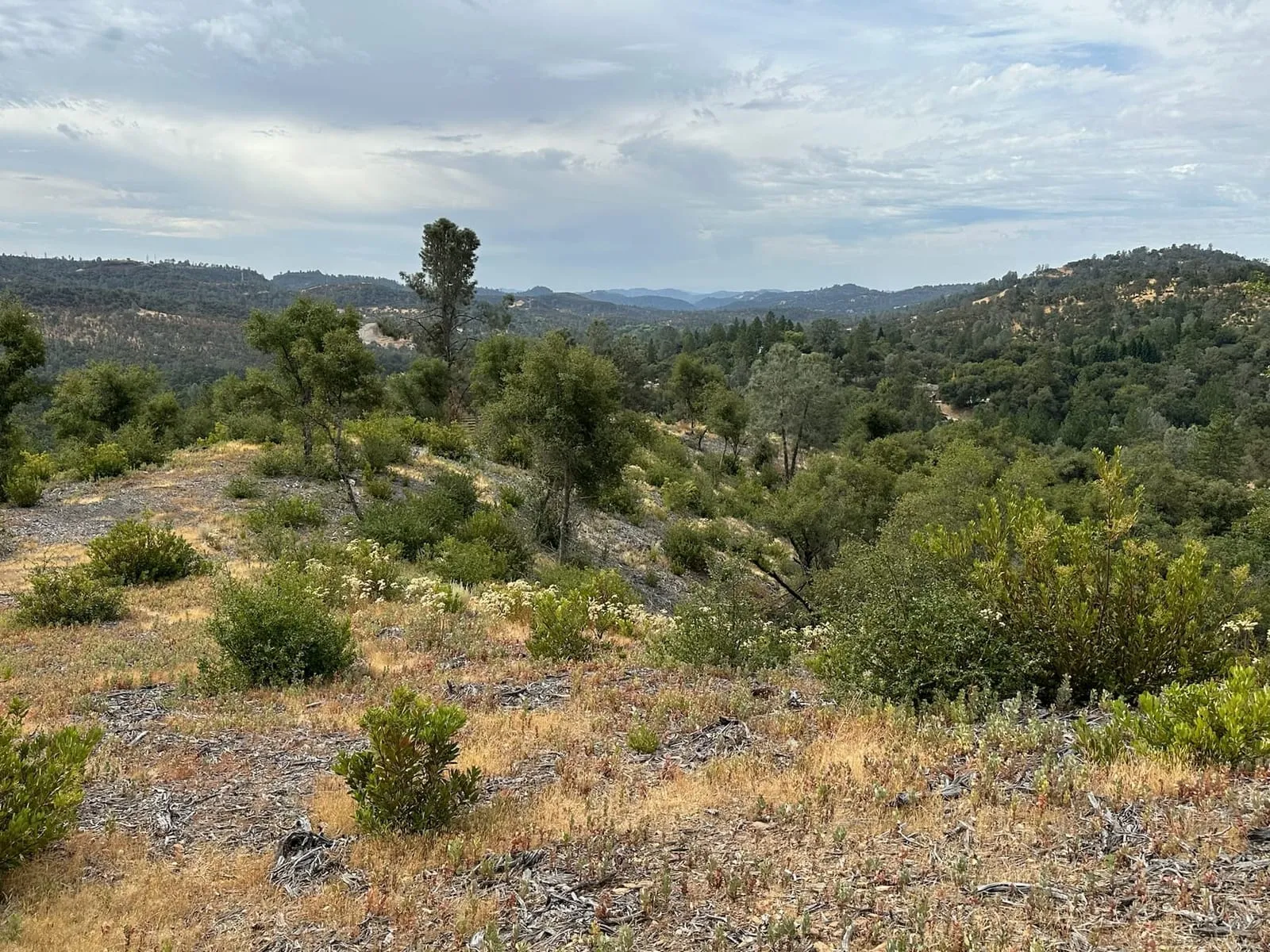
Late-summer view from the hilltop: dry golden grass and scattered shrubs on bare, debris-strewn ground, with a tall pine and oaks against forested hills. Late summer
The same hilltop view the following spring: the slope is covered in green shrubs and young oaks around the same tall pine. The next spring
The same view from the hilltop, framed on the same tall pine. Much of this difference is the season, not only the restoration. Photos: DeepForest
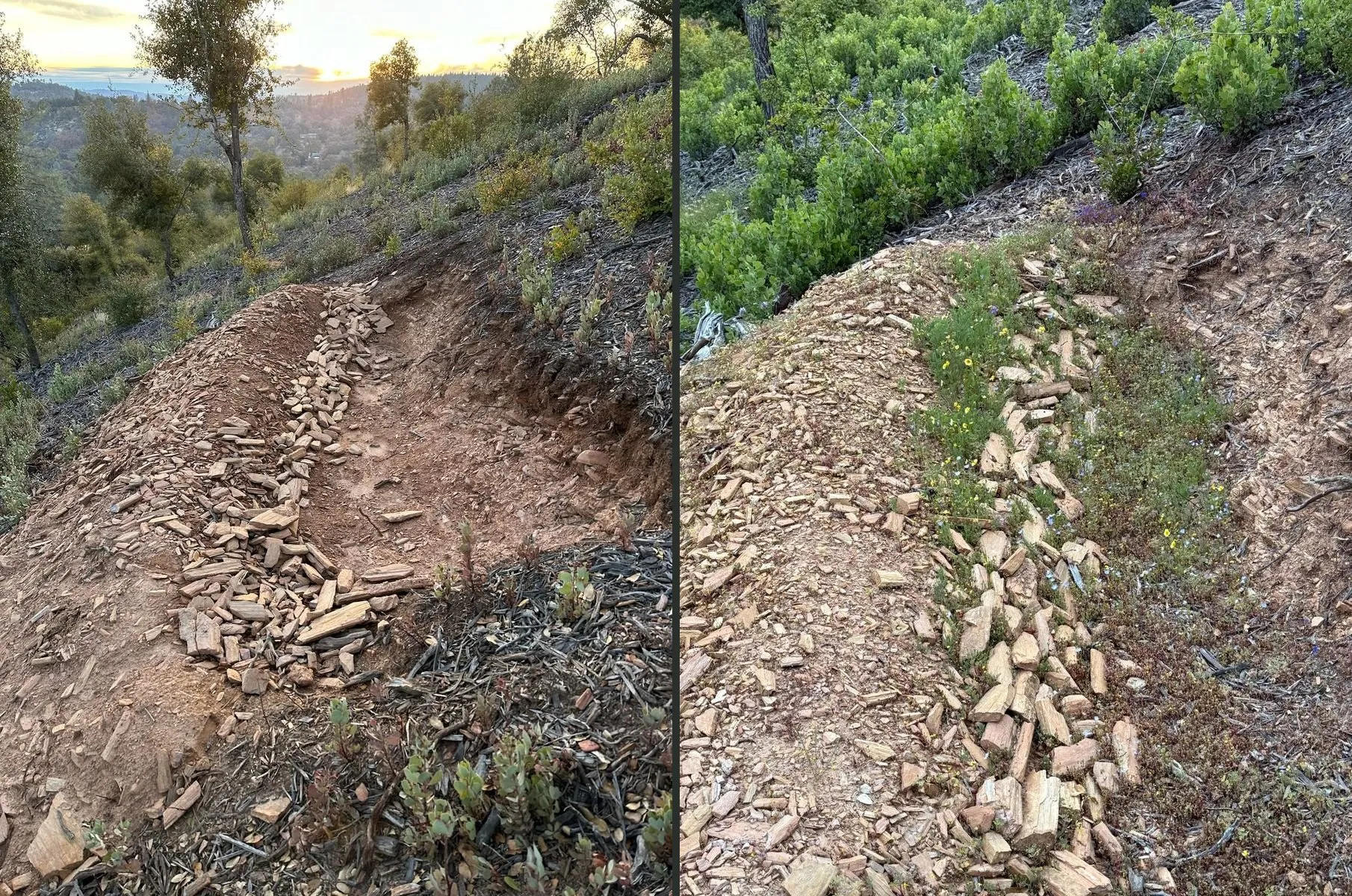
Two photos side by side. Left: a newly built swale on a steep slope, a berm of flat stones beside a channel of bare reddish soil, with young oaks and a sunset sky behind. Right: the same stone-lined swale in spring, with grasses and small yellow wildflowers along the channel and green shrubs on the slope above.
One of the stone-lined contour swales just after it was dug (left) and the following spring (right). The framing is close but not identical. Photo: DeepForest

How we track it

We follow the hilltop in repeat photos from the ground and from drone flights, and post what we see in the Field journal. Photos and drone footage are available to collaborators on request; flight logs with positions are never published.

What’s next

Without continued management the thicket would close in again, so the work ahead is mostly patient pruning: shaping stump-sprouting oaks into trees and cutting back sections of manzanita sprouts as the pines and oak sprouts grow, with targeted thinning where stems crowd in. We’ll keep following the swales through each wet season and see which of the sown wildflowers keep coming back on their own.

Restoring a small woodland of your own, or testing a method that could help here? Message us to compare notes, or start with Work With Us.

Recent

Field journal

All 5 entries
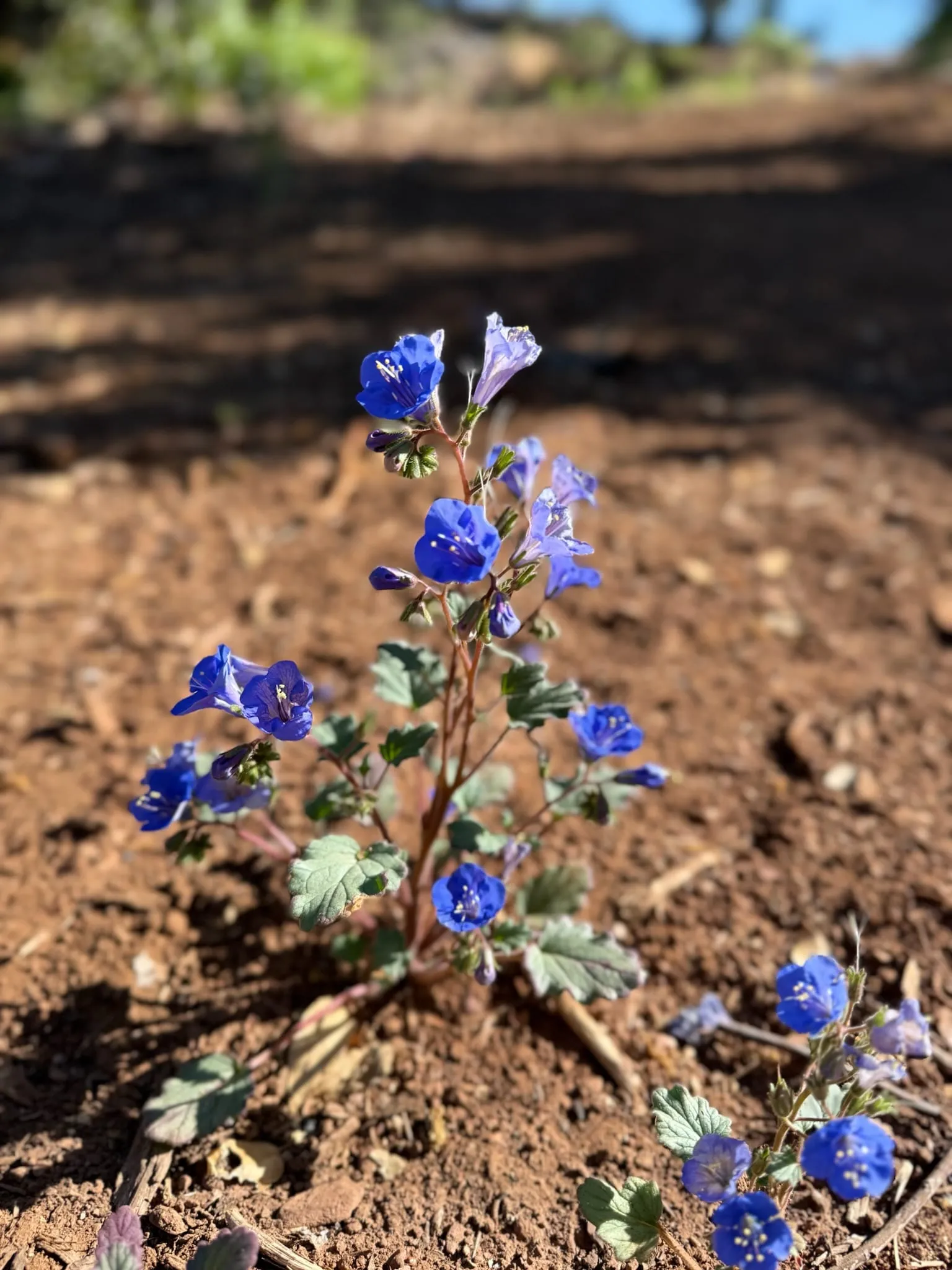
  • A small plant with deep blue, bell-shaped flowers and round, toothed gray-green leaves grows from bare reddish soil, with a shaded path behind it.

    · Woodland Hilltop

    Seed-mix wildflowers on bare ground

    One of the native wildflowers from the seed mix we sowed at Woodland Hilltop Arbory, in bloom on bare ground beside a path in mid-June. We…
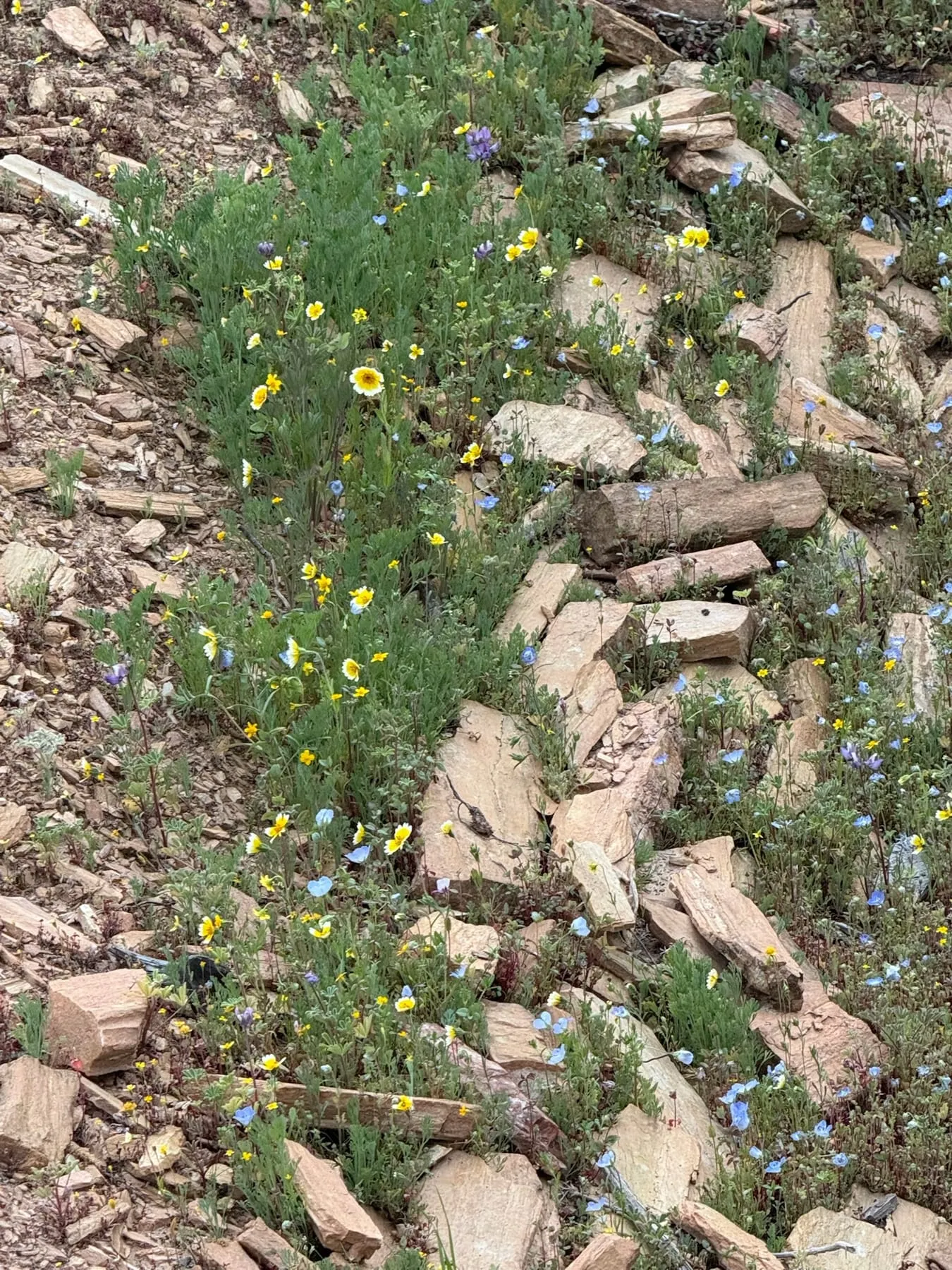
  • Small yellow-and-white tidy tips and pale blue baby blue eyes flowers grow among flat stones lining a shallow swale. +1 photo

    · Woodland Hilltop

    Wildflowers in the swales

    Tidy tips (Layia platyglossa) and baby blue eyes (Nemophila menziesii) are blooming in one of the rock-lined contour swales at Woodland…
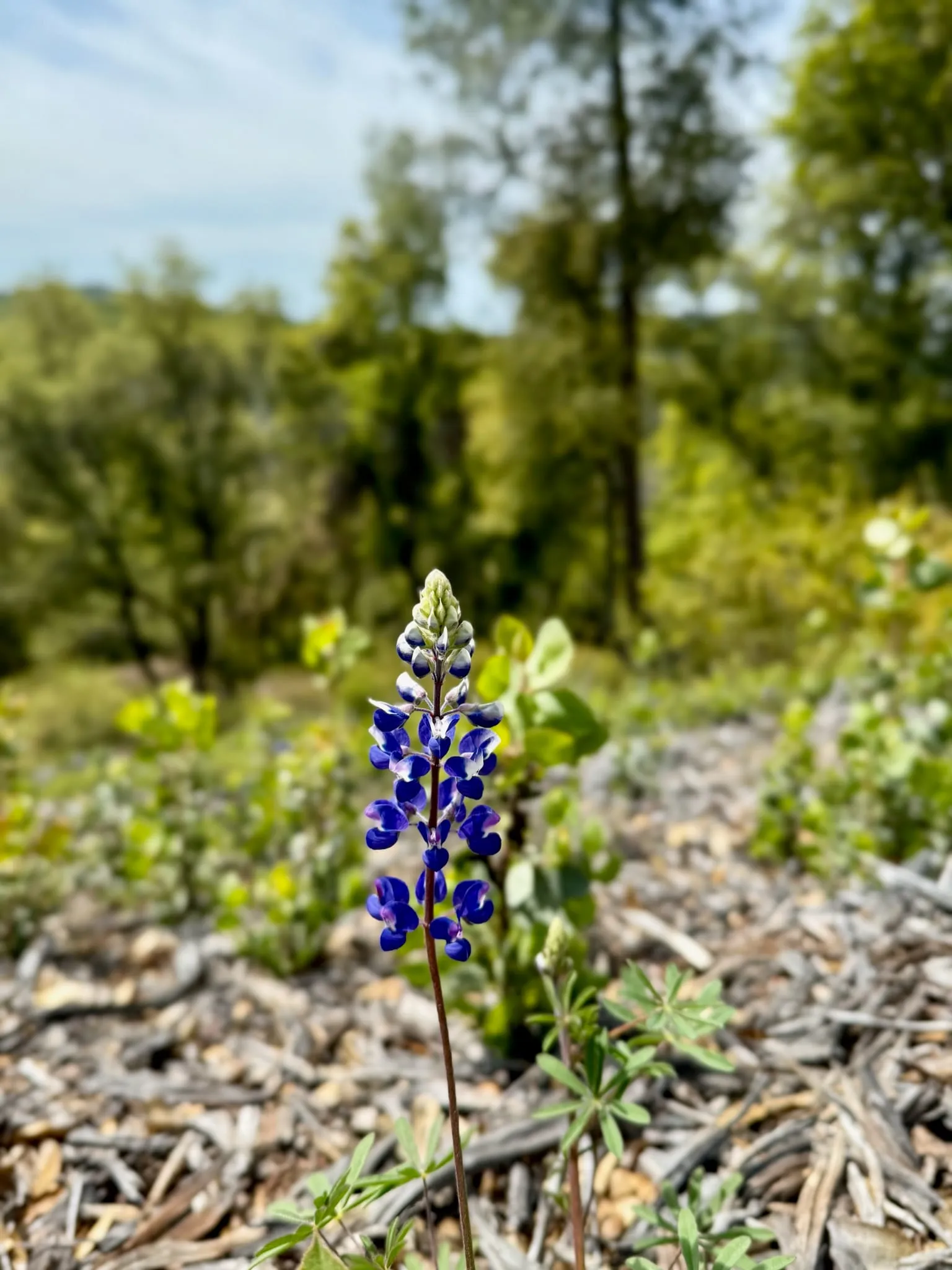
  • A single spike of deep blue-and-white lupine flowers rises from wood-chip mulch, with young lupine leaves at its base and blurred green shrubs and trees behind. +2 photos

    · Woodland Hilltop

    Lupine through the wood-chip mulch

    Lupine (Lupinus sp.) was flowering through the wood-chip mulch at Woodland Hilltop Arbory on April 6, 2025, among low, leafy shrubs, on…
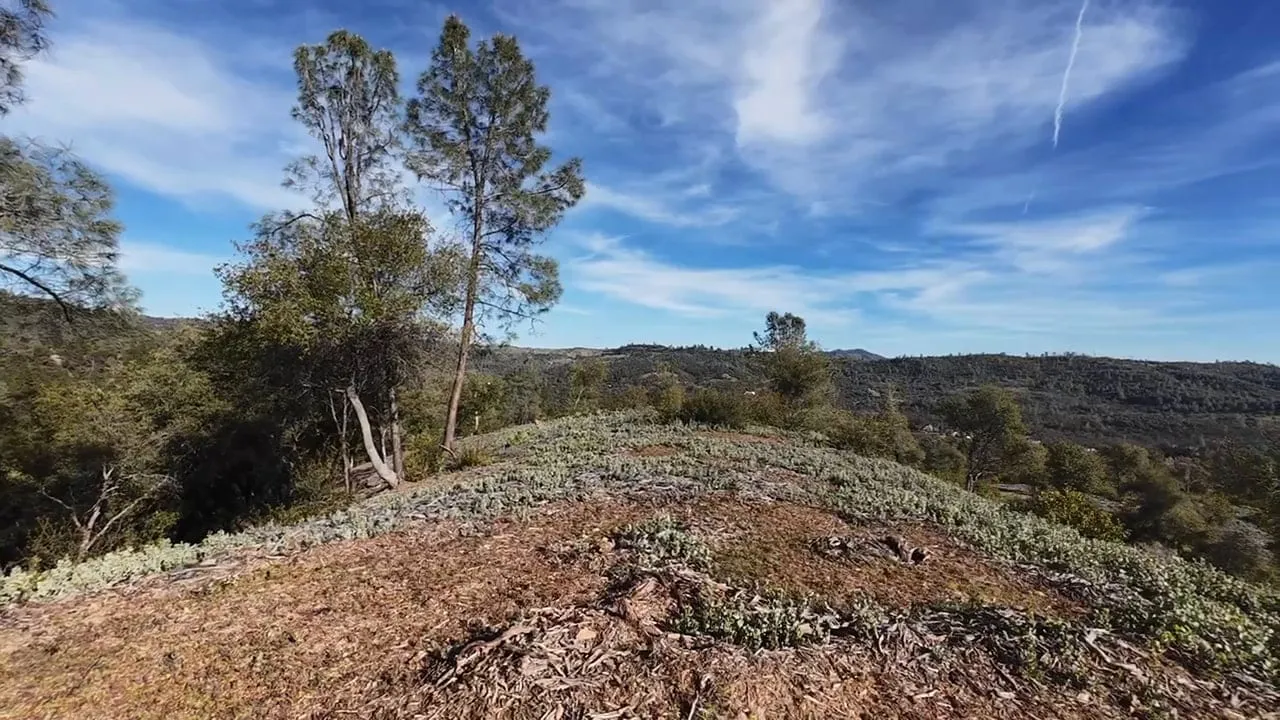
  • Seen from a drone flying low over a hilltop, two tall pines and an oak stand at the edge of a slope of wood-chip mulch and low gray-green plants, with wooded ridges and wispy clouds beyond. +1 photo

    · Woodland Hilltop

    A low drone pass over the mulched hilltop

    On the afternoon of March 23, 2025, we flew a small drone low over the top of Woodland Hilltop Arbory, skimming the masticated ground.…