
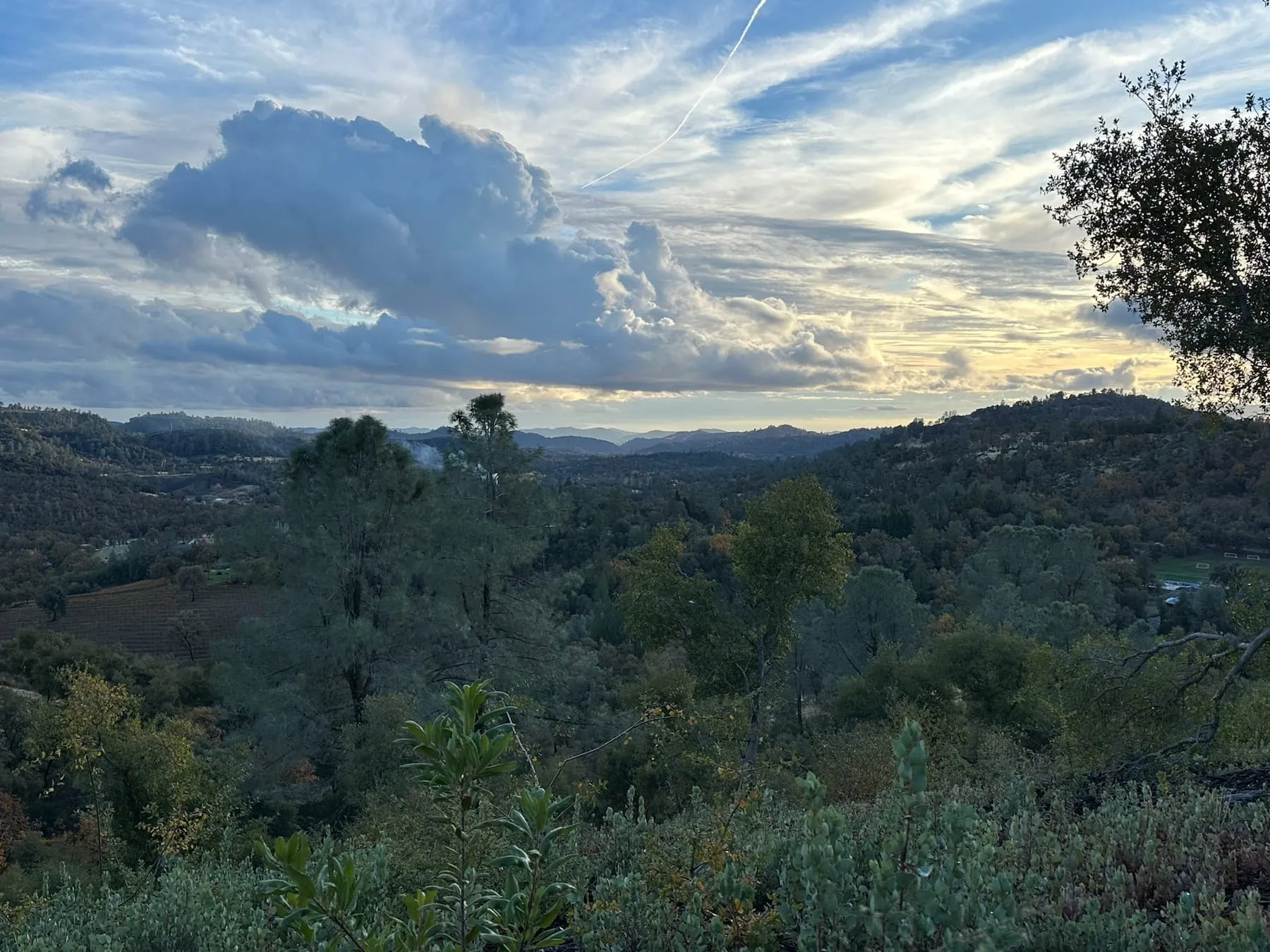
Mission
Cultivate landscapes that are resilient to wildfire and climate stress while serving as powerful tools for carbon removal and biodiversity restoration. We transform degraded landscapes into living ecosystems to develop and demonstrate climate-forward land management practices that foster global collaboration while making immediate impact.
Our approach
- Real, working land. Our sites are working forest, meadow and woodland that can be instrumented and changed quickly.
- From sensing to action. We are working toward systems that link sensing to reasoning and to action, with a person in the loop.
- Memory of a place. Land outlives owners, managers and software. Our digital twins of the sites are built to bring dated records of each place (drone surveys, LiDAR and satellite time series) onto one map and one timeline, so what is learned about its soils, water, vegetation and fire history can stay useful across generations.
We never publish the locations of sensitive wildlife or of archaeological or cultural features.
Research themes
-
AI-powered land monitoring
Remote sensing with modern computer vision and AI-controlled active sampling can track and understand the plants, wildlife, weather, and humans interacting with a place.
-
Ecological restoration
Bringing back native woodland, meadows and soils on land cut over and mined since the Gold Rush, while evaluating how robotics and AI can help.
-
Agentic land stewardship
AI agents that integrate diverse data about land, climate, and agriculture, and input from human collaborators, to provide broad perspective and expertise on managing functioning ecosystems.
-
Forest carbon sequestration with biochar
Forests as carbon capture solutions. Converting excess biomass (wildfire fuel reduction) into biochar can improve soils and store carbon in the soil for centuries. Biochar production in fire-prone landscapes provides multiple benefits and a range of technologies can assist the process.
-
Wildfire resilience
Reducing wildfire fuel and cultivating fire-resilient landscapes. Applying fuel treatments, from thinning and fuel breaks to controlled burns, while prototyping new ways to target, plan, track, and execute wildfire risk mitigation work.
-
Cultural preservation & engagement with AI
The history of land and its people is often spread across fragmented primary sources in varying formats. Modern AI can reduce the work to collect, structure, and synthesize historical and cultural source data.
-
Water management & soil restoration
Understanding and shaping how water moves through landscapes, managing dry seasons in the era of climate change, and regenerating soils.
-
Monitoring biodiversity
Which plants and animals live on the sites, and how can restoration work improve their diverse, vibrant living ecosystems? Tracking and understanding how species respond to restoration over time (with the help of AI).
-
Generational continuity & open datasets
Keeping what is learned about a site's soils, water, species and fire history useful across changes in owners, staff and software, through digital twins of DeepForest's sites and open, privacy-screened data.
Get in touch
Researchers, startups and land stewards: start with Work With Us, or contact us.