
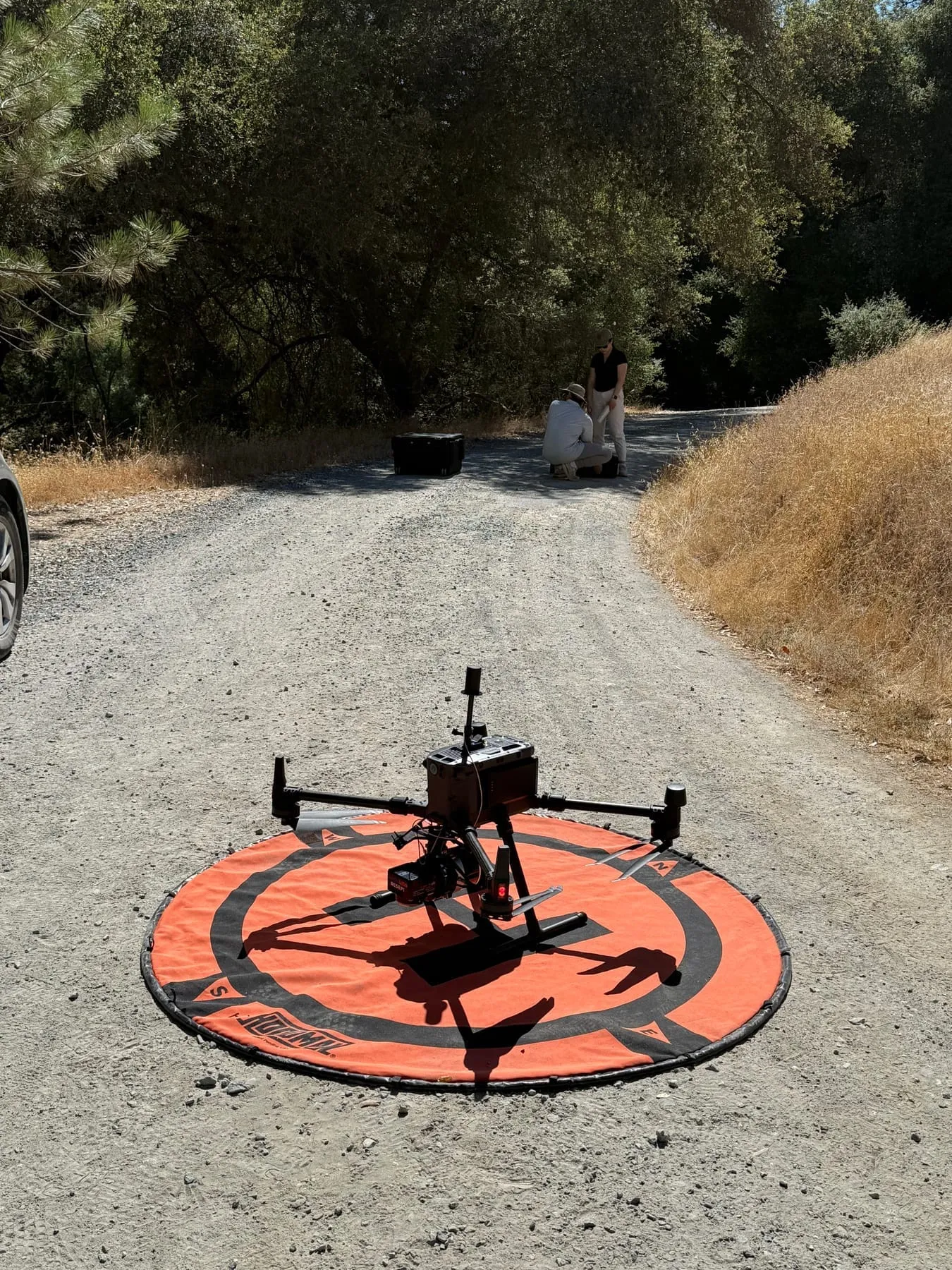
DeepForest’s two sites, San Domingo Arbory and Woodland Hilltop Arbory, are working forest, meadow and woodland in the Sierra Nevada foothills of California. We open them to researchers, startups and land stewards who need real-world conditions rather than a test bench.
Who we work with
- Supporters. People who want to fund the work directly and follow it up close.
- Researchers. Academic teams in climate, ecology and robotics: site access, data and light field support.
- Startups. Short, structured field tests of sensors, drones, robots and software on our project sites.
- Land stewards. Landowners and extension or agency staff who want to try a practice on private land and share the results.
Support our work directly
Many of our projects are funded directly by private supporters. Our patron circle has access to project sites, members-only events and opportunities to work directly with DeepForest staff, sites, and technology. Request information or ask to join.
What the sites offer
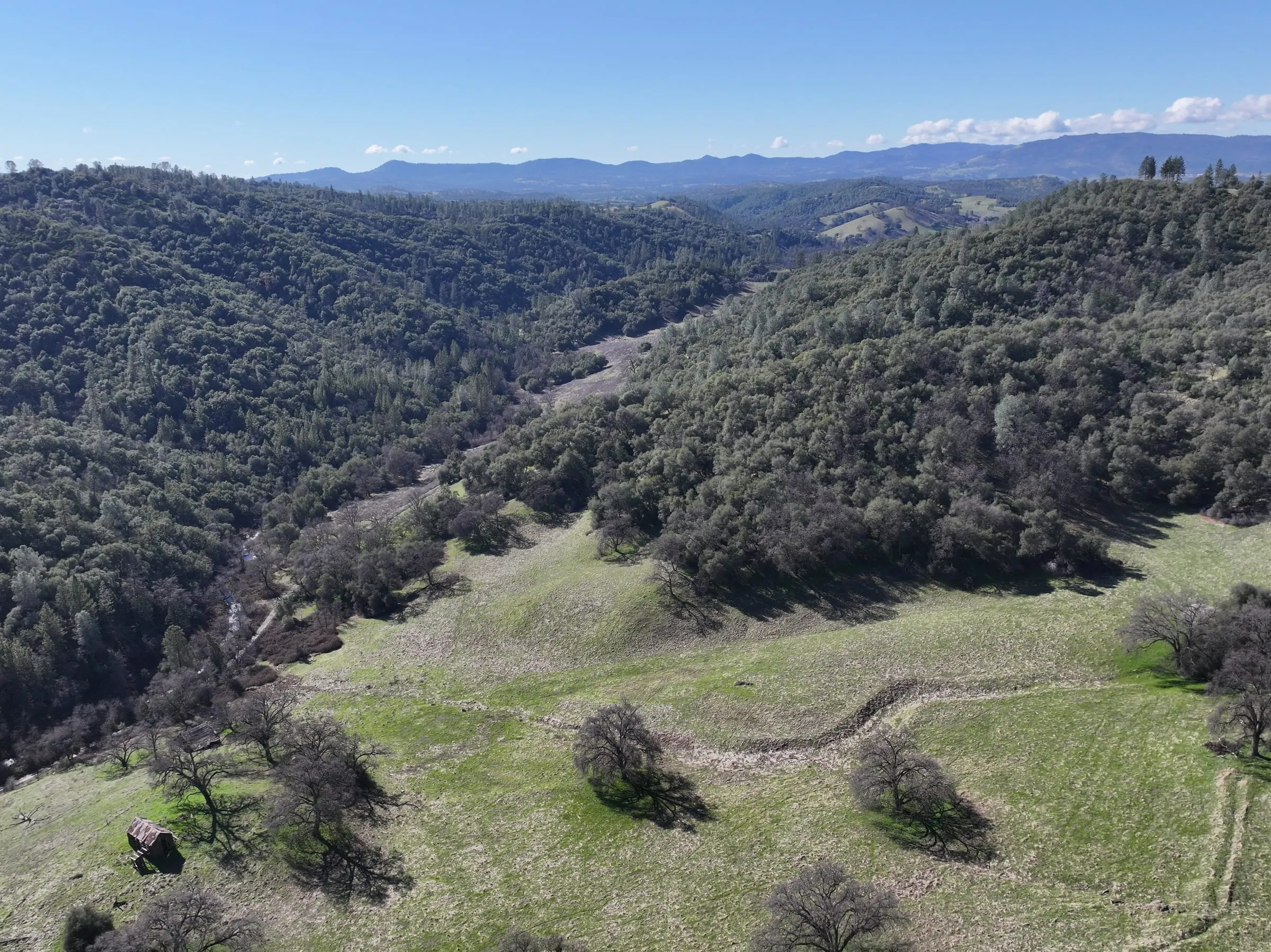
San Domingo Arbory
~450 acres · 1,440–2,330 ft (440–710 m)
- Mixed conifer and oak forest
- Pine-oak woodland
- Grazing meadows with valley oaks
- Chaparral
- Seasonal creek and floodplain
- Water
- San Domingo Creek, which runs dry about three months of the year and can flood the valley bottom in big winter storms. Springs feed the meadows, and a solar-pumped well fills a tank and trough in the pasture.
- Soils
- Mostly low-productivity soils that store little water, depleted in places by Gold Rush mining and erosion. Biochar from fuel reduction is mixed back into the meadows and forests.
- Vegetation
- Denser mixed forest (live oak, bigleaf maple, gray and ponderosa pines, Douglas-fir and sugar pine) on the north-facing slopes; pine-oak woodland with thickening live oak and emergent ponderosa and gray pines on the dry south-facing slopes; large valley oaks in the meadows; small patches of chaparral; and invasive blackberry and star-thistle. Thinning and brush clearing are underway to reduce wildfire fuel.
- Climate
- Hot, dry summers and wet winters, with mostly mild westerly winds. Strong, dry east winds can develop between October and March and bring dangerous fire weather.
- Infrastructure
- Off grid, with no power lines. The cameras run on solar panels and upload over a cellular link, a solar pump fills the pasture's water tank, and restored trails give walkable access for fuel work.
Bring a camera-trap model, a drone payload or LiDAR method, a fuel-reduction treatment, or a question about valley oaks, springs and meadows along a seasonal creek. Tell us what you'd like to try.
- Water
- Contour swales, dug beginning in October 2024 and some lined with rock, slow runoff on the slopes.
- Soils
- Disturbed in places by past mining. Wood chips left by a 2022 mastication cover parts of the ground.
- Vegetation
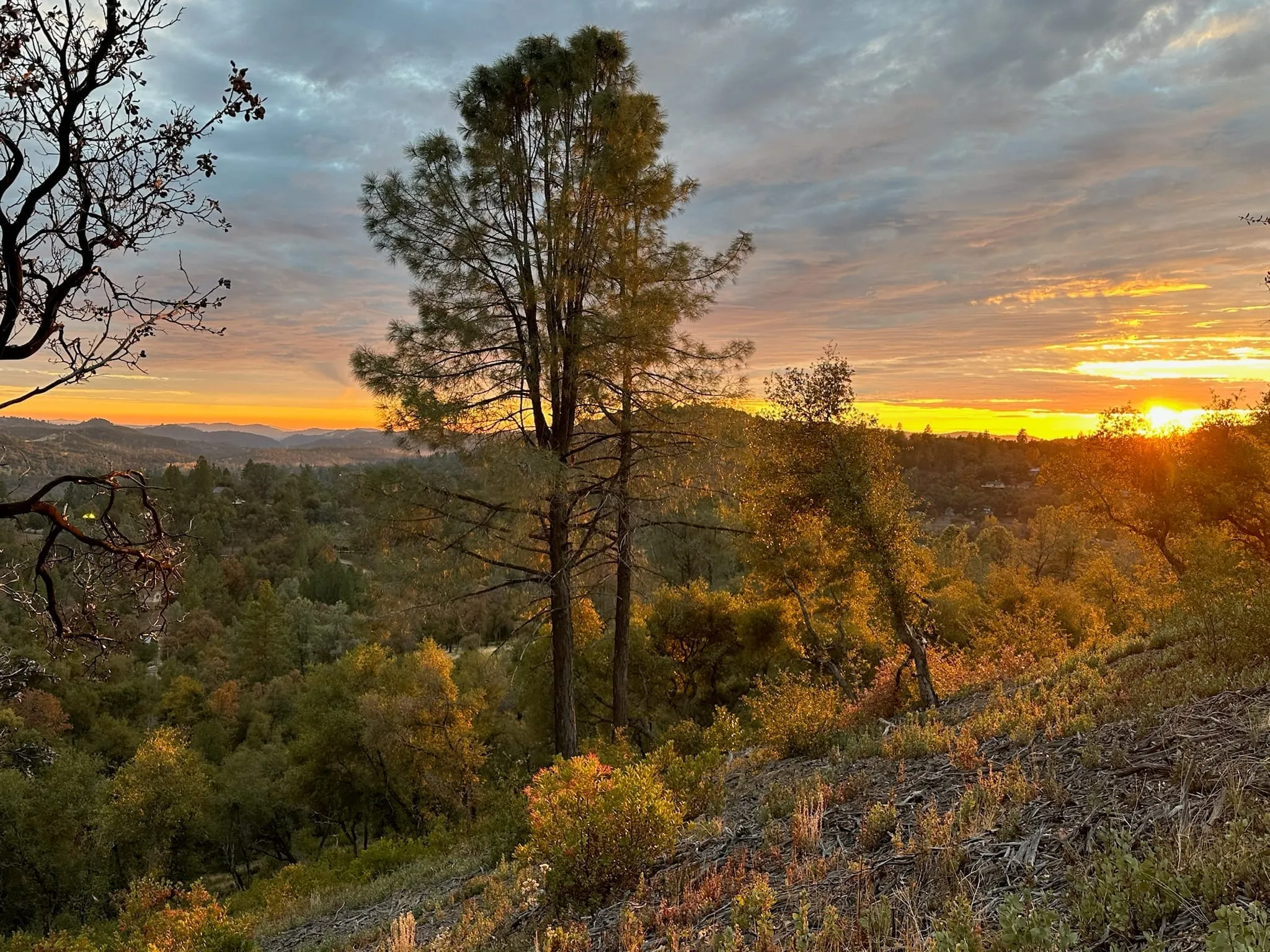
- Hilltop woodland recovering from past clear-cutting. Restoration favors gray pine (Pinus sabiniana), ponderosa pine (Pinus ponderosa), oaks and incense cedar (Calocedrus decurrens), and thins overly dense thickets and deadwood.
- Climate
- Sierra Nevada foothills, with mild, wet winters and hot, dry summers.
A 22-acre hilltop next to town, where a thicket of manzanita and toyon is being turned back toward pine and oak woodland, suits restoration monitoring, repeat drone mapping, tests of swales and native seed on bare ground, and low-cost soil sensing trials. Tell us what you'd like to try.
Data
Our sites record data such as trail cameras, drone surveys and satellite baselines. Data can be shared with collaborators on request. Locations of sensitive wildlife and of heritage features are never shared publicly.
How access works
- Tell us about your project using the form below: the question, the equipment, the timing and the site you have in mind.
- We talk it through: fit, safety, data needs and what the site can support.
- We agree the terms in writing before any fieldwork, including data use and the protection of sensitive locations. Drone flights need our permission and must follow FAA rules.
Start an inquiry
Tell us about your question and what you’d need from a site: access, data, field support or all three.