
 +1 photo
Biochar burn day at the ring kiln
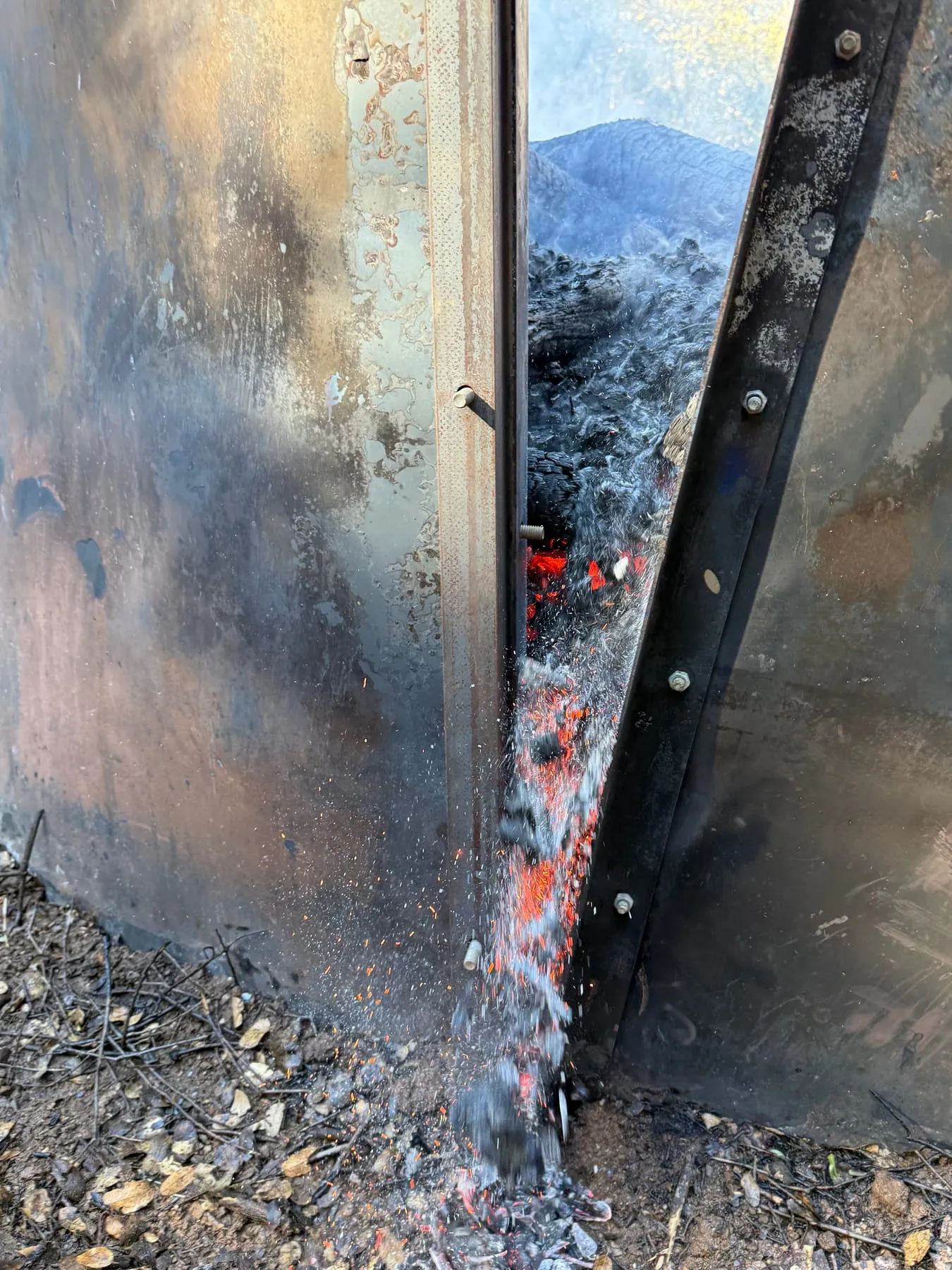
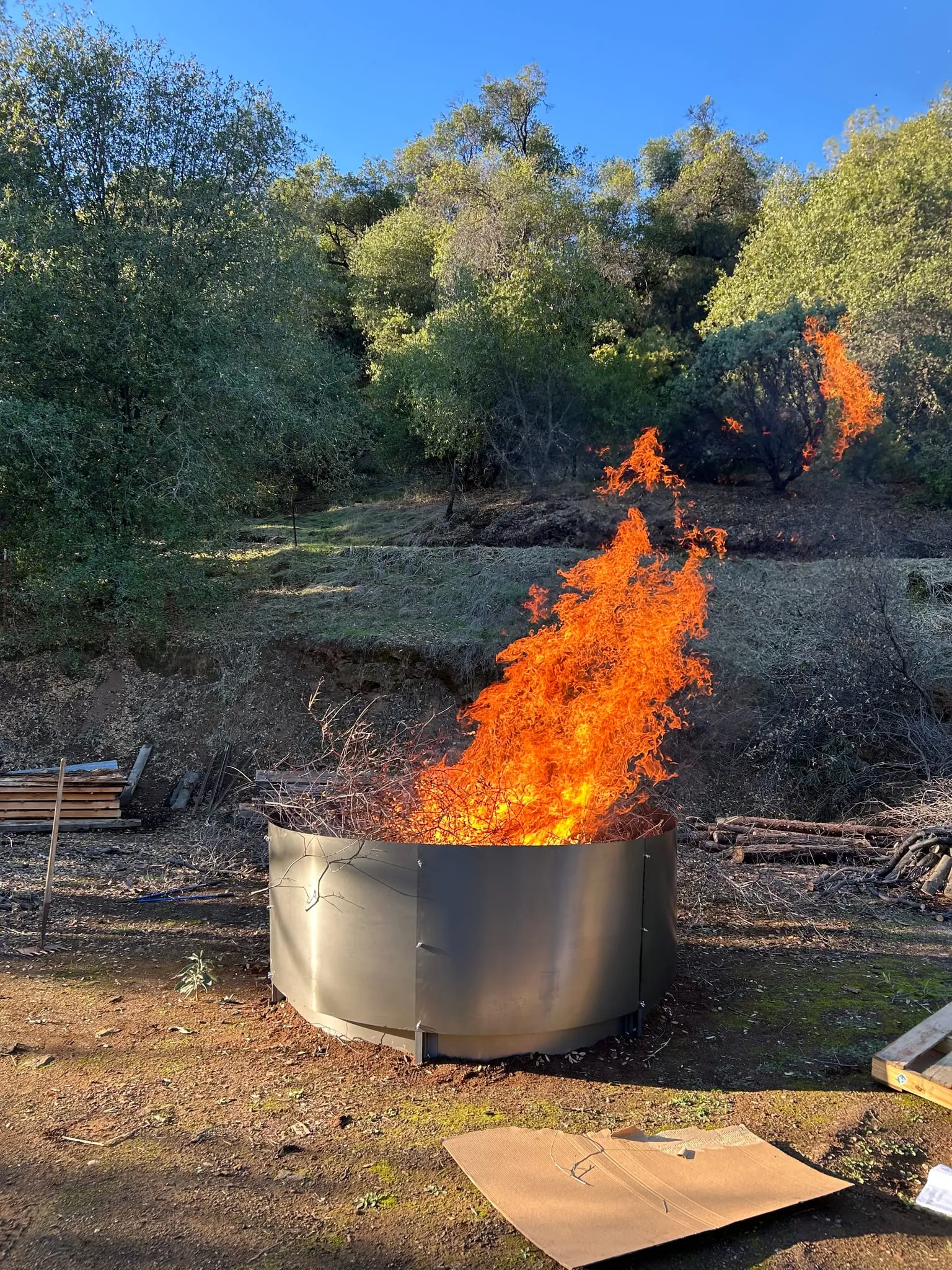
Burn day in the steel ring kiln at San Domingo, the day after the crew staged the burn. Slash from thinning goes in load by load, and a…
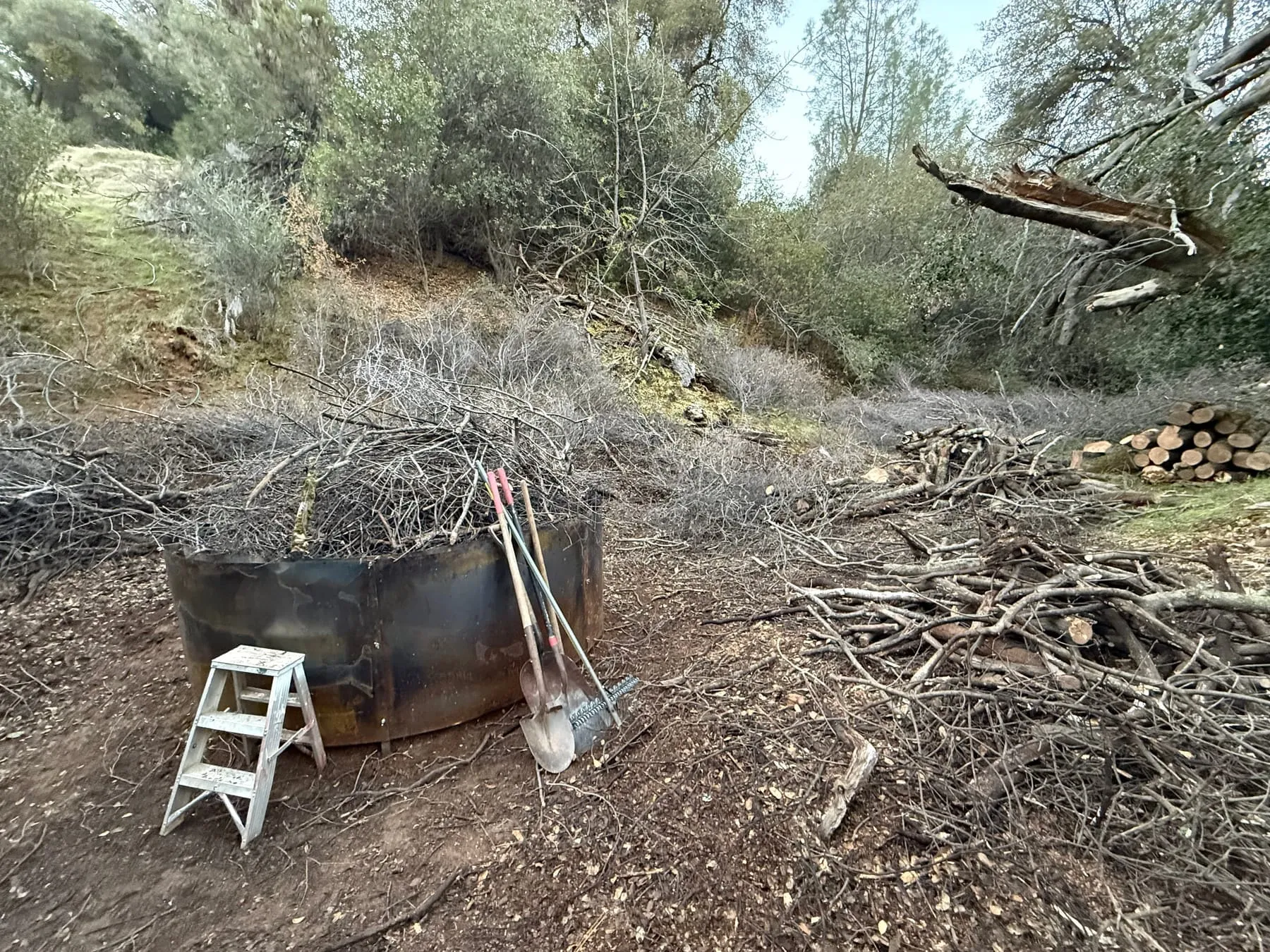
Fuel reduction (clearing fallen and dead wood, pruning low branches, thinning) leaves wood that has to come out anyway. We turn it into biochar on site in flame-cap ring kilns, so little of it has to be hauled, and mix the biochar back into soils the Gold Rush left degraded. Fuel reduction and kiln burns are underway; soil trials and carbon estimates come next.
Photo: DeepForest
Lowering the wildfire risk at San Domingo Arbory means moving a lot of wood: fallen trees and dead wood lying on the ground, low branches pruned from the trees, crowded stands thinned and brush cleared. That wood has to come out of the forest anyway. This project turns it into biochar where it is cut, in flame-cap ring kilns, and mixes the biochar back into the soil, where it helps rebuild ground the Gold Rush left degraded. One piece of work serves three ends: a forest that can live with fire, carbon kept out of the air, and soil that holds water through a long, dry summer.
Before the Gold Rush, these slopes were open blue oak and foothill pine woodland, kept open by frequent, low-intensity fire. Mining, timber cutting and ranching followed, then decades of inattention and cattle grazing (see the site history), and brush and young trees filled in. Fire exclusion did the same across the Sierra Nevada foothills. Crowded trees compete for water and light, and stressed trees are more easily killed by bark beetles, disease and drought, which adds more dead wood to the fuel.
The usual choices for the wood that fuel reduction removes are poor. Left in place, it feeds the next wildfire. Hauled away, it is expensive, especially off steep ground. Burned in open piles, it sends its carbon back into the air as smoke. We generally don’t pile burn at San Domingo.
Over several rounds of fuel reduction, our crews have pruned, thinned and cleared brush to restore San Domingo’s woodland, taking out ladder fuels: the brush and small trees that carry a ground fire up into the tree crowns. Two Crows Ecological Design restored a ridgetop fuel break at San Domingo that was first cut during the 2015 Butte Fire.
Several biochar burns have turned that wood into char, starting with DeepForest’s first burns in a new ring kiln, its panels still bright. One burn, staged by DeepForest crew members the day before, used fallen trees and excess woody fuel from the ground nearby, along with low branches pruned in the area, among them limbs from an old oak beside the kiln.
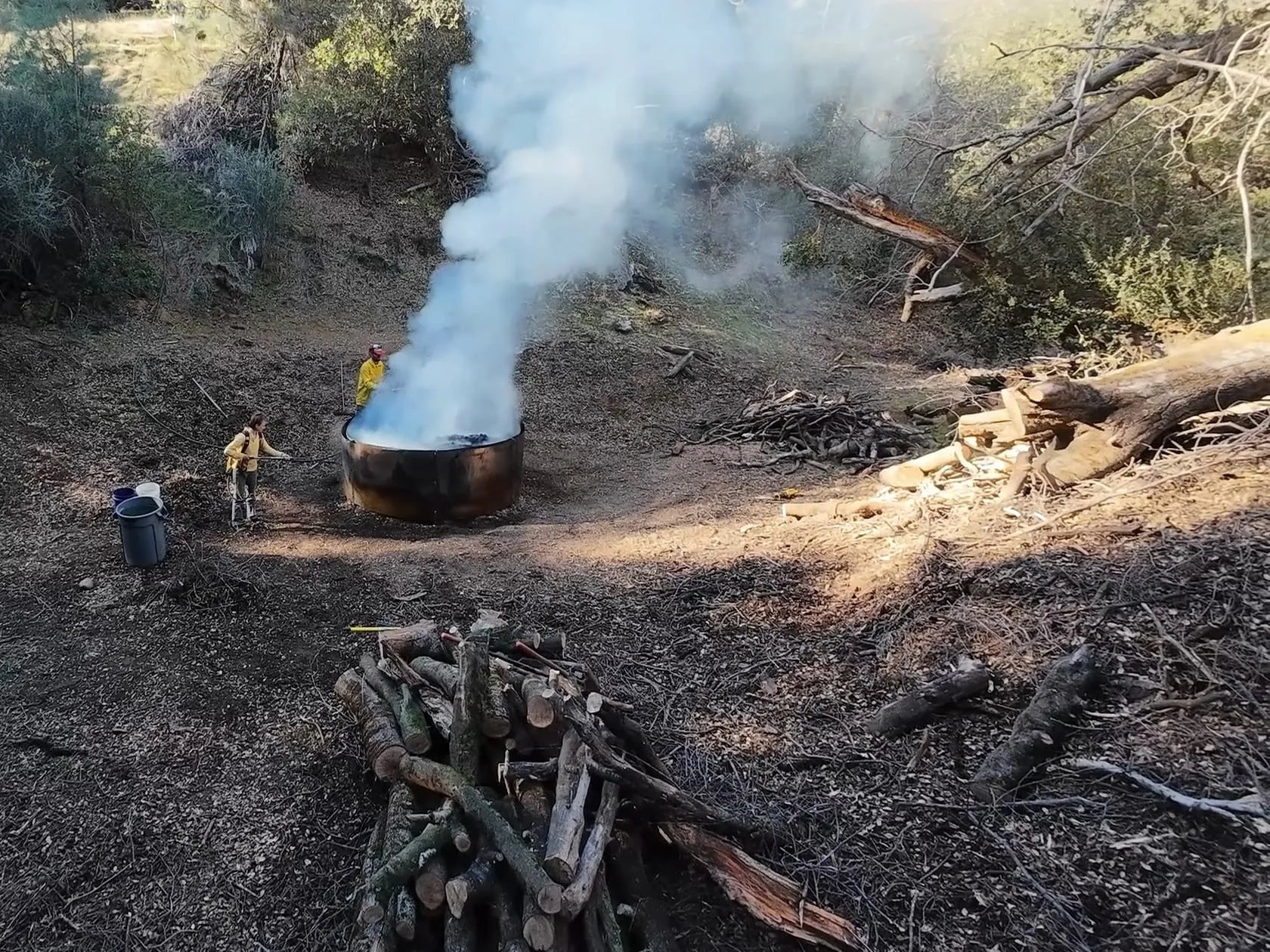
The kilns go to the wood. We typically run one ring kiln at a time, with more on hand, set up close to where the wood is cut. Making biochar on site keeps the effort and energy spent moving heavy, bulky brush and limbs around steep ground to a minimum, and the biochar goes back into the soil nearby.
A ring kiln is an open-topped ring of bolted steel panels. A cap of flame across the top burns the gases rising off the wood and uses up the air, so the wood below heats without enough oxygen to burn to ash (a process called pyrolysis) and turns to char instead. Crews add slash load by load as the char builds. When a batch is done, the coals are quenched with water. What’s left is biochar: a porous, stable form of carbon that can last in soil for centuries. Left to rot, or burned in a pile, the same wood would return most of its carbon to the air.
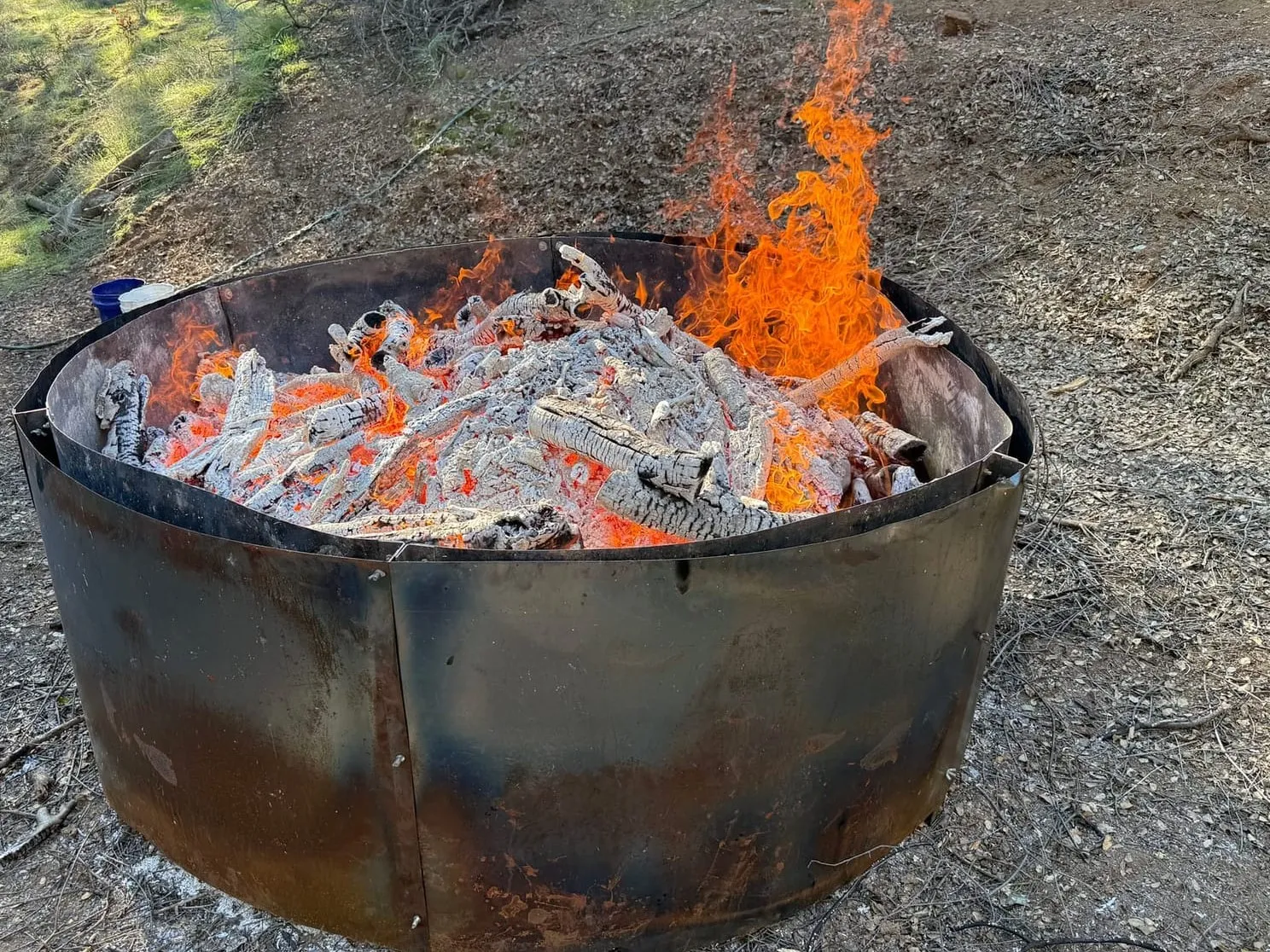
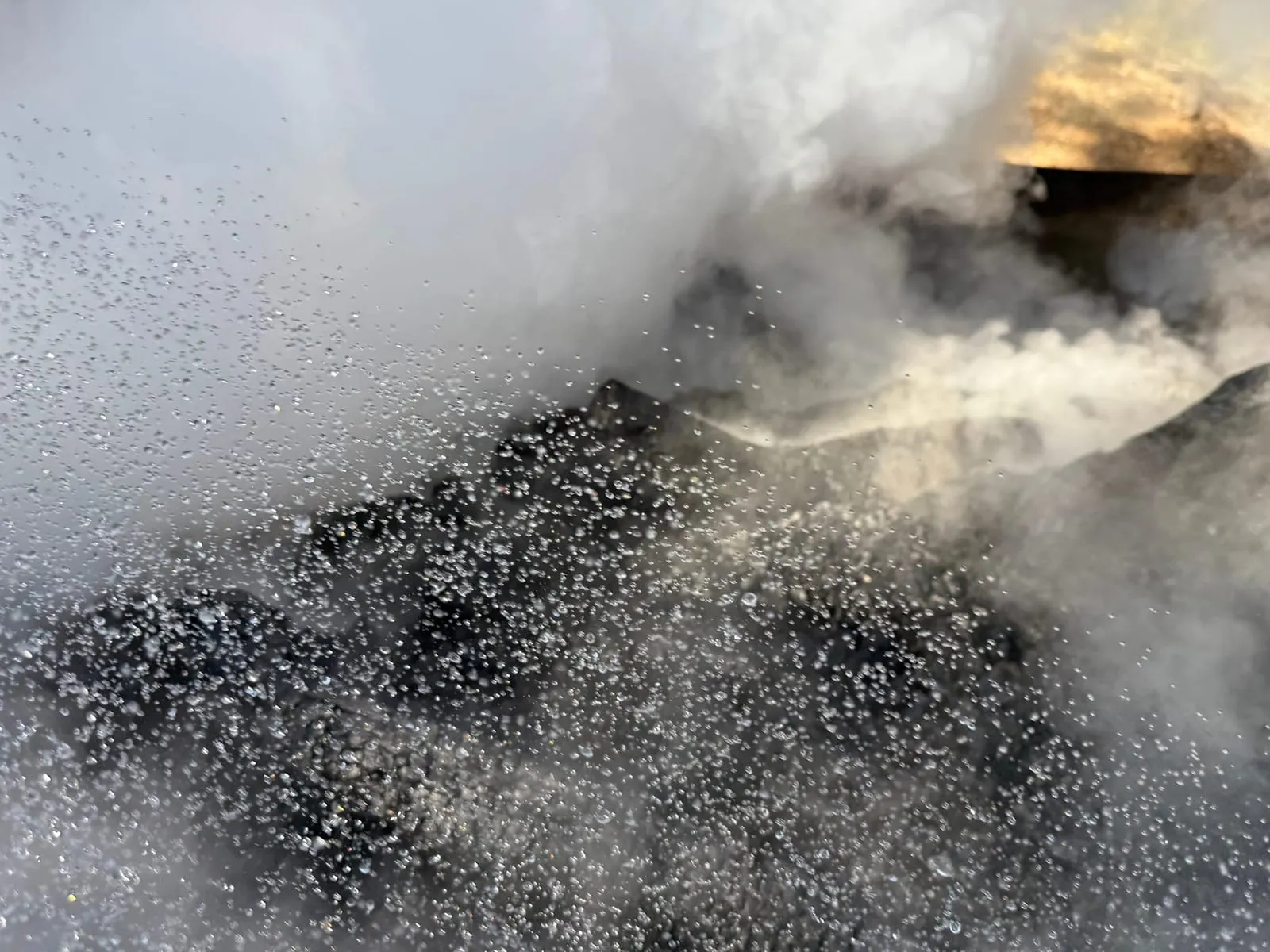
Each burn adds practical experience in running a kiln as part of thinning work on steep foothill ground.
Biochar is full of tiny pores. Mixed into soil, it holds water and nutrients, gives microbes and fungi a place to live and improves the soil’s structure. That matters most in ground the Gold Rush left degraded, where hydraulic mining washed much of the topsoil away, and where the soil has to carry plants through a long, dry summer.
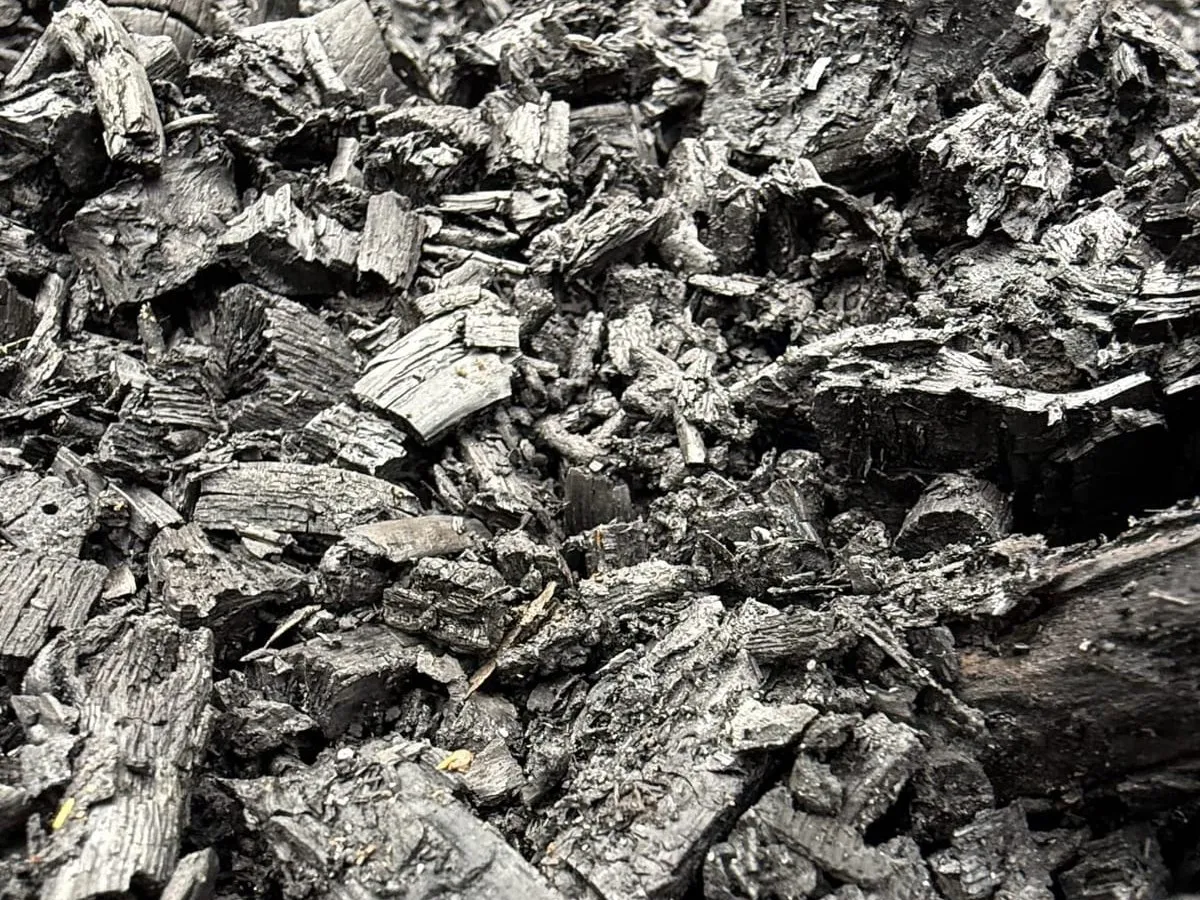
Controlled burns already reduce grass thatch and invasive plants such as blackberry and poison hemlock (Conium maculatum) at San Domingo. Under the trees, fire can come back only once thinning and fuel breaks have brought the fuel down far enough that a low-intensity burn stays on the ground and doesn’t kill the large trees. That is the long-range aim (foresters call this approach pyrosilviculture): fire as routine upkeep of the understory again, as it was before the Gold Rush.
Kiln burns are recorded in photos and drone footage, and repeat drone flights and satellite imagery follow the treated ground and its regrowth through the seasons. AI-managed remote sensing adds cameras and AI processing of drone footage and field photos, and soil trials will compare biochar-amended and untreated ground. These records come together in our digital twins of the sites, to show over the years where fuel was reduced, where the biochar went and how the land responded.
Running a ring kiln, or putting biochar to work in soils and gullies? Get in touch to compare notes.
+1 photo Burn day in the steel ring kiln at San Domingo, the day after the crew staged the burn. Slash from thinning goes in load by load, and a…
 +1 photo
On November 24, 2025, we ran the first burn in a new steel ring kiln at San Domingo Arbory, among DeepForest's first biochar burns. Its…